May 22, 2025 by Sooyoung
Today, I searched for Trichoplusia ni (cabbage looper) and the reason why it is used for protein expression.
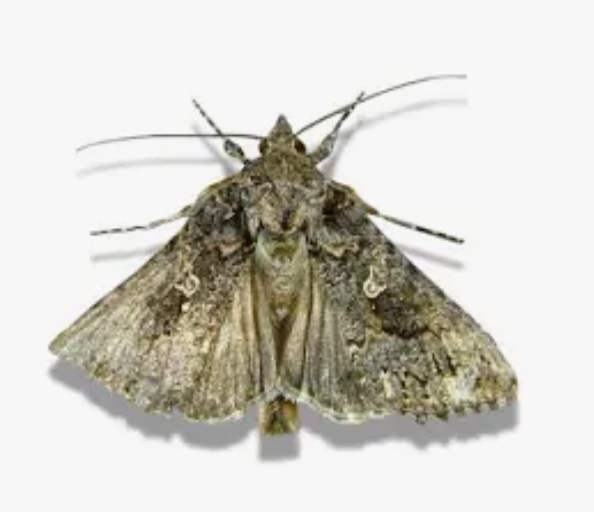
The cabbage looper is a medium-sized moth commonly called owlet moth, and it is known for its distinctive looping movement as a caterpillar. So, the caterpillar is commonly called a cabbage looper, and the adult cabbage loopers are called owlet moths.
A picture of owlet moth from webpage, russellipm.com
You may visit YouTube to see Looper. 🐛
Why it is used for protein expression and how the technology has been developed:
Trichoplusia ni (cabbage looper) is used for protein expression due to its ability to produce recombinant proteins at high levels and with good quality, particularly for SECRETED proteins. Its insect cell lines, such as Tni-FNL, have demonstrated superior protein production compared to other winged insect (lepidopteran) cell lines of Spodoptera frugiperda (fall armyworm moth). Furthermore, some Trichoplusia ni cell lines (Tni-FNL) have shown improved growth rates and the ability to grow at lower temperatures.
Who developed:
The High Five (BTI-Tn-5B1-4) cell line, derived from the cabbage looper (Trichoplusia ni) eggs, was first developed by the Boyce Thompson Institute for Plant Research in 1970. Another Trichoplusia ni cell line, Tni-FNL, was developed by researchers at the National Cancer Institute in 2018.
What we think about protein expression:
Protein yield, Scale-up, Toxicity, Post-translational modification, growth characteristics, how could be advanced further…..
Further reading materials and original references:
- W.F.HINK, 1970, Established Insect Cell Line from the Cabbage Looper, Trichoplusia ni
- Fengrui Zhang, 2008, A New Trichoplusia ni cell line for membrane protein expression using a baculovirus expression vector system
- Esposito Dominic, 2018, Tni-FNL: An Improved Trichoplusia Ni Cell Line for Protein Expression
 Life and Biology stories with Sooyoung and Others