병실에서
오늘도 나는 수갑을 차고
죄수복을 입고 병원복도를
거닐고 있다
In the hospital ward
Today, once again I wear handcuffs,
Clad in a prisoner’s uniform,
I wander the hospital corridors.
Life and Biology stories with Sooyoung and Others
ironic living toward death, continue learning visible and invisible big big world around and inside us. Share your stories and poems here!!!

오늘도 나는 수갑을 차고
죄수복을 입고 병원복도를
거닐고 있다
Today, once again I wear handcuffs,
Clad in a prisoner’s uniform,
I wander the hospital corridors.
8/27/2026
내 손가락에는
아버지의 반지가 끼워져 있다
멋지고 값비싸서
끼고 다니는 것이 아니다
아버지가 돌아가시고
나는 끼고 싶지 않았다
하지만, 어머니의
강력한 권유로 끼게 되었다
아버지의 삶은
공무원 퇴직 후 30여 년을
보험 대리점을 하셨다
성실하셨던 아버지의 삶을
나도 살기를 어머니는 바라셨나 보다
8/27/2026
On my finger
is my father’s ring.
I don’t wear it
because it is fine or expensive.
After my father passed away,
I did not want to wear it.
But at my mother’s
strong urging, I put it on.
After retiring from civil service,
my father spent some thirty years
running an insurance agency.
My mother must have hoped
that I would live a life as faithful
as my father’s.
오늘도 병원 벤치에 누워
태양을 이불삼아
그리움의 베게를 베고
푸른 하늘을 바라보며
못다 이룬 꿈과
사랑을 향해 외쳐본다
흔들리는 나뭇잎의 선율에서
위로 받고 참새의 지저귐에서
외로움을 달래본다
얼마 남지 않은
생에대해 미련과 아쉬움을
버리고
찾아오고 있는
죽음의 검은 그림 뒤를
따라가는 수 밖에….
Again, I lie on a hospital bench,
the sun my blanket, longing my pillow.
Gazing at the open blue sky,
I shout toward the dreams and the love I could not yet claim.
The rustling leaves console me
The sparrows’ song eases my loneliness.
I let go of regrets and attachments
About the life that does not have much left
And can only follow
The black shadow of death that’s coming…
2026/10/1 차강석 씀
송편 속은
깨를 넣은 것이 가장 맛 있다
송편을 씹으면
깨가 각각의 맛을 내며 입안을 장악한다
잘잘한 알갱이마다
고소하고 약간의 짠맛 등 다양한 맛이 난다
또 깨 송편은
침처럼 입안에 오래도록 머물러 맛을 느낀다
깨 송편은
이런 면에서, 가을을 맞는 인생의 맛이다
Of all the fillings for songpyeon,
sesame is the best.
When you bite into songpyeon,
each sesame seed gives off its own flavor
and takes command of the mouth.
In every tiny grain
there is nuttiness, a hint of salt,
a whole range of tastes.
And sesame songpyeon
stays in the mouth for a long time, like saliva,
so you go on tasting it.
In this way, sesame songpyeon
is the taste of a life
welcoming autumn.
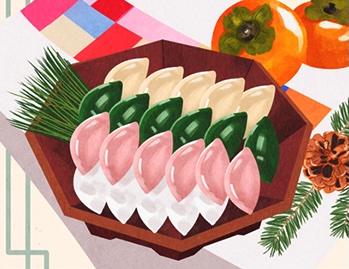
Chuseok Illustration 026″ by the Korea Copyright Commission, licensed under CC BY 4.0. Modified from the original (cropped). Source: Gongu Madang.
A series of Wine Bits and Sips, written by Junghyun.
For the original Korean version
If you’re a wine lover, a decanter is a must ……. right?
You’ve probably seen it in a movie or a drama: someone lifts an elegant glass vessel, tilts it slowly, and lets the wine fall into a glass in a long, glistening stream. It looks impossibly sophisticated. And if you’ve ever read the manga The Drops of God, you’ve almost certainly felt the pull of a beautiful decanter. But is it actually essential for a wine enthusiast? I’d say: not necessarily.
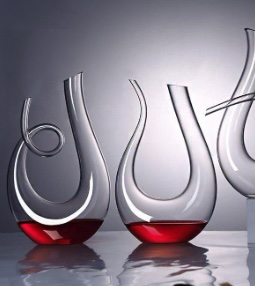
There’s a temptation to think that using a decanter signals you know your wine and that decanting will magically improve whatever’s in the bottle. But decanting carelessly can actually backfire: delicate wines can lose their most refined aromas in the process, and a decanter that hasn’t been cleaned thoroughly can leave an off-putting smell in the wine.
The original purpose of a decanter was practical: to separate an old vintage’s sediment from the wine. You’d hold a lit candle behind the bottle, watch for the sediment, and slowly pour only the clear wine into the decanter before serving. Older reds often develop tartrate crystals, which is another reason to decant before pouring. Decanters are also used to quickly aerate a young, tightly structured wine, essentially fast-forwarding its evolution in the glass. That said, most sommeliers apparently prefer the simpler approach of just opening the bottle a few hours ahead of time and letting it breathe in the bottle.
I’ve had both good and bad experiences with decanting. At a natural wine restaurant, the server decanted a bottle to help dissipate the funky, barnyard notes that natural wines sometimes carry, and it worked beautifully, revealing the wine’s true character underneath. The other memory is less fond: at a gathering where we’d opened an expensive bottle, it sat in a wide-bottomed decanter for four or five hours before being served at the end of the meal. By then, it had passed its peak entirely and was flat, uninteresting, and a shadow of what it should have been.
A decanter is useful when you need it. But it’s also bulky, not cheap, and worth asking yourself honestly: how often will I actually use this? And cleaning it is its own challenge; if there’s any soapy residue or wine staining, you’d typically rinse it with a small amount of the wine you’re about to decant, sacrificing a little in the process. If your main goal is aeration, a compact wine aerator like the Vintorio is a practical alternative. Personally, I find it more interesting to pour into a glass and just wait; watching how the wine evolves in the glass over time is part of the pleasure.
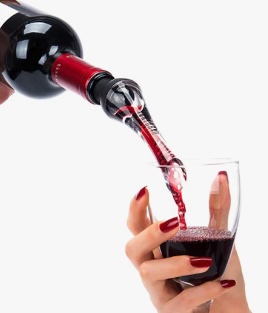
Have you ever wanted just one glass of wine, not the whole bottle? Pour a glass, seal the bottle well, tuck it in the fridge door, and come back to it whenever you like.
This one I do recommend is the Vacu Vin Wine Saver
The Vacu Vin Wine Saver with its vacuum pump makes a real difference for storage. Stored upright in the fridge, a sealed bottle keeps well for two to three weeks. A small note on corks: putting the cork back in upside-down is considered unhygienic; the outside of the cork has been exposed to air and handling, so ideally you’d replace it with the original orientation. That’s not always easy to do, which is exactly why the rubber Vacu Vin stopper is so practical.
If you only want a few glasses at a time, half-bottles are another option, though they’re rarely half the price and the selection tends to be limited. A good stopper and a few days of careful drinking are usually the better deal.
🤣One last thing: please don’t follow those YouTube hacks that show you pouring leftover wine into a plastic bottle and squeezing out the air. Single-use plastic bottles aren’t meant for reuse, bacteria can grow, and squeezing the bottle releases micro/nano-plastics directly into your wine. You have a perfectly good glass bottle right there. Use it.
For sparkling wines: skip the vacuum stopper; it removes the carbonation along with the air. Use a Champagne stopper instead, which keeps the fizz intact. Wine stoppers are inexpensive, last a lifetime, and genuinely earn their place in your wine kit. Highly recommended. 🍾
Of all the wine accessories you’ll reach for, the opener is the one you’ll use most. Most of us have a standard two-step waiter’s corkscrew from some wine gift set, the kind that occasionally destroys the cork and requires more technique than it should. My personal favorite is the Alessi Alessandro M., which I ordered as an afterthought to hit a minimum shipping amount on a German kitchenware order. It’s a continuous-turn corkscrew: just keep rotating in one direction and the cork comes out smoothly. It also looks beautiful on the table, which doesn’t hurt. Guests always notice it. Worth every cent.
Electric openers work well too, but a well-designed manual opener with some personality makes the ritual of opening a bottle that much more enjoyable.
Don’t forget the foil cutter to go with it. The two-step waiter’s corkscrew usually has a small serrated blade built in, but if you’re using an Alessi-style or electric opener, a standalone foil cutter is the way to go; just place it on the capsule, press lightly, and turn.
A few more accessories worth knowing about:
Wine gift sets these days often come with a wine ring, a small collar that sits at the bottle’s neck to catch drips. Personally, I prefer a dedicated dark-colored cotton napkin (burgundy or navy works well), which is easy to wash, looks elegant, and is more hygienic.
Another handy item is Drops Stop wine pourers. These thin discs roll up and insert into the bottle mouth, preventing drips as you pour. The disposable disk version is especially convenient for large gatherings.
And finally, the often-overlooked essential: an ice bucket, or for something more compact, an active wine cooler sleeve. It works like a freezable gel pack that fits around the bottle, keeping your wine at the right temperature from the first glass to the last. Doubles perfectly as a camping companion. 🏕️
😘For everything on wine glasses, see No. 2. For the biggest wine accessory of all, the wine fridge, see No. 1.
2026 어느날 이한숙 씀
축복 받으며 울음을 터뜨리며
태어나 인생은 시작되고
이별이라는 슬픈 단어로
포장되어 있는 죽음으로
인생의 무대에서 막은 내려지고
연극은 끝이 난다.
운명이라는 단어에
귀속되고 매료된 장식품
배당받은 시간속에
쌓아올린 노력의 탑을
수용 할수 밖에
주어진 굴레에
벗어날수 없는 삶
그래도 내일이라는 미지수에
꿈과 희망을 갖고
살아야 할 의무와 책임이
있지 않은가
written by Lee someday in 2026
Blessed and bursting into tears,
life begins,
and runs and ends in death
wrapped in that sad word, Parting.
The curtain falls on life’s stage,
and the play comes to its close.
An ornament, bound to
and enchanted by the word “fate,”
Within this allotted time,
I have no choice but to accept
the tower of effort I have raised.
A life that cannot escape
the yoke it was given,
yet with an unknown tomorrow
holding dreams and hope,
Is there a duty and responsibility,
to go on living?
나를 외면하는 낯선 사람들
나를 외계인처럼 쳐다보는 사람들
너는 나에게 오뉴월
엿가락같이 착 달라붙었다
주식 시황 등의 정보를 줘
거래를 하여 경제적 이익을 얻고 있다
또 시간이 날 때 영화와 음악 등을
보고 듣도록 하여 정서를 풍부하게 해 준다
강의와 강연 등을 하여
낯선 사람들에게 감동을 주고 있다
너와 나는 천생연분!
영원히 함께할 것이다

