
[Wine Bits and Sips] No. 3. Do You Really Need a Decanter? Wine Accessories, Honestly Reviewed


A series of Wine Bits and Sips, written by Junghyun.


For the original Korean version

If you’re a wine lover, a decanter is a must ……. right?

You’ve probably seen it in a movie or a drama: someone lifts an elegant glass vessel, tilts it slowly, and lets the wine fall into a glass in a long, glistening stream. It looks impossibly sophisticated. And if you’ve ever read the manga The Drops of God, you’ve almost certainly felt the pull of a beautiful decanter. But is it actually essential for a wine enthusiast? I’d say: not necessarily.
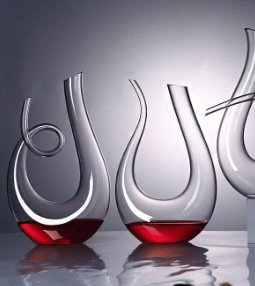
Zelto Decanter

There’s a temptation to think that using a decanter signals you know your wine and that decanting will magically improve whatever’s in the bottle. But decanting carelessly can actually backfire: delicate wines can lose their most refined aromas in the process, and a decanter that hasn’t been cleaned thoroughly can leave an off-putting smell in the wine.

The original purpose of a decanter was practical: to separate an old vintage’s sediment from the wine. You’d hold a lit candle behind the bottle, watch for the sediment, and slowly pour only the clear wine into the decanter before serving. Older reds often develop tartrate crystals, which is another reason to decant before pouring. Decanters are also used to quickly aerate a young, tightly structured wine, essentially fast-forwarding its evolution in the glass. That said, most sommeliers apparently prefer the simpler approach of just opening the bottle a few hours ahead of time and letting it breathe in the bottle.

I’ve had both good and bad experiences with decanting. At a natural wine restaurant, the server decanted a bottle to help dissipate the funky, barnyard notes that natural wines sometimes carry, and it worked beautifully, revealing the wine’s true character underneath. The other memory is less fond: at a gathering where we’d opened an expensive bottle, it sat in a wide-bottomed decanter for four or five hours before being served at the end of the meal. By then, it had passed its peak entirely and was flat, uninteresting, and a shadow of what it should have been.

A decanter is useful when you need it. But it’s also bulky, not cheap, and worth asking yourself honestly: how often will I actually use this? And cleaning it is its own challenge; if there’s any soapy residue or wine staining, you’d typically rinse it with a small amount of the wine you’re about to decant, sacrificing a little in the process. If your main goal is aeration, a compact wine aerator like the Vintorio is a practical alternative. Personally, I find it more interesting to pour into a glass and just wait; watching how the wine evolves in the glass over time is part of the pleasure.
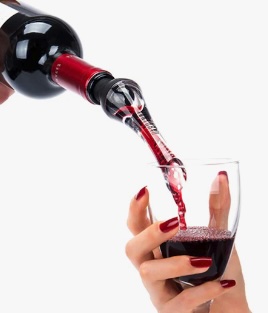
Vintorio Aerator

Have you ever wanted just one glass of wine, not the whole bottle? Pour a glass, seal the bottle well, tuck it in the fridge door, and come back to it whenever you like.

This one I do recommend is the Vacu Vin Wine Saver

The Vacu Vin Wine Saver with its vacuum pump makes a real difference for storage. Stored upright in the fridge, a sealed bottle keeps well for two to three weeks. A small note on corks: putting the cork back in upside-down is considered unhygienic; the outside of the cork has been exposed to air and handling, so ideally you’d replace it with the original orientation. That’s not always easy to do, which is exactly why the rubber Vacu Vin stopper is so practical.

If you only want a few glasses at a time, half-bottles are another option, though they’re rarely half the price and the selection tends to be limited. A good stopper and a few days of careful drinking are usually the better deal.

🤣One last thing: please don’t follow those YouTube hacks that show you pouring leftover wine into a plastic bottle and squeezing out the air. Single-use plastic bottles aren’t meant for reuse, bacteria can grow, and squeezing the bottle releases micro/nano-plastics directly into your wine. You have a perfectly good glass bottle right there. Use it.

For sparkling wines: skip the vacuum stopper; it removes the carbonation along with the air. Use a Champagne stopper instead, which keeps the fizz intact. Wine stoppers are inexpensive, last a lifetime, and genuinely earn their place in your wine kit. Highly recommended. 🍾

Of all the wine accessories you’ll reach for, the opener is the one you’ll use most. Most of us have a standard two-step waiter’s corkscrew from some wine gift set, the kind that occasionally destroys the cork and requires more technique than it should. My personal favorite is the Alessi Alessandro M., which I ordered as an afterthought to hit a minimum shipping amount on a German kitchenware order. It’s a continuous-turn corkscrew: just keep rotating in one direction and the cork comes out smoothly. It also looks beautiful on the table, which doesn’t hurt. Guests always notice it. Worth every cent.

Electric openers work well too, but a well-designed manual opener with some personality makes the ritual of opening a bottle that much more enjoyable.

Don’t forget the foil cutter to go with it. The two-step waiter’s corkscrew usually has a small serrated blade built in, but if you’re using an Alessi-style or electric opener, a standalone foil cutter is the way to go; just place it on the capsule, press lightly, and turn.

A few more accessories worth knowing about:

Wine gift sets these days often come with a wine ring, a small collar that sits at the bottle’s neck to catch drips. Personally, I prefer a dedicated dark-colored cotton napkin (burgundy or navy works well), which is easy to wash, looks elegant, and is more hygienic.

Another handy item is Drops Stop wine pourers. These thin discs roll up and insert into the bottle mouth, preventing drips as you pour. The disposable disk version is especially convenient for large gatherings.

And finally, the often-overlooked essential: an ice bucket, or for something more compact, an active wine cooler sleeve. It works like a freezable gel pack that fits around the bottle, keeping your wine at the right temperature from the first glass to the last. Doubles perfectly as a camping companion. 🏕️

😘For everything on wine glasses, see No. 2. For the biggest wine accessory of all, the wine fridge, see No. 1.
[Wine Bits and Sips] The Charm of Wine

I share a series of Wine Bits and Sips, written by Junghyun. We invite you to start your wine journey right here, with us as your friendly guide, Junghyun.

for the original Korean version

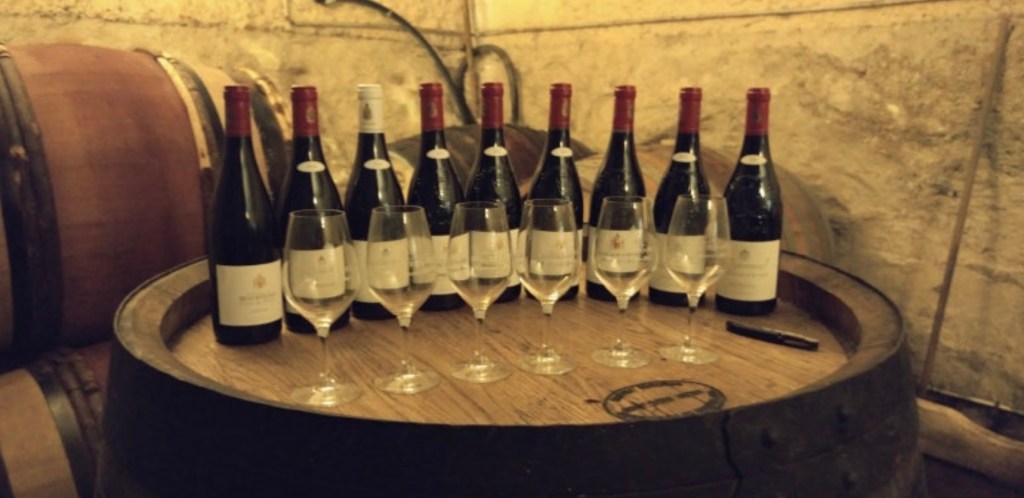
Winery of Chateauneuf du Paoe

Before we dive into wine cellars, ratings, and the age-old debate whether an expensive bottle is truly worth its price, let me tell you why I got into wine in the first place.

The beauty of wine, I think, is this: without packing a bag or going anywhere, you can sit still and travel the world through all five senses. That’s the charm, and sometimes, honestly, it can also be the headache. Choosing a wine can feel like a multiple-choice question with answer options that spill onto the next page. You can’t always get it right. But that’s exactly why the moment you stumble upon something extraordinary feels so electrifying. One unexpected sip can make your eyes go wide in wonder. When a wine truly delights you, even the long hunting for that perfect bottle becomes a kind of play. The risk is, of course, that if you fail too many times in a row, the motivation to keep trying quietly fades away. Along with it, you lose the chance of ever finding that one wine that brings you genuine happiness. This is why, rather than picking at random, it helps to improve your odds a little bit.

That’s what this series is about.

The usual advice is to begin your journey by finding a grape variety you enjoy.

Build a framework, something to anchor your choices so they’re easier to remember. In the New World, many wines are crafted from a single, well-known variety, which makes comparisons much easier. Mid-range American wines in particular tend to express their grape variety in a direct, straightforward way. Trying different bottles from the same producer, such as Long Barn or Textbook, across different varieties is a great way to map out your preferences. Textbook is best known for its reds and produces across a wide range, including Cabernet Sauvignon, Chardonnay, and Sauvignon Blanc, with Pinot Noir being a more recent addition to their lineup. Each grape brings its own skin thickness, natural sugars, and character, and you’ll taste these differences in the glass as distinct wine’s texture, tannins, acidity, and finishes. Once you discover a variety you love, you can begin expanding your horizons by seeking out the same grape from different countries. However, keep in mind that this is only one of many ways to explore the world of wine. 

Wine, they say, is a joint creation of the grape, the terroir, and the winemaker’s human hand. In France, it’s traditional not to list the grape variety on the label. Bordeaux-style blends are common, and the French tend to feel that variety alone doesn’t determine the wine’s soul. They see little reason to highlight it as the primary feature. During a Bordeaux winery tour years ago, where most of the guests were American. The winemaker poured a glass of deep, dark red wine and challenged us to guess the grape. Most guessed Cabernet Sauvignon or Syrah. The answer? 100% Merlot. These graphs came from vines nearly a hundred years old, rooted in the dry, stony soil of a hillside. While we were in Saint-Émilion on the Right Bank, an area where Merlot is the dominant variety and typically blended with small amounts of Cabernet Franc and Cabernet Sauvignon, that tasting was a revelation. It was the exact moment the concept of terroir finally clicked for me, instantly and completely.

I came to wine with a strong conviction that France was its spiritual home of wine, so I started there, tasting my way across the regions one glass at a time. Unlike the New World, France places terroir at the center of everything. I fell for the rich, brooding tannins of Bordeaux reds: that dark tropical fruit, the weight, and a seductive, perfume-like quality that lingers like a single drop of fragrance. A wine with real complexity doesn’t just speak to your palate. It speaks to your imagination. I’d find myself picturing an elegant woman in a field of wildflowers or something bold, dynamic, almost physical. That’s Bordeaux red to me.

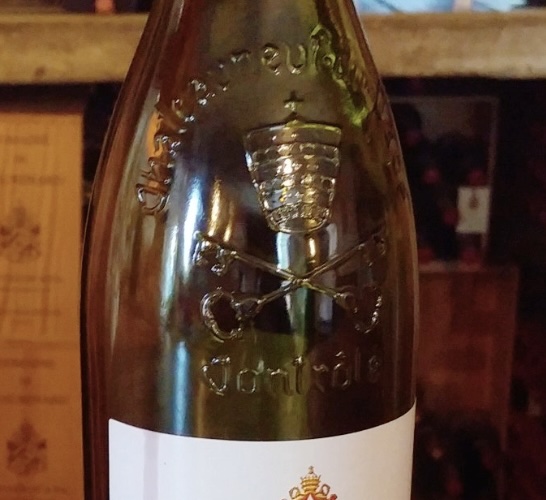
Chataeuneuf du pape bottle

Then came Châteauneuf-du-Pape (CDP), often called the Pope’s wine, hailing from the southern Rhône valley. During the Avignon Papacy, Pope John XXII built a summer residence and a winery north of Avignon, giving the region its name, which translates to the “new castle of the Pope.” While history suggests that the wines of the Rhône still required refinement at the time, leading the Pope to reportedly ship in Burgundy until local quality improved. One of the most striking features of these bottles is the embossed papal coat of arms, featuring the tiara over the keys of Saint Peter, which sets them apart from everything else on the shelf. CDP is a blend led by Grenache, Syrah, and Mourvèdre (GSM), along with other permitted varieties [the list has been revised from 13 down to 9 permitted varieties], which gives it a characteristic complexity. As a wine built for long aging, it possesses both power and elegance that never disappoints. Rich and full-bodied, yet more reasonably priced than Bordeaux or Burgundy, so it’s become my trusted bottle. It is a wine that feels particularly right from late autumn through the Christmas season, offering a warmth from the inside out. The only catch: it’s not exactly an everyday-priced bottle. Though when you see the vineyard, where every grape is hand-harvested and farmed organically, the price starts to feel entirely fair.

One afternoon at Lotte department store wine event, a staff recommendation led me to a Southern French Syrah. 

Most people associate Syrah with Australia, but it originated in France’s south. Phylloxera (a kind of aphid) devastated the vineyards of the region in the 19th century, and the Syrah planted today is technically a reimported variety; however, something about this land remains unchanged. The combination of limestone and gravel soils, paired with the fierce Mistral wind, gives Southern French Syrah a character entirely unlike its Australian counterpart. I drank a 2012 vintage in 2023 and was struck by the kind of balance and depth that only a well-aged, high-quality wine can offer. That specific wine is no longer imported, but whenever I spot a Syrah from the neighboring Roussillon region, it goes straight into my basket. Roussillon was long known for cheap table wine, but with talented winemakers moving in, the quality has surged, and you now find genuinely excellent value there.

When dining out, I often ask for a wine pairing recommendation, a habit that sometimes leads me to bottles I’d never have chosen for myself.

This is exactly what happened at a wine bar near my home. I typically did not reach for American wines, and when it comes to whites, I rarely stray beyond French Chardonnay, but this was wonderful, offering a rich, almost oily texture and ripe orange fruit, complemented by a touch of oak and just a whisper of mineral on the finish. It was quite simply delicious. Curious to see whether I could find a similar experience elsewhere, I tracked down a South African Chardonnay in the $20 range. South Africa occupies somewhere between the Old World and the New with a wine history that is much longer than most people realize. The Dutch East India Company planted vines there as early as 1662, producing the country’s first wine by 1669. By the 1880s, South Africa had become one of England’s premier wine suppliers until politics, natural disasters, and war pushed it into obscurity for decades. It was only under the presidency of Nelson Mandela that the wine industry began to rebuild. Today, South African winemakers draw from both traditions by studying Burgundian techniques while embracing the expressive, fruit-forward styles of the New World. The result is a collection of wines with a unique identity that often provide exceptional value.

Every new variety, region, and producer weaves together terroir, intention, and craftsmanship into a story that awakens all five senses. The world of wine is truly boundless.

This is how I travel the world, right from the glass on my dinner table.

Create your own website, free on WordPress.com.Create your own website.
Start free