[Wine Bits and Sips] Do You Really Need a Wine Fridge?

a series of Wine Bits and Sips, written by Junghyun.

for the original Korean version

Bottles piling up at home? Wondering whether a wine fridge is worth it?

Wine is, at its core, a bottled beverage with around 13% alcohol. It doesn’t spoil easily. However, that said, if you want it to taste exactly the same a few months from now as it does today, you’ll want to store it somewhere dark and cool, what the French call a cave, essentially a cellar-like environment. Experts give a fairly wide range for ideal storage temperature: anywhere from 45°F to 68°F (7–20°C). In my own experience, a single shelf in a closet, away from direct sunlight and not directly in the path of heating or air conditioning, works perfectly well for up to a year. The key is to lay the bottles on their side, which keeps the cork moist and prevents it from drying out. 

If you’re planning to finish a bottle within a month or two of buying it, there’s really no need to invest in a dedicated wine fridge. And if you just want the look, a stylish wine rack on a sideboard or countertop does the job beautifully and adds a lovely touch to any room.

If you find yourself regularly storing more than 20 to 30 bottles at a time, keeping wines for six months or longer, or aging premium bottles (think $80+) for several years, it’s time to invest in a proper wine fridge. 

Compressor vs. thermoelectric. 

Smaller, quieter thermoelectric (semiconductor) models have become popular, but they’re sensitive to ambient temperature and tend to have shorter lifespans. For long-term storage, a compressor-based unit is the more reliable choice.

Brand matters. 

Look for something with minimal vibration, consistent temperature control, and a solid track record for durability [Top brands worth considering: LG DIOS, Dometic, and Eurocave]. My wine fridge costs more than my main refrigerator 😅.

Dual-zone vs. single-zone.

Some models let you set different temperatures for reds and whites; others don’t. If yours has only one temperature zone, set it to white wine temperature. Reds can be served slightly warmer after taking them out, but whites need that cooler baseline.

A few practical notes:

  • Wine you’re planning to drink soon doesn’t need to go in the fridge, though pulling a perfectly chilled bottle from it does feel rather nice.
  • If you’re moving soon, hold off on buying. The vibration and temperature swings of a move aren’t great for a wine fridge or the wine inside it. Wait until you’re settled.
  • Wine fridges can be noisy; they take up real space. [If you’re short on room, there’s always the sommelier-approved method: clearing out a wardrobe. It works really well 🥰]; they use more electricity than a standard fridge 😭.

찰랑찰랑, 차강석 씀 | Sloshing written by Cha, KangSeok

찰랑찰랑

2026/4/11 차강석 씀

맑은 물이
컵에서 넘을까 말까 하고 있다

나에게 시를 짓는다는 것은
위의 물처럼 넘으면 화가 나고
넘지 않으면, 언제 넘을까를
걱정하는 것과 같다

시가 잘 안 풀리면 화가 나고
시가 잘 써지면, 발이 뜻대로
움직여 주지 않아 짜증난다

화와 걱정이
찰랑 되는 물처럼
내 기분은 출렁인다


Sloshing

Clear water

is about to overflow

For me, writing a poem

is like that water
if it overflows, I get angry,

if it doesn’t overflow,

I worry about when it will overflow

If a poem doesn’t go well,
I get angry,

if a poem is written well,

my feet do not move

as I intend, and I get irritated

Anger and worry

like sloshing water,

my mood sways

Postscript

Korean version (뒤풀이글 한국말로 읽으시려면 여기를 클릭)

오늘은 강석형을 만난 이야기를 시 뒤에 덧붙여 본다.

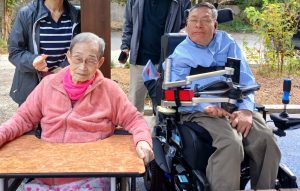
강석형은 발로, 더 정확히는 발가락으로 컴퓨터를 다룬다.
그는 시를 쓰고, 그 시를 우리 블로그에 꾸준히 올리는 시인이기도 하다.

강석형이 나의 친구인지 아닌지는 잘 모르겠다.
하지만 그는, 내가 존경하는 사람 중 한명이고,
한때 같은 단체를 꾸렸던 소중한 인연이다.

우리는 1997년 여름, 인터넷 마이넷 통신망에서 만났다.
하이텔이나 천리안 같은 대형 통신망과 달리
마이넷은 교육부 산하에서 운영되던,
아는 사람만 아는 무료 통신망이었다.

그곳에는 돈이 없던 학생들과
마찬가지로 돈이 없던 장애인들이 모여 있었다.

그 무렵 나는 대학 2학년이었고,
결핵이 재발하여 고향집에 내려와 있었다.
할 수 있는 일은 많지 않았고,
나는 컴퓨터를 통해 세상과 연결되었다.

병은 처음엔 혹독했다.
피를 토하고, 매일 병원에 가서 주사를 맞아야 했고,
약도 쉽게 듣지 않았다.
하지만 시간이 지나면서 상태는 나아졌다.

일을 할 수 없었기에
자원봉사를 시작했다.

처음으로 찾은 것은 임사체험 관련 단체였고,
미국의 한 단체에서 한글-영어 번역 자원봉사를 맡았다.
그 인연은 지금도 이어지고 있다.

그해, 국내에 자원봉사 단체들이 생겨났고
나는 춘천시 자원봉사대 1기,
청소년 수련원 상담소 소속 대학생 자원봉사자 1기로 활동했다. 또한 춘천시 천주교 성당 소속 기쁨의 전화 상담소에서 긴 교육을 받고, 전화상담자로 활동했다.

그리고 강석형의 제안으로
마이넷 동호회 참사랑 (장애인과 비장애인 클럽) 창립 멤버가 되었고,
부회장 역할을 맡았다.

클럽 참사랑은 통신망이 사라질 때까지 이어졌다.

학교 클럽은 아니었지만
그곳은 세상과 이어지는 다리였고,
우리는 온라인과 오프라인을 넘나들며
함께 모였다.

장애인이든 아니든
세상을 조금 더 나은 곳으로 만들고 싶어 하던
아주 평범한 그런 사람들이었다.

강석형은 검정고시를 준비했다.
나는 크게 돕지 못했다.

돌이켜 생각해 보니
강석형은 누군가의 도움 때문이 아니라
그의 궂은 의지로
초등, 중등, 고등의 모든 과정을 아주 금새 통과해냈다.

이후 경희사이버대학교 문학과에 입학했고,
복지학과를 거쳐
언어치료학 석사 과정까지 마쳤다.

나는
강석 형의 시와 글들을 더 많은 사람들에게
소개하고 싶은 마음이다.

Today, I am adding a story about meeting Kang Seok hyung (a Korean term used by a male to address an older male).

Kang Seok hyung uses his feet, more precisely, his toes, to operate a computer.

I am not sure whether he is my friend or not.
But one thing is certain: he is someone I deeply respect,
and someone with whom I once built a community or organization.

We met in the summer of 1997 on an online network called Mynet.
Unlike major Korean networks such as Hitel or Chollian,
Mynet was a lesser-known, free network operated under the Ministry of Education, South Korea.

Because it was free,
it was a site where students without money
and people with disabilities, also without money, gathered.

At the time, I was a sophomore in college.
My tuberculosis had relapsed, and I had returned to my hometown.
There was little I could do,
so I connected to the world through a computer.

The illness was harsh at first.
I coughed up blood, went to the hospital every day for injections,
and the medication did not work easily.
But over time, my condition gradually improved.

Since I could not work,
I began volunteering.

The first thing I found online was an organization related to near-death experiences. Through it, I started working as a Korean–English translation volunteer for a group in the United States.
That connection continues to this day.

That same year, volunteer organizations began to emerge in Korea as well. I became part of the first cohort of the Chuncheon City Volunteer Corps and a university student volunteer affiliated with a Chunchuon Youth Center and counseling phone call center called “Gippeum-ui jeonhaw,” meaning a joyful call center.

Then, at Kang Seok hyung’s suggestion,
I became one of the founding members of a Mynet club, “ChamSaRang”, meaning trulove, and took on the role of vice president.

The club lasted until the network itself disappeared.

It was not a school club,
but it was a bridge to the world for me and others.
We met both online and offline,
gathering together.

Disabled or not,
we were all young,
and we genuinely wanted to make this society a better place.

Kang Seok hyung prepared for the school equivalency exams.
I did not help him much.

Looking back,
it was not because of anyone’s help,
but through his own determination
that he passed every stage.

He later entered Kyung Hee Cyber University to study literature,
then went on to study social welfare,
and eventually completed a master’s degree in speech-language pathology.

Even now,
I remain someone who wants to introduce more of his writing to the world.

About Cha, Kang Seok

기둥, 차강석 씀 | Radish written by Cha, KangSeok

기둥

2026/3/19 차강석 씀

서걱서걱한 무를
한 입 배어 물었다
그러나 기대한 것과는 달리

무 속에는 기둥이 있었다

그 기둥은 자라
딱딱하고 굳건한
암처럼 온 무를 점령했다

그 무를 섭취한
인간들은 뇌까지 경직돼
다양한 사고를 멈추고 썩어 간다


Radish

I took a bite

of the crisp, crunching radish
But unlike what I had expected,
inside it

there was a pillar.

That pillar grew,

hard and unyielding, like a cancer

until it overtook
the entire radish.

Those who consumed it

felt even their minds stiffen,

their thoughts grinding to a halt,

slowly decaying.

A Christian Funeral


written by Younghee Lee, Oct 30 2025

For the Korean version

A few days ago, my husband and I attended the funeral of someone we barely knew, the wife of a friend of my husband’s. 

I had met her only once before, more than ten years ago, at her father’s funeral. She was the eldest daughter-in-law. After the service, several of my husband’s classmates gathered with their spouses, but she did not greet us. Instead, she stood apart, speaking eagerly with someone else. None of us got over to greet her as well. It was unusual, and I’ve remembered it ever since. 

I hoped to tell my husband to go by himself, but the funeral hall was some distance away from us, and my husband was not young, and we decided to attend together since the bereaved husband had personally sent the notice, and we felt it was right to go.

At the entrance to the funeral hall, we met the deceased’s husband. He looked worn and solemn, dressed in a white mourning suit. We exchanged greetings quietly, offered our condolences, and took a seat inside where the casket was placed. 

The portrait of the deceased—gentle and faintly smiling—was displayed on either side of the altar. That image was completely different from how I vaguely remembered her. She appeared warmer and more serene than I remembered. We met two of my husband’s classmates and sat together with the classmate who had come alone. 

The service began under the guidance of the deceased’s nephew, a pastor.  Prayers were offered and hymns were sung, following the order of service, and three of her four children shared brief memories of their mother. Only the youngest son spoke at length, sharing about his mother and her faith.

Next came the tributes from friends, many of whom were medical doctors like her husband. One man, visibly unwell, spoke while remaining seated. In a steady but solemn voice, he said, “None of us came here today for the deceased or for her family. We came for ourselves. No matter how faithfully one attends church, unless one is born again, one cannot enter the Kingdom of Heaven.” He quoted John 3, the words of Jesus to Nicodemus about spiritual rebirth.  It was continued. Someday, the deceased came and asked, “Were you reborn? While he just does and lives good habits with his mother’s religion. First her question startled him, and he even felt offended and uncomfortable, but the remark of the deceased allowed him to look back and experience the rebirth and still live with the rebirthed religious faith. Soon, the atmosphere became solemn as everyone reflected on themselves. 

Next it was the deceased’s husband’s turn. He spoke of how they met—how she had come to America and devoted herself to raising their four children and supporting him. His voice trembled as he recalled those early years. 

Fresh out of medical school, he was drafted and assigned a pressure sore patient, but he had never had any operation before. He continued that, unable to decline in front of his subordinates, he mustered the courage to proceed with the surgery, and thanks to the use of U.S.-made (Mijae), Mycin, the patient fortunately made a full recovery. At that time, the corpse used U.S.-made medication. The word “Mijae” caused a burst of laughter.  When we were young, the U.S. products were the best. The word that he succeeded in treating that patient spread widely, and even the community school’s principal visited, and that’s how he eventually met his wife. Standing before her, he reminisced about their youthful days.  A quiet ripple of warmth moved through the room. 

He planned to tell five grateful memories about her, but due to time constraints, he only shared three. How could it be only three? Even the fact that, in her youth, she declined a position as a KBS announcer and chose instead to serve as an announcer for Far East Broadcasting in Korea was itself a testament to the death of her faith. 

When he spoke about his wife, he said that memories came flooding out one after another, like sweet potato stems trailing in a row, and once again the funeral hall erupted in laughter. It was a heartwarming funeral.

The deceased, who passed away at the age of 85, wore the same serene smile from the very beginning, as if satisfied, displayed on both the upper corners of the frontal portrait. As the service drew to a close, the daughters continued to weep with the unmistakable grief of forever bidding farewell to their mother.

The words of Ecclesiastes 7:1-4 came to mind: A good name is better than precious ointment, and the day of death better than the day of birth. It is better to go to a house of mourning than to go to a house of feasting, for death is the destiny of everyone; the living should take this to heart. Frustration is better than laughter, because a sad face is good for the heart. The heart of the wise is in the house of mourning, but the heart of fools is in the house of pleasure. 

Most of those present were Christians, yet beyond doctrine, there was a shared understanding, an awareness that life does not end here, and that one must prepare for what lies beyond. 

The essential truth is that before death, no one is exempt. On this autumn day, with the sky so high, I felt I had glimpsed an answer to how I ought to live the remaining time of my life. All the way home, the hymn sung by the deceased’s sister and family, There, in that place, with the Lord, we shall live forever echoed in my ears.

Poem Book—Returning to Origins—Free

Last time when I visited Korea, one of my sunbaes (college seniors) told me that even startups need practice (she is a CEO of Biotech CRO) and practice with any kind of business. I thought about what I could do. That was making books, since I already had personal notes. However, I did not know how to get ISBNs, how to calculate cover thicknesses, how to choose papers, or where to print and sell books.

In Korea, I used Indipub for distribution. Actually, I arranged for the printed book to be delivered directly to the Indipub’s office. In the US, I used Amazon KDP to publish a poem book, both as an eBook and in print. Printing price is cheaper in the US than in Korea, but the quality and variety are limited in the US.

This year, I tried creating children’s picture books using Pages and JPEG images by exporting as ePub. While I worked on them, I realized that JPEG (file size) is smaller than PNG, and iBooks does not support any more ePub previews, so I used Cradle instead of iBooks. I just published two books through Amazon KDP and Barnes & Noble. One book was by my first daughter, and the other by my second daughter. I hope to continue supporting other kids to publish their own books. Writing and publishing seem to help them grow and become more thoughtful about the world around them.

Furthermore, working together with my kids makes me happy and helps me learn more and allows me to better understand how the world works and how the world changes quickly. Today, I discovered how to make eBooks available for free. At Amazon KDP, authors can not offer their books for free all the time, but through KDP, we can make them free 5 days within a 90-day period.

From today, Sep27 to Sep 30, the book, Returning to Origins, is free : https://a.co/d/cIdHYP5

Thanks

GoJoseon—The first kingdom in Korea

Records about Gojoseon are found in the book Samguk Yusa (written by Buddhist monk Iryeon), which says that it was founded in 2333 BCE by Dangun Wanggeom.

According to the Dangun myth, Hwanung (a heavenly being who descended to earth) had a son named Dangun with Ungnyeo (a bear who transformed into a woman). The country that Dangun established was called Joseon.
Later in history, another kingdom called Joseon appeared, as you know, so historians use the name Gojoseon (“Old Joseon”) to refer to the earlier kingdom. Chinese historical texts such as the Shan Hai Jing and Guanzi also mention Joseon.

Gojoseon was based on a Bronze Age culture but broadly seems to cover the late Neolithic and early Iron Age and was said to have the Law of Eight Prohibitions. Among them, three laws are still passed down and known:

  1. A person who commits murder shall be executed.
  2. A person who injures another must compensate with grain.
  3. A person who steals shall become a slave. To redeem themselves, they must pay a fine of 500,000 coins.

It is believed that Gojoseon’s territory may have reached as far south as present-day Seoul.

In Korea, many dolmens (ancient stone tombs, Goindol in the Korean pronunciation) can still be found throughout the Korean Peninsula.


If you want to see a representative example, you can visit LegoLand in Chuncheon, South Korea, where such remains as Neolithic pit houses and Goindols scattered. In fact, it is known that the land beneath LegoLand contained many archaeological things, and the construction of the park was heavily opposed. Despite this, LegoLand was eventually built on the site.

 You can check it out on this website! But the information is written in Korean.


There is one Korean drama, Tae Wong Sa Shin Gi based on the Gojoseon legend.

Unfortunately, there are still no officially English-dubbed versions. JustWatch and Netflix only provide non-English versions.

There is some OST series of Tae Wong Sa Shin Gi on YouTube.

and….

I found Ep2 (Eng Sub) of Tae Wong Sa Shin Gi on YouTube

Hobbies should be purely for enjoyment.

written by Younghee Lee, July 2025

painted by Younghee Lee

Google tells me that a “hobby” is an activity done for pleasure, while a “special skill” is a talent or ability in which one excels beyond others. Over the years, I’ve come to understand how differently these two can be experienced in life.

When our children grew up and left the nest, the house felt unbearably quiet with just my husband and me. The days stretched long, and I wondered how to fill the hours. Then, one day, the thought came to me—I should paint.


Perhaps it was because, as a child, I never had proper art supplies and never dared to try. Without hesitation, I bought watercolor paints, brushes, a sketchbook, and even an easel. The joy and anticipation of that moment still feel vivid to me.

The first thing I painted was the red begonias blooming on our balcony. It was a clumsy piece, with no regard for light, shadow, or perspective, but leaning it against the living room wall filled my heart with happiness. Guests would compliment it and ask, “Who painted this?” I would reply, “I started it as a hobby—it’s my first since elementary school.” My memories of school art classes were purely theoretical; all I felt now was the pride of beginning something new.

After we moved to the United States, I often took my granddaughter to her art class. Watching her made me want to learn again. I gathered my courage, asked her teacher, and was warmly welcomed. I signed up for weekly lessons, walking home with my heart brimming with excitement. This time, I truly believed I could paint “real” paintings.

Reality, however, was humbling. I remembered how my high school aptitude test had shown a dismal score in spatial perception. My math and logic were near perfect, but my spatial awareness—a key to artistic ability—barely reached eighty points. Painting, it seemed, was not my natural gift. When I traveled, I was always tempted to capture beautiful scenes on canvas rather than in photographs, but that longing often turned into pressure.

Thankfully, my children loved my work, no matter how imperfect. Whether I painted roses that looked like smudges, sunflowers that resembled wildflowers, or adults that looked like children, they said, “We love it because it’s Mom’s painting.” To my surprise, my American son-in-law’s parents—who both majored in art—hung my painting of geraniums in their kitchen, calling it “fresh in a way only amateur work can be.”

Last year, my tenth-grade grandson lived with us. Gifted in sports, he had transferred from San Francisco to Los Angeles to improve his skills. In a family where academics had always been the priority, his decision surprised us. At first, we thought it was just a passing phase, but we were wrong. He threw himself entirely into school and club activities and even managed his diet with discipline, avoiding anything unhealthy. For him, his hobby and his special skill were one and the same—and his joy in doing it brought exceptional results.

Now, my grandson has returned home, and I am back to my own routine. The first thing I want to do is paint again. I’ve taken such a long break that it feels daunting, but I’m determined not to put down my brush. My sister, who knows me well, often asks why I struggle with painting instead of focusing on something I’m good at. My answer is simple: because it makes me happy. And I intend never to forget that a hobby should be pursued purely for the joy it brings.

For this Korean Version

Design a site like this with WordPress.com
Get started