Antibodies: From Lab Bench to Therapeutic Drugs

I’ve always been fascinated by antibodies. My journey began in 2000, when I first took an undergraduate immunology class. During graduate school in Medical Biotechnology, I dove deeper—advanced immunology in 2001, psychoneuroimmunology in 2002—researching NKT cells and CD1d in autoimmune diseases. Back then, my curiosity was pure: I just wanted to understand how things worked. Papers, grants, and impact factors? I didn’t think about those. Honestly, even now, grant writing still feels like a mountain to climb!

Until 2018, during my third postdoc, I never actively pursued grants. I was fortunate to be in well-funded labs, free to follow my interests, attend meetings, and write papers when inspiration struck. That freedom was exhilarating. I often chose research topics my supervisors weren’t interested in—at least initially—giving me the joy of discovery.

But freedom has a cost. By the time I tried to apply for my own grant, it felt late. I wrote one in 2018, only to have my name removed by my PIs and replaced with a colleague’s. They told me it would increase our chances of funding. I also learned a hard lesson: in both academia and industry, even great data isn’t always shareable due to patents. At the end of the day, the only guaranteed rewards were a paycheck and the sheer pleasure of exploring science.

Sometimes I wonder if I should have pursued a Ph.D. in immunology instead of neurobiology. I missed a lot of immunology along the way. Still, I wouldn’t trade my journey—it shaped the scientist I am today.


Generating Antibodies: My Hands-On Experience

If you’ve worked in biology or medicine, you know antibodies are everywhere. They’re essential for research and diagnostics, from simple antibody staining to generating completely new reagents.

During my Ph.D., I generated antibodies both in-house and through companies. I provided expression constructs, sometimes purified proteins, and worked with animals like mice or ferrets. It took time, patience, and more than a few failed attempts—especially for antibodies against certain domains. For instance, when generating pan-antibodies against protocadherin 7, we eventually produced polyclonal antibodies, but monoclonal antibodies just didn’t cooperate.

Fast forward to 2020–2021: antibody engineering has advanced tremendously. I created numerous AAV constructs, including Fab and scFv, analyzing backbones, VH, VL, CDRs in detail. Companies sometimes tweaked CDRs sequences, either randomly or with AI. Even Fc regions required careful attention, as they could influence adverse effects in the case of Fc-fused proteins and full antibody drugs. To generate AAV constructs, all other parts, such as promoter regions, signal peptides, linkers, polyA, WPRE, etc., should be considered. The next steps are to check whether the antibody-based fragments are secreted and work properly by Western blots and ELISA. Of course, in the case of AAV constructs, we should check AAV property and yields and have AAV first.


Fc and Fab: The Power of Two

Antibodies have two main regions: Fab and Fc.

  • Fab or variable regions bind to antigens
  • Fc, often called the “effector arm or tail,” performs critical functions:
    1. Cell-mediated and humoral immune activation: Fc binds Fc receptors on macrophages, neutrophils, NK cells, and dendritic cells and leads to ADCC (antibody-dependent cellular cytotoxicity) and ADCP (antibody-dependent cellular phagocytosis).
    2. Complement system activation: Fc triggers pathogen lysis, opsonization, and inflammation.
    3. Half-life regulation: Fc binds neonatal Fc receptor (FcRn) in endothelial cells, protecting antibodies from degradation.
    4. Maternal-fetal transfer: IgG Fc interacts with FcRn in the placenta, passing immunity to the fetus.

When designing therapeutic antibodies, deciding whether to keep, engineer, or remove Fc is crucial. Fab fragments penetrate tissues better but have shorter half-lives. Fc is often necessary for cancer therapies, whereas autoimmune or blocking therapeutics benefit from Fc engineering to avoid harming self-tissues.


A Look at Therapeutic Antibodies

Here’s an overview of some major monoclonal antibody drugs and their Fc strategies:

DrugTargetIndicationFc StrategyEngineering / Mutations
RituximabCD20B-cell lymphoma, RAActive Fc → ADCC + CDCNone
TrastuzumabHER2HER2+ breast & gastric cancerActive Fc → ADCCNone
AdalimumabTNF-αRA, Crohn’s, psoriasisNeutralizingNone
CetuximabEGFRColorectal & head/neck cancerActive Fc → ADCCNone
NivolumabPD-1Melanoma, NSCLCFc-silent → avoids killing T cellsIgG4 backbone + S228P
PembrolizumabPD-1SimilarFc-silentIgG4 backbone + S228P
OmalizumabIgESevere asthma, urticariaFc engineered to avoid mast cell activationIgG1 backbone; avoids C1q binding
BevacizumabVEGF-AColorectal cancer, AMDNeutralizing; Fc not criticalWild-type IgG1

Key patterns:

  • Cancer drugs keep Fc active to kill tumor cells.
  • Checkpoint inhibitors silence Fc to avoid killing PD-1+ T cells.
  • Anti-cytokine drugs have no effector function, but increase half-life by FcRn recycling.
  • Anti-IgE drugs engineer Fc to prevent dangerous immune activation.

Fc-Free Antibodies: A Growing Field

Fc-free antibody fragments are also gaining attention. As of August 27, 2025:

StatusCount%
FDA-approved1527%
Terminated / Withdrawn1018%
Under Clinical Development2647%
Regulatory review47%
database for Therapeutic Antibodies (db.antibodysociety.org)

Even though Fc can trigger strong immune responses, careful control – through dosing or engineering – can make it highly beneficial. Fc-free fragments face challenges like short half-life or lack of effector function, explaining why some have been terminated.


Antibody research is a perfect blend of biology, engineering, and clinical innovation. It’s a field full of stories – both successes and failures – that teach us how to translate basic science into therapies. 

I’ve recently started reading again a book on therapeutic antibody engineering (2012), and I plan to share insights and reflections here from time to time.
Cabbage looper | Owlet Moths | Trichoplusia ni

May 22, 2025 by Sooyoung

Today, I searched for Trichoplusia ni (cabbage looper) and the reason why it is used for protein expression.

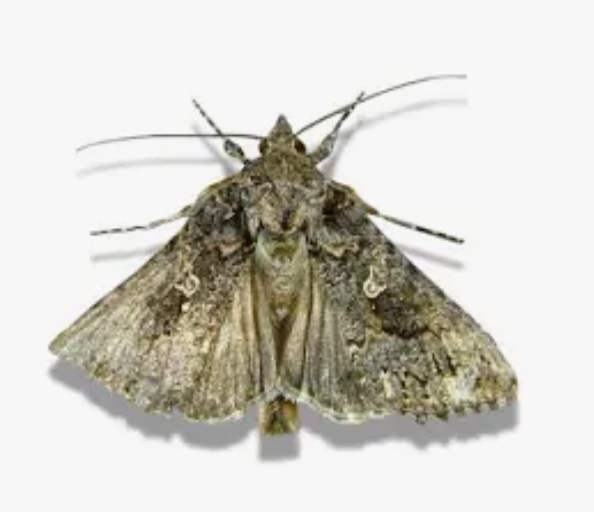
The cabbage looper is a medium-sized moth commonly called owlet moth, and it is known for its distinctive looping movement as a caterpillar. So, the caterpillar is commonly called a cabbage looper, and the adult cabbage loopers are called owlet moths.

A picture of owlet moth from webpage, russellipm.com

You may visit YouTube to see Looper. 🐛

Why it is used for protein expression and how the technology has been developed:

Trichoplusia ni (cabbage looper) is used for protein expression due to its ability to produce recombinant proteins at high levels and with good quality, particularly for SECRETED proteins. Its insect cell lines, such as Tni-FNL, have demonstrated superior protein production compared to other winged insect (lepidopteran) cell lines of Spodoptera frugiperda (fall armyworm moth). Furthermore, some Trichoplusia ni cell lines (Tni-FNL) have shown improved growth rates and the ability to grow at lower temperatures. 

Who developed:

The High Five (BTI-Tn-5B1-4) cell line, derived from the cabbage looper (Trichoplusia ni) eggs, was first developed by the Boyce Thompson Institute for Plant Research in 1970. Another Trichoplusia ni cell line, Tni-FNL, was developed by researchers at the National Cancer Institute in 2018.

What we think about protein expression:

Protein yield, Scale-up, Toxicity, Post-translational modification, growth characteristics, how could be advanced further…..

Further reading materials and original references:

What is life?

by Moon family May 11, 2025

On the way home from school, Grace and I discussed what life is. First, Grace said, life needs WATER. Dried things have no life in there, and we discussed eating, pooping and peeing – METABOLISM. Life needs metabolism for ENERGY. 

The discussion has been continued, and today during the mother’s day dinner time, we added TEMPERATURE. Corpses have no body temperature she said. Finally, her dad, my hus added SPIRIT, and then,

What else? Grace tried to add OXYGEN, but we did not agree on it, because humans need OXYGEN, but not for all living things.  

On this question of “What is life”, I felt that it is very interesting. We could think of the simple question in the view of everything from tiny unicells such as bacteria to the bigger organisms like humans and even the universe. I thought about himan vital signs such as breathing and blood pressure as well.

Suddenly, i murmured the unscientific idea that all things have life because they have birth and extinction. 

We might continue thinking of what life is.

Pymol

There are molecules that we can not see with our naked eyes. Protein is one of them.

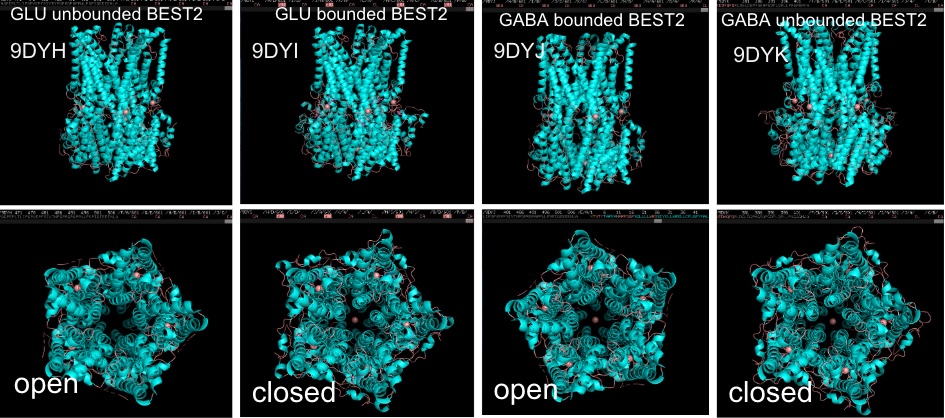
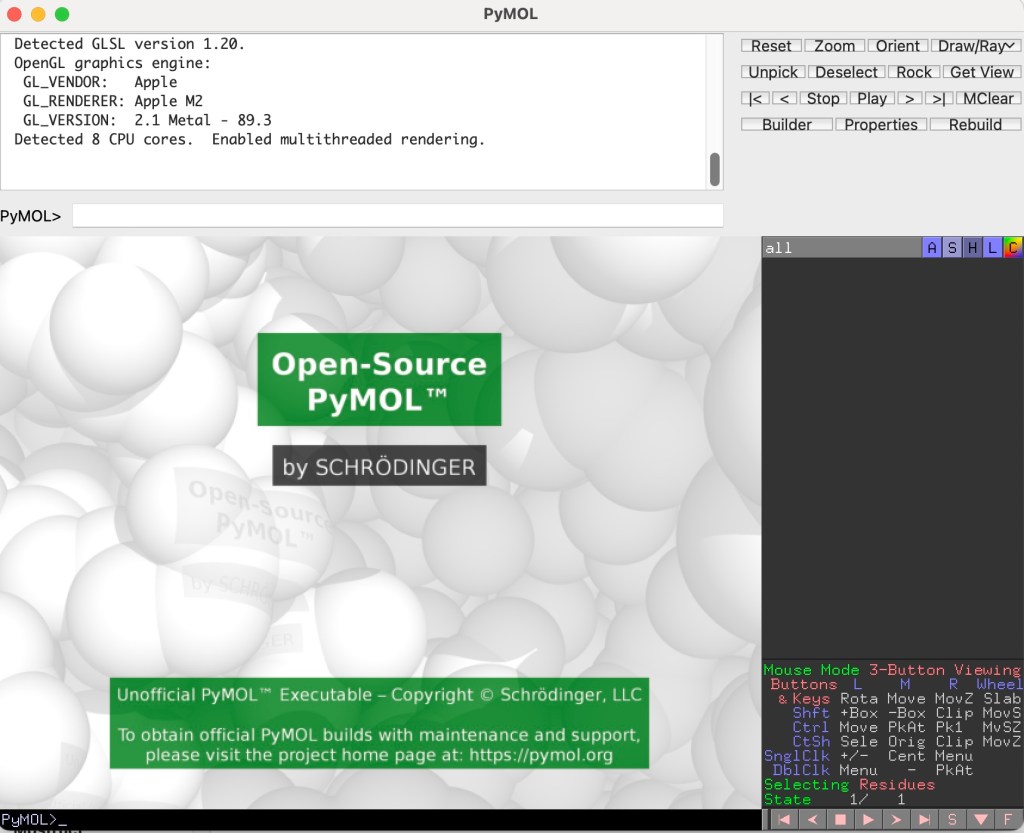
You may see some proteins using PyMOL on your computer.

You could install free PyMOL in your terminal using brew:

Brew install pymol

Now, to see any protein there, use fetch command:

fetch 9DYH

You could get PDBIDs and more information from here: RCSB.

This is another useful command to arrange all PDBs in order: alignto 

alignto PDBID (eg 9DW7), object=all_to_PDBID (eg 9DW7)

You could start learning about protein structure by digging more websites. 🤞

Sulfanilamide Disaster

Aug 29, 2024

Incident

More than 100 people after using a drug – Elixir Sulfanilamide, died.

Sulfanilamide, a drug used to treat streptococcal infections with dramatic curative effects, and safely used in tablet and powder form. In June 1937,  S.E. Massengill Co., in Bristol, Tenn., manufactured the drug in liquid form with diethylene glycol. No toxicity and pharmacological studies had been done on the new sulfanilamide preparation. Diethylene glycol (antifreeze) is a deadly poison.

On Oct 11, 1937, the American Medical Association (AMA) received incidental report from physician in Tulsa, Oklahoma, that an unfamiliar sulfanilamide compound was responsible for a number of deaths, and  AMA laboratory isolated diethylene glycol as the toxic ingredient and immediately issued a warning through newspapers, and radio that Exlixir Sulfanilamide was toxic.

Next year 1938, FDA set out to make sure all of the drug was retrieved. 239 FDA inspectors and chemists was assigned to the task, and state and local health officials joined the search, and newspapers and radio stations continued to issue warnings.

Chaos

In some drug stores, the elixir had been sold without prescriptions to purchasers whose names the druggiest did not know. In other cases, doctors had incomplete records, or none at all- of the names and address of patients for whom they had prescribed.  Even one East St. Louise woman told an inspector she had destroyed the drug. The inspector persisted in his questions how did she destroy. Her answer was that she had thrown the bottle out the window into an alley. The inspector found the bottle still unbroken, still containing enough elixir to kill any child.

A South Carolina doctor told an inspector that he had dispensed the medicine, but none had died, but the inspector found all his patients had died after taking the elixir. 

Of 240 gallons manufactured and distributed, 234 gallons and 1 pint was retried.

Victims

Many of them were kids, treated for sore throats. All exhibited similar characteristic of failed kidney, stoppage of urine, abdominal pain, nausea, vomitting, stupor, convulsions.  

However, the firm was not illegal, because in 1937, the law did not prohibit the sale of dangerous, untested, or poisonous dugs. Dr. Samual Evans Massengill, the firm’s owner said: My chemists and I deeply regret the fatal results, but there was no error in the manufacture of the product. We have been supplying a legitimate professional demand and not once could have foreseen the unlooked-for results. I do not feel that there was any responsibility on our part.” The Chief Chemist, Harold Watkins committed suicide after learning of the effects of his latest concoction.

1938 Federal Food, Drug and Cosmetic Act

FDA Commissioner Walter Campbell pressed for better federal regulation of drugs, and pointed out how the inadequacy of the law had contributed to the disaster. 

The Elixir disaster hastened enactment of the 1938 Federal Food, Drug, and Cosmetic Act. New Drug section, added to prevent such tragedies, gave the US a new system of drug control which provided superior protection and 25 years later, this Act saved the Nation from an even greater global drug tragedy— a thalidomide disaster 

In the 1938 Food, Drug, and Cosmetic Act, requires perform animal safety tests.


However, currently, that requirement, especially cosmetics is not mandatory, if the company provides an evidence of the safety

Reference: Carol Ballentine, FDA consumer magazine, June 1981 Issue

Plasmid extraction

Molecular work 01: Plasmid extraction:

For plasmids, gDNAs, RNAs etc extraction, nowadays, we use commercial kits. I do not know when we started using commercial kits, but in early 2000s, many laboratories still used non-commercial methods- lab made Sol I (lysozyme lysis buffer), II (Acid buffer) and III (Alkaline buffer), following Phenol, Chloroform, and Isopropanol clearance after extraction. The most successful companies for plasmid kits may be Quiagen and Macherey-Nagel. They have plasmid kids for Mini, Midi, Maxi, Giga, Endo toxin free! In my mind, MN yields were better than Quiagen, but Giga prep I have used only Qiagen kit, so I am not sure whether MN has Giga prep kits as well. Quiagen, Promega and MN are still the most successful companies I think. Quiagen’s market occupancy started before 2000 even in South Korea. Also someone who is old like me might know and used CsCl plasmid purification. What I learned first during my Master degree training, was plasmid purification using CsCl ultracentrifuge method. It was simple but took time. My Master degree mentor Dr. Seho Park preferred CsCl at that time. I do not know which method he likes currently.

A few years ago, I saw a biotech company where they work to make a plasmid isolation machine. I’m not quite sure whether they were successful. However, you may hear Thermo KingFisher Plasmid Pro that I never used on my hands. Also you may hear automated lab components provided from Molecular device. I am not sure how they are successful. Long time ago, we/some old generation like me still remember that even we manually moved PCR tubes from different temperature water baths to another for PCR reaction.

About the water

Last step is adding solution either TE (Tris EDTA) or water. I recommend that you have to keep in mind what you are doing, for the next steps, before adding either TE or water. Generally I recommend adding water for the next steps: Restriction enzyme treatment, in vitro (cell), and in vivo (animal) treatment etc. TE definitely is a good solution for storage, but if you keep your plasmid DNAs at -20 °C, they are really safe, not degrading. You also could aliquot them. Usually, if you use water, you could save/reduce amounts of restriction enzyme using small reaction volume. Endo toxin free molecular grade water is easy to purchase from Fisher.

GMP plasmids

Maybe some heard about GMP (Good manufacturing practice) plasmids. I just googled how many GMP plasmids supplying companies are globally. There are quite numbers of companies including Aldevron and Catalent.

Bioinformatics: Featurecount Install and more

Subhead-2.0.2

https://github.com/ShiLab-Bioinformatics/subread/releases

  1. wget https://github.com/ShiLab-Bioinformatics/subread/releases/download/2.0.2/subread-2.0.2-macOS-x86_64.tar.gz
  2. tar -xvf subread-2.0.2-macOS-x86_64.tar.gz
  3. mv -v subread-2.0.2-macOS-x86_64 apps/
  4. nano .zshrc
  5. add: Export PATH=$PATH:/Users/__/___/subread/bin
  6. get gif or make gif: https://useast.ensembl.org/Mus_musculus/Info/Index
  7. use eg) featureCounts -T 5 -a annotation-subread/mouse_ensembl/Mus_musculus.GRCm38.102.gtf  -o quants/KO_count_matrix.txt HISAT2/SRR2936859.bam HISAT2/SRR2936860.bam HISAT2/SRR2936861.bam HISAT2/SRR2936864.bam HISAT2/SRR2936865.bam
  8. Cat file | less
  9. Cat file | cut f1,7-10> new file (could rename of column in excel!!!)

reference:

https://rdrr.io/bioc/Rsubread/man/buildindex.html

https://github.com/ShiLab-Bioinformatics/subread/releases

Design a site like this with WordPress.com
Get started