Stories are shared when writers allow them to be shared here. Original short stories written in any language would be translated in English, and original and English translated writings will be shared together if the original one in the different language/non-English did not published otherwhere.
The languate translation in English is not always perfectly same with the original writing, but we do try to send author’s ideas properly. Before sharing here, we always check authors’ opinions about the translation.
However, if anybody has some different or better opinion about our translation, please let us hear!
If anybody wants to share your own original short stories and little notes, please send us as well.
Send email
A Christian Funeral, by Younghee Lee, Oct 30 2025
The first kingdom in Korea, Aug 24 2025
The oldest lyric poem Aug 08 2025
Hobbies should be purely for enjoyment, by Younghee Lee, July 2025
The Accidental Author or How Not To Write a Book, by Rocky Smolin, v.8.0 June 03 2025
How not to start a novel
I never intended to write a book. Ever.
By book here I’m talking novel – fiction. I do have three titles to my name – all technical computer- and software-related. One that sold really well, two that didn’t draw flies. Still, I suppose I am a writer. In addition to the tech books, I have written several hundreds of thousands of lines of computer code over a period of 40 years that no one will ever read. No Pulitzer or Nobel for that.
But if asked about writing a novel, I would say that I had a better chance of becoming Pope or playing for the Lakers. And being Jewish and 73 years old at the time I got sucked into this odyssey, that seemed a pretty safe assumption.
So here’s what happened. I was cycling with a friend up and down the coast in north San Diego County, and we were sharing stories about our lives. We hadn’t known each other for that long, so we still had stories to tell.
One of the stories I told my cycling friend was about an encounter with a witch that I had when I was in my early 20s – 21 if memory serves. I had known this woman for a few years – she was a compulsive meddler in other peoples’ lives, a self-identified artist (perhaps the worst artist in the history of Western civilization), and, among other things, my father’s mistress.
I had complained to this woman about a former girlfriend. I broke it off with her but the problem was that she hadn’t broken up with me. And that had become a bit of an annoyance.
At this point artist/meddler/mistress revealed herself as a practicing witch and asked me if I would like her to cast a spell to get rid of my ex. Well, I thought, what harm could it do? And being a child of the ‘60s I was ready to try pretty much anything having to do with spiritualism or the occult. At worst, it would be entertaining. So I said go ahead.
Artist/meddler/mistress/witch gathered up her spell-making paraphernalia – and after some incantations, candles, incense, etc., the spell was cast.
Now, after the “witch” cast that spell, the girl disappeared from my life as completely as if she’d never been born. Not a trace. Even today. No internet presence. Who’s alive today that won’t show up in a Google search?
Was it coincidence? Did the spell work? Would my therapist say that the spell give me permission to sever a relationship I had been unconsciously maintaining? Well, I don’t know. The witch told me that outcomes were the important thing and stop over-thinking (one of my self-confessed faults).
My cycling buddy was so impressed with the story that he told me I had to write it down. It’s family history, he said. You owe it to your descendants. You need to leave it as part of your legacy, for your family, and ya-da ya-da.
Yeah, yeah, OK, Martin. I’ll do that. I had absolutely no intention of doing anything of the sort.
But the seed was planted
Against my wishes, better judgment, nature, etc., the idea kept bouncing around in the back of my mind. Channeling Walter Mitty, I thought, “Could I turn this anecdote into a book? How would that work? How could I weave a whole story out of this incident? Short answer: I couldn’t. I didn’t know how to write a book – not fiction, anyway. I’d never written dialogue before. I didn’t know how the plot would go or who the characters would be – except for the witch, of course. So in short, I parked the whole thing in the dark attic of my mind and went about my business.
But the mind is a marvelous thing – one of the last great mysteries. And it has an unsettling tendency to do things we never anticipate.
So one day, I was standing at my computer (I work at a stand-up desk), when the following sentence came to mind, unbidden. I opened up a word doc and wrote:
“An old man sat alone on a park bench at Oak Street Beach looking out at Lake Michigan.”
I stared at the page, nonplussed. I didn’t have the name of my protagonist yet. But, OK, what about him? So I wrote:
“The small, brownish breakers made their quiet splash as they piled up against the seawall, blending with the soft hum of evening traffic on the Outer Drive behind him. Farther out, the oily gray-green swells rose and fell, the lake breathing slowly.”
A whole paragraph! So, I kept going. Who is this guy and why is he sitting there? (I had no idea.) But I continued to write; just a biographical sketch of this guy on the bench, adding details that would make a picture in my mind (isn’t that what real writers do – paint word pictures?). It became important because if I had pretensions of turning this paragraph into a book I had to find out who he was, what he was doing there, what was his raison d’etre (that’s French). At this point this was just a game. I was not a novelist, just a dilettante playing at novelizing.
I can’t remember exactly what happened after that, but I kept writing and, by and by, I had it! Chapter 1! There he was, Roger Coles (I had given him a name), meat on the bones, all ready to be sent on an adventure.
It was a very heady experience. I am too old to be coy about having taken drugs in my ill-spent youth, especially the psychedelic ones. This experience had a very reminiscent feeling. That’s as close as I can come to describing the euphoria. I had the feeling of standing on a precipice trying to decide whether to step off into space, or turn quietly back to my programming tasks.
So, I leaped. I was gonna turn this chapter into a book – a novel!
On plotters and pantsers
But first, gentle reader, a digression, if you’ll allow (try and stop me). Somewhere, I recalled reading that there are two kinds of writers: plotters and pantsers.
Plotters plan the book before they write. They do a plot outline, define the characters, identify the problem to be solved, and the solution, of course, the theme(s) of the book, motifs, etc., etc. Then they begin to write, knowing how the story begins, proceeds, and ends.
Pantsers just start writing, not knowing where the story will lead them. They “fly by the seat of their pants” so to speak. Comforting to know that I had a label even if I didn’t have the foggiest idea what I was about. I was a pantser.
Fiction versus nonfiction
They say writing fiction is easier than writing nonfiction. With nonfiction you are constrained by facts, by what is the truth (alright, I know what you’re thinking, but don’t go there). You have to do the research and present it in a clear, convincing style. When writing fiction you get to invent everything that goes into your story.
They also say writing nonfiction is easier than writing fiction. In nonfiction you just have to be absolutely sure of your facts, or someone will surely point out your error(s). When writing fiction, every word is made up by you: every character, scene, the dialogue, all the exposition… in short, you must invent everything that goes into your story by yourself.
But what next? I didn’t know.
So what do I do with this character? Where to go with this story? What happens next? I didn’t know. I ruminated. I temporized. I procrastinated.
Something I learned from programming: When you get stuck, turn to a different part of the project. I had been thinking about the problem of how to weave the incident with the witch into the story. And Chapter 1, I had to admit, wasn’t very exciting, consisting as it did of mostly creating the protagonist of the story, turning him from an idea into a person with history, with personality.
A Prologue! That’s it! I’ll start with a flashback, introduce the witch and her spell, and then fast forward to the man on the bench.
And since I had lived that spell-casting experience in real life, it would be easier to write. It wasn’t strictly autobiographical. The names had to be changed to protect the innocent. And the guilty. And the incident I was about to write would be a lot more interesting than the incident I had lived. I would like the fictional version better. And that would be my Prologue.
Done! Wonderful! Pathos and drama! Prologue and Chapter 1. This was getting good.
So on with the story! Except I still didn’t know where “on” was.
Write what you know
However, I did have a clue about how to proceed. It wasn’t a great clue, but I remembered reading somewhere, some time in the dim past, about writing, and it was this: Write about what you know.
Now, I know New Orleans, having been there a few times. So, okay, Roger (my protagonist), let’s have you emerging from the Gumbo Shop (my favorite eatery in the French Quarter of New Orleans), and then…what?
So I wrote:
“Roger left the Gumbo Shop and paused at the corner of Royal.”
So did I. And here’s one of those semi-magical moments that can only be accounted for by the unconscious mind because I surely was not in control of the process at this point.
I continued to write:
“He had intended to turn right on Royal and stroll down to Frenchmen Street, to hear some music. That had been his habit for almost every night of the three weeks he had been hanging out in the French Quarter. But now he felt a little tired of that routine, thinking that another night on Frenchmen would be pleasant, but predictable. Turn left, he thought. Maybe something different will happen.” (bold mine)
Wishful thinking? (Thinking of any kind?)
I didn’t know what would happen to Roger. I hoped that something different would happen because I had nothing in mind. And a story to write.
So I had him wander down Bourbon Street mimicking my wandering mind. And then:
“Tiring of Bourbon Street and the booze-fueled revelry with its overlay of desperation, he turned back to Royal. Reluctant to go back to his hotel this early, he started again for Frenchmen and the promise of better music. As he passed Le Gros Beignet Café, he thought he heard someone call his name. But that was unlikely. He didn’t know anyone in New Orleans.”
And walla! As he passed Le Gros Beignet Café something entirely unexpected did happen (to both of us). He was hailed by a woman he had known in college but hadn’t been in contact with for…decades? And then what?
Churchill once said: “When you’re going through hell, keep going.” So I thought, “When the writing gets hard, keep writing.” Flesh out this new character. Write some dialogue between…wait…dialogue? I had never written dialogue. OK, keep writing. Just write down the imaginary conversation between them. That seemed too easy. And it resulted for Roger and his new-found old friend (and me, too) a whole three-day adventure culminating in a visit to a witch (no spoilers).
How to get where you’re going
The internet is your friend. In particular, Google Earth Pro. When Roger emerged from the Gumbo Shop and wanted to go up to Frenchmen, I wasn’t entirely sure of the right way to go – the street names, the right turns, etc.
But using the street view of Google Earth Pro, I was able to fly right down to the street outside the Gumbo Shop and walk the streets verifying every turn. This is real Star Trek stuff, I thought. Formerly an author might have to go to New Orleans to get the verisimilitude (love that word) the writing needs. But I could go there virtually.
Of course you don’t get the sounds, the smells, the people in motion. But you do avoid having your hero make a left turn and end up in the river.
There were other locations I used in the story – some that I had been to, some not. But when I needed to see some place from street level, Google Earth Pro took me there. I went to plantations on the Old River Road outside of New Orleans, a small town in Burma, the Shwedagon Pagoda in Rangoon, and a Ducal Estate in Normandy. When I needed to find a cottage in Cape Cod for Roger that looked out over the sound, I went there with Google Earth Pro and found the cottage and the name of the street it was on. And I could then describe in the story what Roger saw when he looked out of the cottage’s kitchen window to Cape Cod Bay. In all these virtual visits I collected information that lent credibility to the story.
But wait…there’s more…
Google is your friend
I cannot count the number of times I went to the internet to answer a question or check some fact or get some data. I can imagine the great novelists of the ‘50s and ‘60s sitting in a library doing the research that would lend authenticity to their story. Or traveling to the location of their story for a few weeks to do the writing of that part of their story. No more. Google is your friend.
For example, when having to make up names for Burmese characters in my story, I Googled it and went down a fascinating rabbit hole about how the Burmese name themselves. Check it out.
When trying to find the exact right word to express the nuance I was looking for, I Googled the word plus “synonym” and got a list of synonyms which almost invariably had the exact word I was looking for. (You can also use that for finding antonyms.)
In short, for today’s writer, the internet is invaluable. The sum total of all our knowledge is there. You just have to ask and Presto! You are given the information you need.
By the way, I like Google but there’s nothing special about Google versus another search engine. Use the one you like.
The end
So, let’s cut to the chase. Eventually, I got to the end of the book. I’m not sure how I got there but I did have one inspiration – James Michener who was well known for the length of his books – Hawaii was 937 pages, 240,000 words (thank you, Google). When he was asked how he could write books of that prodigious length, he answered that to write you have to regard it as a job. Get up every day and go to work.
So I decided to treat it like a job and start writing every morning until I had completed at least one chapter.
It didn’t always work out that way. Some days I did a lot of research, so not many words that day. Some days it just flowed out (I’ll skip the graphic similes here). Some days, since I was a pantser and had no clear idea what would come next, I just pondered. But not idly. Creative pondering (I just made that up.).
Every day I worked. On my novel. Until the surprise ending. Yes, I was the first one to be surprised by the ending.
So at last I wrote “The End” – mentally.
What next?
I went back to page 1 and started reading. What have I got here? Aside from 73,000 words of perhaps dubious coherence. I was certain that it was not classic literature. But on the other hand, I didn’t think it was a literary turd. But halfway through the prologue I saw that some things needed changing. Or clarification. Or needed a metaphor to liven up the copy. Or the dialogue sounded stilted. Or…
Being a software developer by profession, it was obvious – Version 2.0! So I did the rewrite. And then another – 3.0. So it wasn’t really the end. Finishing the first draft of the manuscript was just another step along the road.
Beta testing
The next step was to get someone else to read it.
Lucky for me I am married to a freelance journalist. So she was my first beta tester. Old school, she insisted on editing hard copy. OK. In all things related to words, I deferred to her opinion. So I printed it out. And let her edit it. And then wrote Version 4.0.
But now I needed a focus group, a panel, a group of people I could impose on to read this oeuvre and feed back their comments. And this, my friends, was one of my better decisions. My focus group was about 12 people – real life and on-line – and all of them, if not eager to read, were at least compliant.
Writing any but the simplest story is similar to writing a computer program in the sense that all the pieces have to fit together properly, to flow in a logical way – what screenwriters call “continuity.” Events have to unfold in the order they occurred. A character that is left-handed has to be left-handed all the way through the story. A character introduced with brown eyes cannot have sparkling blue eyes later in the book. If the setting is in the 1960s you can’t refer to a digital watch. Or a cell phone. That’s anachronistic (great word, huh?).
One of my panel of “beta testers” wrote back about one of my characters, saying that the way the story reads, and the history of this character, she would be about 120 years old. Oh, right. Debug time. Not a difficult fix but necessary.
In addition to the details, you get feedback on lots of stuff. Did the story move along smartly or get bogged down in exposition and unnecessary detail? Did the plot have an unexplained twist? Were there loose ends that left the reader wondering? Stuff like that.
Which yielded Version 5.0. And Version 6.0 which was created from the feedback I received from a professional editor.
The Rest Is Detail
So now I had my book, right? Well, no, I had a manuscript. So how to move from manuscript to a book you can hold in your hand (or the e-reader of your choice)?
Getting the manuscript published is the goal. But finding a publisher or an agent who will flog your manuscript to a publisher is exceedingly difficult. Especially for the first-time (me) author.
A little research (thank you, Google) led me to…Amazon! You can upload your book for no cost. Amazon does the entire fulfillment and sends you a healthy percent of the money.
Amazon has revolutionized the publishing business, making it possible for writers like me to self-publish. But first you need to jump through a couple of hoops. They need it typeset in formats for printing and Kindle with front and back cover art.
Thanks to a friend, I got connected to a company in New York that took my manuscript and turned it into press-ready copy, with the right font and size for the reader, and a cool font for the chapter headings. They also sent me PDF, Kindle and Epub formats.
Thanks to another friend, I was sent to an artist in India through Fiverr who did a bang-up job of designing a cover.
Finally, a third friend (it’s not always what you know, but who you know, right?) helped me navigate the process of uploading my book to Amazon, and there it was on my own Amazon web page. Where it sold a few copies. Enough to qualify as “proof of concept.”
And, in due course, there’s that heady day when your author’s copies are delivered and you finally have your book in hand.
Now the problem is how to drive 40,000 people to the book’s web page on Amazon. In other words – marketing.
Or not. Perhaps this is the end of this particular adventure. I’m not a book marketer – don’t know where to start. But the model of plotters and pantsers goes as well, I think, for life as it does for writing fiction. In life, I am a pantser, so I have no idea what will come next. But I already have an idea for another book parked in a dark corner of my mind, waiting for that first magical sentence.
A final word
Are our thoughts and words important enough to memorialize? Or is it just a conceit that drives one to write?
Do you have a book in you? Or just a desire to write and, so far, don’t have the vaguest notion of how to go about it. Ruminate. But don’t ruminate forever. Write that first sentence when it comes to mind. Fill out the paragraph. Don’t be afraid. Let the book lead you where it will.
A famous aphorism, but mis-attributed to Thoreau is this: “Most men lead lives of quiet desperation.”
But that is only the first half of it. The whole quote is: “Most men lead lives of quiet desperation and go to the grave with the song still in them.”
It’s a mashup. The first half is Thoreau’s. But the second half is probably taken from Oliver Wendell Holmes: “Alas for those that never sing, / But die with all their music in them.”
Regardless of attribution, it is a powerful statement. And we should all, from time to time, ask ourselves:
Is there a song still in me that needs to be sung?
Breaking the Spell by Rocky Smolin is available on Amazon.

Cabbage looer | Owlet Moths | Trichoplusia ni, May 22 2025🐛
Today, I searched for Trichoplusia ni (cabbage looper) and the reason why it is used for protein expression.
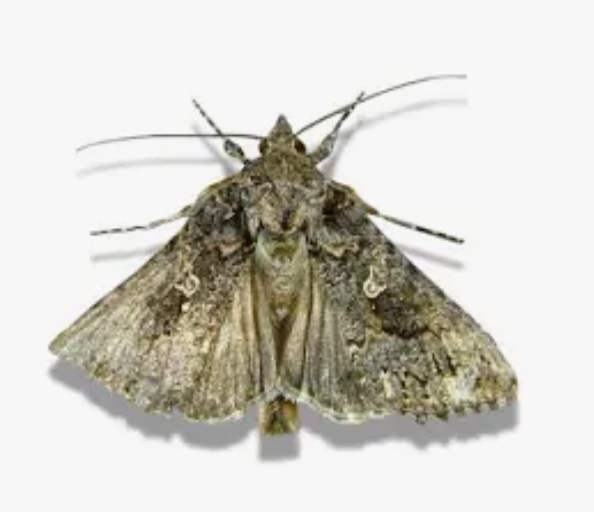
The cabbage looper is a medium-sized moth commonly called owlet moth, and it is known for its distinctive looping movement as a caterpillar. So, the caterpillar is commonly called a cabbage looper, and the adult cabbage loopers are called owlet moths.
A picture of owlet moth from webpage, russellipm.com
You may visit YouTube to see Looper. 🐛
Why it is used for protein expression and how the technology has been developed:
Trichoplusia ni (cabbage looper) is used for protein expression due to its ability to produce recombinant proteins at high levels and with good quality, particularly for SECRETED proteins. Its insect cell lines, such as Tni-FNL, have demonstrated superior protein production compared to other winged insect (lepidopteran) cell lines of Spodoptera frugiperda (fall armyworm moth). Furthermore, some Trichoplusia ni cell lines (Tni-FNL) have shown improved growth rates and the ability to grow at lower temperatures.
Who developed:
The High Five (BTI-Tn-5B1-4) cell line, derived from the cabbage looper (Trichoplusia ni) eggs, was first developed by the Boyce Thompson Institute for Plant Research in 1970. Another Trichoplusia ni cell line, Tni-FNL, was developed by researchers at the National Cancer Institute in 2018.
What we think about protein expression:
Protein yield, Scale-up, Toxicity, Post-translational modification, growth characteristics, how could be advanced further…..
Further reading materials and original references:
- W.F.HINK, 1970, Established Insect Cell Line from the Cabbage Looper, Trichoplusia ni
- Fengrui Zhang, 2008, A New Trichoplusia ni cell line for membrane protein expression using a baculovirus expression vector system
- Esposito Dominic, 2018, Tni-FNL: An Improved Trichoplusia Ni Cell Line for Protein Expression
Discovering ‘Myself’ on the Unknown Road to Machu Picchu, by Michell Cho 2024💕
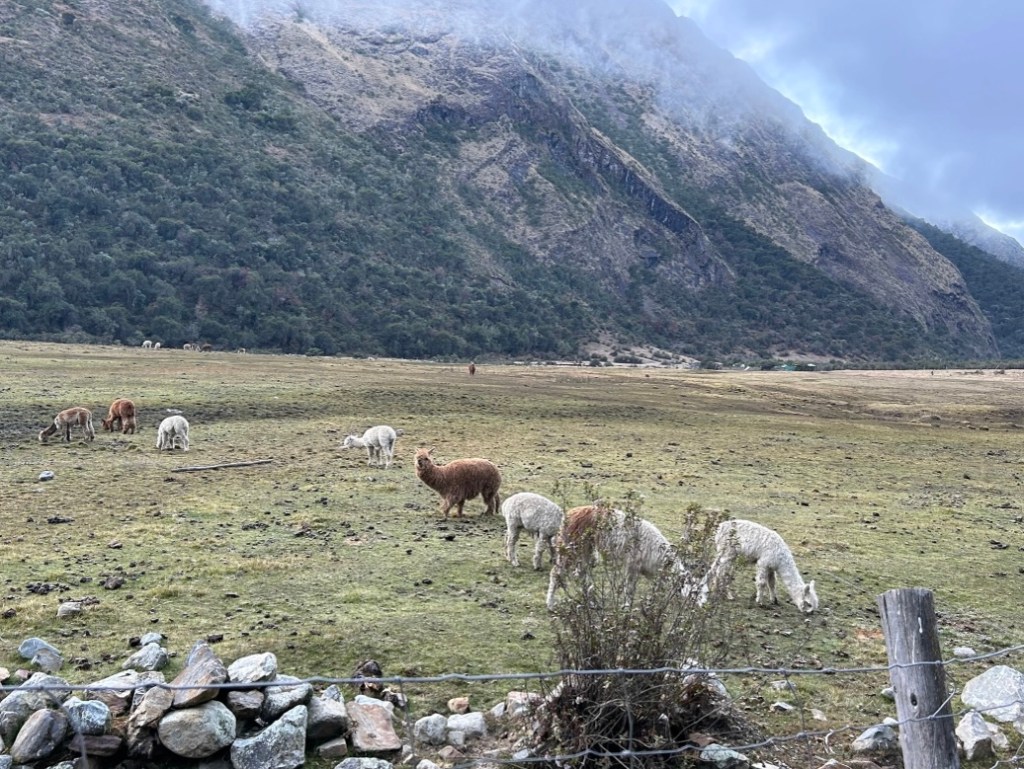
I finally took a long solo trip. It’s been a really long time since I’ve taken a long solo trip. It’s been 28 years since I went backpacking through Russia and Eastern Europe for four weeks in the summer of 1996. It was a time to look back on my life, which has been so busy running forward, and to reflect on what is truly important in my life. In 1996, when I was in my 20s, I traveled while intensely contemplating questions like —“Who am I?”, “What is the purpose of life?”, “How should a person live to live a meaningful life?”— about the cycle of human birth, aging, illness, and death, and joys and sorrows. Now this recent trip was a time to look back on the past 30 years of my life and make a new commitment to how I live more meaningfully in the next 30 years.
This June, my son graduated from college, and I wanted to treat myself to a vacation after working so hard. I wanted to go to a new place where I did not know anyone for a month or so, do whatever I wanted to do, and relax. While thinking about learning to surf during my vacation, I searched Google to find good surfing resorts in nearby South America and came across a city called Huanchaco in Peru. It was a beautiful small beach town famous for surfing, and it reminded me of a dream I had since my 20s of going to Machu Picchu in Peru, so I decided to make Machu Picchu my destination.
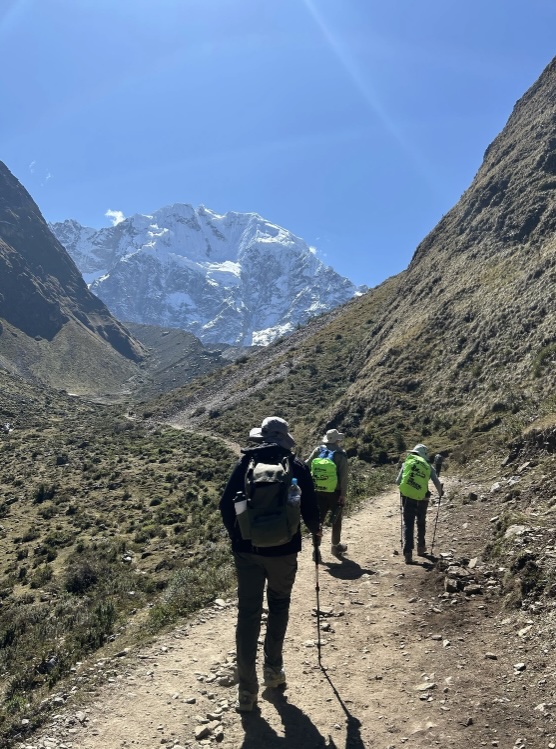
In early July, I arrived in Cusco, the ancient capital of the Inca civilization, and the five-day hike to Machu Picchu was a new challenge for me. I chose the difficult route of climbing Machu Picchu, instead of the convenient bus ride. The physical burden of climbing the steep mountain path was not easy because it was at high altitude. This trip was a journey that challenged the limits of my physical strength, with me struggling to catch my breath.
The first day of the hike was so hard that I thought about giving up, regretting why I even took on this challenge at the age of 50. When I arrived at the campsite at close to 7 pm after walking 22 km (14 miles) from dawn, I didn’t even want to eat dinner because of the pain from head to toe, and I was worried about how I would walk again the next day with this tired body. But strangely enough, when morning came, my body had recovered from a sound night’s sleep, and the pain was gone, and I felt a sense of accomplishment and confidence for having completed the hardest course of the 5-day itinerary.
At that moment, the thought suddenly crossed my mind that our lives are the same. We solve the difficult tasks that life throws at us one by one, and there may be days when we feel so hard that we want to give up, but if we live each day diligently, take on new challenges, and overcome difficulties, we gain a sense of accomplishment and confidence in life, and we find the meaning of life.
Life is a journey, and no one can avoid death. All living beings are born, grow, and mature, and when the time given to them ends, we all return to the embrace of the universe. The moment humans realize that the time given to us is not infinite, we begin to reflect on what is truly important in life.
We may have been living only in pursuit of material wealth and fame, forgetting the meaning of life and what is truly important to us. I looked back on the path I took while climbing the steep road of the mountain. The time of self-reflection in Peru, where I went into my own time and looked inside myself, was a valuable time that made my soul mature one step further. Confucius said that at the age of 50, one reaches a state of understanding the will of heaven. It is an age where one begins to accept life as it is, acknowledging one’s imperfections and embracing destiny. At this age, it’s ok to live authentically, just as I am.
Life is not a race, but a journey.
Hiking Machu Picchu has been on my bucket list for a long time. There are two hiking courses from Cusco to Machu Picchu, the capital of the Inca civilization: the Inca Trail and the Salkantay Trek. There is also a course that takes only two days by bus and train, but what I wanted to do was hike. The Inca Trail has a limited number of tourists per day, so I had to make a reservation at least 3 months in advance. This time, I decided to go on the Salkantay Trek, where I could enjoy more of the natural scenery. I booked a guided hiking tour with a company called Alpaca Tours and arrived in Cusco on July 2nd. I took a break and toured the city to get used to the highlands.
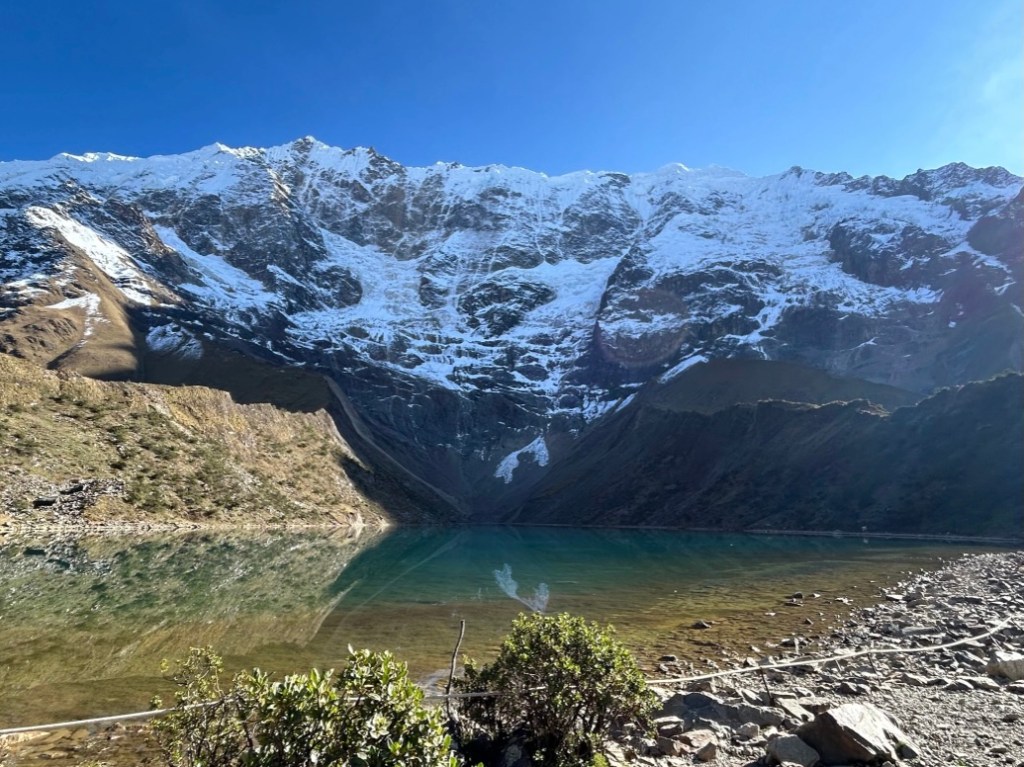
On July 4th, the first day of hiking, at 6 am, we started from the town of Soraypampa, located at 3900 meters above sea level, and climbed up and down to the 4200-meter Human Thai Lake for 2 hours, then walked up a steep trail to the Salkantay Pass, located at 4600 meters above sea level. It was a total course of 22 km (14 miles). The first day of this hike, with snow-covered icebergs in the background, was a day of challenging my physical strength due to low oxygen and steep mountain paths. As I climbed the mountain from dawn, I stopped every few minutes to catch my breath, and I felt like giving up, but I was determined to complete this challenge. Seeing me struggling, Americo, a tour guide, kept telling me, “It’s not a race. Go at your own pace.” Those words somehow encouraged and helped me to climb up one step at a time.
Just like mountain climbing, life is not a race but a journey. Everyone has their own path and journey. Don’t be discouraged or give up because you think you’re falling behind others. If there’s something you want to challenge yourself with, don’t be concerned about what others think or about your age, and try taking action. I remember a conversation with my friend Bill, who works in the same financial consulting field as me. One day, a client named J, who was 60 years old, came to him with a slightly worried face and asked if it would be financially possible for her to go to law school. She had been saving up her money well and managing it wisely, and when he calculated the scenarios and told her that it would be possible, J’s face brightened and she said, “But my son was against the idea and said this.” , “Mom, you’ll be 63 when you finish law school. Why do you want to do it now?”, So J said. “Son, even if I don’t go to law school, in 3 years I will be 63 years old. I want to be 63 years old while doing what I have been dreaming and wanting to do.” If there is something you want to do now but you are hesitating because of your age or the others’ opinions, what about dreaming again and making a plan? Whether it is a hobby or a new career, take the leap. When you challenge yourself with new things, overcome difficulties, and focus on today, you cultivate the garden of your body and mind, enriching your life.
Sulfanilamide Disaster (Summary), Aug 28 2024
Aug 28 2024
Aug 29, 2024
Incident
More than 100 people after using a drug – Elixir Sulfanilamide, died.
Sulfanilamide, a drug used to treat streptococcal infections with dramatic curative effects, and safely used in tablet and powder form. In June 1937, S.E. Massengill Co., in Bristol, Tenn., manufactured the drug in liquid form with diethylene glycol. No toxicity and pharmacological studies had been done on the new sulfanilamide preparation. Diethylene glycol (antifreeze) is a deadly poison.
On Oct 11, 1937, the American Medical Association (AMA) received incidental report from physician in Tulsa, Oklahoma, that an unfamiliar sulfanilamide compound was responsible for a number of deaths, and AMA laboratory isolated diethylene glycol as the toxic ingredient and immediately issued a warning through newspapers, and radio that Exlixir Sulfanilamide was toxic.
Next year 1938, FDA set out to make sure all of the drug was retrieved. 239 FDA inspectors and chemists was assigned to the task, and state and local health officials joined the search, and newspapers and radio stations continued to issue warnings.
Chaos
In some drug stores, the elixir had been sold without prescriptions to purchasers whose names the druggiest did not know. In other cases, doctors had incomplete records, or none at all- of the names and address of patients for whom they had prescribed. Even one East St. Louise woman told an inspector she had destroyed the drug. The inspector persisted in his questions how did she destroy. Her answer was that she had thrown the bottle out the window into an alley. The inspector found the bottle still unbroken, still containing enough elixir to kill any child.
A South Carolina doctor told an inspector that he had dispensed the medicine, but none had died, but the inspector found all his patients had died after taking the elixir.
Of 240 gallons manufactured and distributed, 234 gallons and 1 pint was retried.
Victims
Many of them were kids, treated for sore throats. All exhibited similar characteristic of failed kidney, stoppage of urine, abdominal pain, nausea, vomitting, stupor, convulsions.
However, the firm was not illegal, because in 1937, the law did not prohibit the sale of dangerous, untested, or poisonous dugs. Dr. Samual Evans Massengill, the firm’s owner said: My chemists and I deeply regret the fatal results, but there was no error in the manufacture of the product. We have been supplying a legitimate professional demand and not once could have foreseen the unlooked-for results. I do not feel that there was any responsibility on our part.” The Chief Chemist, Harold Watkins committed suicide after learning of the effects of his latest concoction.
1938 Federal Food, Drug and Cosmetic Act
FDA Commissioner Walter Campbell pressed for better federal regulation of drugs, and pointed out how the inadequacy of the law had contributed to the disaster.
The Elixir disaster hastened enactment of the 1938 Federal Food, Drug, and Cosmetic Act. New Drug section, added to prevent such tragedies, gave the US a new system of drug control which provided superior protection and 25 years later, this Act saved the Nation from an even greater global drug tragedy— a thalidomide disaster
In the 1938 Food, Drug, and Cosmetic Act, requires perform animal safety tests.
However, currently, that requirement, especially cosmetics is not mandatory, if the company provides an evidence of the safety
Reference: Carol Ballentine, FDA consumer magazine, June 1981 Issue
Lyric Analysis of “A Hard Rain’s A-Gonna Fall”, June 15 2024
June 15 2024, The original writing was written in my wonderful English class (EngL100) at MiraCosta college.
Prologue
I was a little hesitant about which texts to choose between Reflections of a 17-year-old by Sylvia Plath (excerpt from journal) and A Hard Rain’s Gonna Fall by Bob Dylan (song). Regardless of the warning not to choose A Hard Rain’s Gonna Fall if you do not have enough knowledge of music composition and terminology, I could not avoid choosing A Hard Rain’s A-Gonna Fall for my choice to analyze it when I listened to the music piece. I definitely heard the name of Bob Dylan, but I never knew the details about him, or heard any of his music pieces so far. However, I felt I knew his melody when I listened to it. The first feeling of the song A Hard Rain’s Gonna Fall was warning, gloomy, and even horrible. The music raised me the images of the animation, Princess Monnonoke. Princess Monnonoke is a 1997 Japanese film.
Introduction
Bob Dylan who composed a Hard Rains a-Gonna Fall is an American singer and songwriter. He is one of the best-selling musicians and a Nobel Prize winner in literature. His first debut album, The Freewheelin’ Bob Dylan (1963), was a big hit, and he (age 83) is still running a music festival tour (Wiki). The topic and motif of his rock and roll’s lyrics in his songs are understood as part of the Civil Rights Movement. A Hard Rain’s A-Gonna Fall was written in 1962 and recorded in 1963 (Wiki) when his age was 21 and 22. The themes of the song are series of images as arranged: dead forests and oceans (environment, pollution), orphanages, no people, no communication, a lost innocent and conscientious young generation, a destroyed blue-eyes’ world, no attention to others, individualism, hatred and a warning to escape or fight against these coming hard rains. However, these themes have values in all ages even of Noah’s time and even today. The year 1960s , when this song released, summarized as the most tumultuous and divisive decade in world history, marked by the civil rights movement, the Vietnam War and antiwar protests, countercultural movements, political and generation gaps, and the lyric of the song encapsulates the view of the times. The lyrics of the song are a part of his society, America and world young generation of 1960s as much as his personal growth development.
The lyrics of A Hard Rain’s A-Gonna Fall
1 Oh, where have you been, my blue-eyed son?
2 And where have you been, my darling young one?
3 I’ve stumbled on the side of twelve misty mountains,
4 I’ve walked and I’ve crawled on six crooked highways,
5 I’ve stepped in the middle of seven sad forests,
6 I’ve been out in front of a dozen dead oceans,
7 I’ve been ten thousand miles in the mouth of a graveyard.
8 And it’s a hard, it’s a hard, it’s a hard, it’s a hard rain’s a-gonna fall.
9 Oh, what did you see, my blue eyed son?
10 Oh, what did you see, my darling young one?
11 I saw a new born baby with wild wolves all around it,
12 I saw a highway of diamonds with nobody on it,
13 I saw a black branch with blood that kept dripping,
14 I saw a room full of men with their hammers a-bleeding,
15 I saw a white ladder all covered with water,
16 I saw ten thousand talkers whose tongues were all broken,
17 I saw guns and sharp swords in the hands of young children.
18 And it’s a hard, it’s a hard, it’s a hard, it’s a hard rain’s a-gonna fall.
19 And what did you hear, my blue eyed son?
20 And what did you hear, my darling young one?
21 I heard the sound of a thunder, it roared out a warning,
22 Heard the roar of a wave that could drown the whole world,
23 Heard one hundred drummers whose hands were a-blazing,
24 Heard ten thousand whispering and nobody listening,
25 Heard one person starve, I heard many people laughing,
26 Heard the song of a poet who died in the gutter,
27 Heard the sound of a clown who cried in the alley,
28 And it’s a hard, it’s a hard, it’s a hard, it’s a hard rain’s a-gonna fall.
29 And who did you meet, my blue eyed son?
30 And who did you meet, my darling young one?
31 I met a young child beside a dead pony,
32 I met a white man, who walked a black dog,
33 I met a woman, whose body was burning,
34 I met a young girl; she gave me a rainbow,
35 I met one man, who was wounded in love,
36 I met another man, who was wounded with hatred.
37 And it’s a hard, it’s a hard, it’s a hard, it’s a hard rain’s a-gonna fall.
38 Oh, what’ll you do now, my blue eyed son?
39 Oh, what’ll you do now, my darling young one?
40 I’m going back out ‘fore the rain starts a-falling,
41 I’ll walk to the depth of the deepest black forest,
42 Where the people are many and their hands are all empty,
43 Where the pellets of poison are flooding their waters,
44 Where the home in the valley meets the damp dirty prison,
45 Where the executioner’s face is always well hidden,
46 Where hunger is ugly, where souls are forgotten,
47 Where black is the color, where none is the number,
48 And I’ll tell it and think it and speak it and breath it,
49 Then I’ll stand on the ocean until I start sinking,
50 But I’ll know my song well before I start singing,
51 And it’s a hard, it’s a hard, it’s a hard, it’s a hard rain’s a-gonna fall.
The subject of this song, who is, was, or will be responsible for or in charge of this gloomy and unsatisfied world, is “blue-eyed son”. Blue-eyed son means the American White young healthy generation or Bob Dylon himself. This song is asking for the current or future responsibility of the blue-eyed son to avoid or fight against the coming hard rains. Hard rains are catastrophe like the Great Flood, a kind of God’s punishment
Let’s move and see the repeated below lyrics in this song. The current chaotic world was caused by the absence of the blue-eyed son (young, healthy white responsible generation) or his darling young generation, and this song is asking them/blue-eyed son/daring young generation to see the current political chaos, hatred, industrialization, and deprived environment, and this song is again asking or even encouraging the young generation’s proper or right action to escape the bigger catastrophe.
Oh, where have you been, my blue-eyed son?
Oh, where have you been, my darling young one?
Oh, what did you see, my blue-eyed son?
Oh, what did you see, my darling young one?
And what did you hear, my blue-eyed son?
And what did you hear, my darling young one?
Oh, who did you meet, my blue-eyed son?
Who did you meet, my darling young one?
Oh, what’ll you do now, my blue-eyed son?
Oh, what’ll you do now, my darling young one?
Let’s check another repetition of phrases after different part of lyrics below. This is Emphasis and Soliloquy of this poem. The expression in this short-repeated phrases, has Symbolism, Tone, Mood, Satire, Imagery and Colloquialism in techniques.
And it’s a hard, and it’s a hard, it’s a hard, and it’s a hard
And it’s a hard rain’s a-gonna fall
In the phrase, it’s hard is repeated again, emphasizing that the coming rain is greatly hard and destroying. A hard rain is like the Great rain that sins the whole world.
Let’s move on the other parts of the lyrics. The other parts have Irony, Metonym and Synecdoche as well as techniques of Soliloquy, Symbolism, Tone, Mood, Satire, Imagery and Colloquialism. The first part (lines 3-7 indicated above) of the song describes a sad and deadly world: twelve misty mountains, six crooked highways, seven sad forests, dozen dead oceans, and ten thousand miles in the mouth of a graveyard. What numbers (12, 6 and 7) means? Bob Dylan surely has the exact meaning of the numbers although others are not easy to know. The number 12 is our world of mountains and oceans that are misty and dead. The number 6 is men-made roads that are crooked. The number 7 is the forest that is sad. What 7 forests mean exactly. 7 continents or 7 kings. 7 seems be somehow 7 authorities located or connected between crooked highways (men) and mountains and oceans (world). The second part (lines 11-17) describes: new bone baby, new young generation is around wild wolves, describing “threatened by the old generation, notion, environment, politics etc”. The wild wolves might mean the old generation, notion, environmental deprivation, political injustice. There is another highway of diamond, where nobody is, and while latter maybe from the dead ocean, but covered. Dead forest continues described as blood dripping branches that men made. The men want to talk but the talkers could not talk because they do not have tongues. Young children have guns and swords, marching toward graveyards. Words of diamonds, hammers-a-bleeding, white ladder, tongues, guns, sword, hands, young children are Symbolism and Synecdoche. The most of these words transfer horrible mood but diamonds and white ladder are hints of hopes that this destroying world has inside, even although they are invisible and covered. The third part (lines 21-27) of the song is a kind of warning, but nobody could listen to or notice the warning, because they could not even hear others near them. Poets died and clowns cried. Many people laughing and one person starves. The fourth part (lines 31-36) described broken hearted individuals: young child with dead pony, white man with black dog, burning women. They are all like ghosts and wounded. but there is still hope described as a rainbow that a young girl has. The last part (lines 40-50) is resolution and shouting, even losing the war to fight against hard rains. This is a declaration against the older or existent generation or even himself, or he is still outside the his life and real world, showing his resolution that Bob Dylon wants to walk into dark black forest, even he wants to go deep into the black darkness with his free will or warm heart, but he wishes he would go back out of the forest before the rain. Let’s see the bellowed lyrics. The lyrics is beautiful sounding of soul full of resolution and confidence.
And I’ll tell it and think it and speak it and breathe it
And reflect it from the mountain so all souls can see it
Then I’ll stand on the ocean until I start sinkin’
But I’ll know my song well before I start singin’
In summary, this is a sad song of accusation, warning, and declaration, but it calls for the hope of a rainbow. This lyrics is sad but not weak, and sounds strong and full of confidence, showing resolution against the world around him.
Prologue:
In the end, I would like to introduce Korean songs from the 1970s that similarly have accusations, warnings and declarations for resistance against the old or existent generation: Yeog by Yangbyeongjib, Haengbog-ui nalalo/ To the Land of Happiness
by Handaesu ((lyric is different, but sounding is similar to the song A Hard Rain’s A Gonna Fall), more songs by Minki Kim (who is recognized as a Korean Bob Dylan), and Taechun Jeong. All of these songs are beautiful, and evoke lingering emotions from our hearts and ask for a kind of justice and community happiness, although the melody is simple and repetitive. Furthermore, these songs represent a kind of young generation, development or growth from kids to the adults, start seeing or realizing the imperfect world around themselves.
Reference
Wiki, https://en.wikipedia.org/wiki/Bob_Dylan
https://www.history.com/topics/1960s
Religion Education requirement in the USA, July 11 2024
written July 11 2024, The original writing was written in my wonderful English class at MiraCosta college.
Religious education requirement in the USA and current situation of Disney films as an instrument of intercultural moral and spiritual education
SooYoung Kim
This essay is personal opinion and not based on research and expertise views.
America is one of the countries that empathize cultural and individual diversities, However, America is a Christian country, so America has a kind of paradoxical situation between religious uniformity and cultural diversity. Paradoxically, there is no religious diversity in the USA, with a percentage of over 58% Christianity although the immigrants are from all other different countries. The cultural and sociological systems do not support any religious activities, and school system has no religion education. According to the first Amendment to the United States Constitution, freedom of religion is guaranteed, and the school system is separated from any religion education and practices. It is believed or considered that religion is a personal one and should be taken from family. There are many immigrants from all over the world coming to the USA. When they step into the USA, they easily adapt to the USA religious uniformity and start attending Christian Church, maybe due to the convenience of easy-to-find Christian churches, and obtain support from them or teach any kind of religion to their next generation easily, not insisting on the old religion practice. Thus, despite of the diverse immigrants the USA is still a region of uniform Christianity.
There is a kind of opposite society where there are almost no immigrants, but quite a diverse and dynamic religion mixture. Korea has passed Shamanism over 4,000 years and Buddhism over 2,500 years, and the Last Kingdom Joseon dynasty was established with Confucianism as a moral system. During the late Joseon dynasty, Christianity was imported to Korea, and currently Christianity has become a dominant religion type in South Korea. But South Korea sociology allows religious internal, social, cultural, inter-family diversity and freedom, and they are tolerating to any religion. However, Christianity in South Korea might be different from any other countries because Christianity in South Korea could be a mixture with other religion backgrounds, such as Buddhism and a moral system, Confucianism. It is meant that religion is not separated from society and any religions keeps changing with peoples. Furthermore, there are similarity between Christianity and traditional morality of Korea: Men lead families, wives serve husband’s leadership, and kids obey to their parents. The similarity is one reason that peoples was easy to change their religions.
There are crisis and big problems in the current USA educational system, because the most families in the USA do not transfer any religious practice to their next generation, losing their function, and the next generation could not have any religious experiences. Most children do not adhere to any specific religious beliefs that are exemplified by their parents. Religious practices and learning are part of moral education and the deepest roots of harmony with oneself and others. Many Asian countries have moral classes, and the UK included religion education in the 1988 Education Reform Act to reflect the multiculturalist policy. It has taught big six religions-Christianity, Judaism, Islam, Hinduism, Sikhism and Buddhism- but is currently expanding to teach more diverse world religions, and at the same time non-religion, and other moral philosophies that are sociological structure (Shaw). Some countries are more easily accessible to different religious services with friends, and even kid alone, but in the USA, if parents reject attending any religious community, the children are very unlikely to be exposed to any religious system. The educational system does not need to teach religious practice and faith but could teach religious core and historical and broad common views of religion, nurture moral and spiritual sense, and promote religious diversity as well as cultural diversity. There are some comments from UK pupil and teachers for the need of religion education (Shaw).
“We live in a country with loads of different religions and I think we should learn about each different one, so if you do come across them, you know what they’re on about, and you know who they are” (Pupil)
“Obviously you cannot look at them all, but I think it’s important to look at how people have beliefs but they may not be within a formal religion” (Parent)
“I think they (non-religious worldviews) are just as important to learn as like Christianity because it’s still a form of belief” (Pupil)
“I’d want them [pupil] to think more broadly about what we class as religion too. There are people that dance round Stonebenge naked because the sun’s up. Does that fall under the remit? Definitely it does of spirituality.” (Teacher)
“I think religion lives and breathes, it’s the same with language, it’s eternally changing. We should teach it as that” (Teacher)
“We need to learn about how religion mixes into politics” (Pupil)
The above article shows the learners’ desire for learning about a broader range of religions and an understanding of religion, belief, and interrelationship with society. This is UK schools’ example, but it would be not quite different in other countries. Even atheists would want to learn about more religion. Even If there is a desire to know all kinds of religion, it is not easy for one person to learn and understand even one kind of religion. Thus is another reason for us to give religion education in the school system. According to the National Education Statistics (NCESa), in 2020, 30,492 schools among the total 98,577 elementary and secondary schools in the US is private. Around 75% of the total private schools are religious (NCESb). When it is considered that 10% (5 million) in total, 50 million students attend private elementary and secondary private schools (NCESc), around 4 million students attend private elementary and secondary religious school. Among them, 1.8 million students are attending Catholic schools (NCESb). Although private schools educate religious practices, they are providing one kind of religion and the practices, not general and philosophical religious education. There are core similarities among religions and differences that have aroused wars and even current. As global citizens, the next generation need to be prepared for global diversity including religion.
In the USA, Disney film play a role to teach religion core, spirituality and engaging kids to learn morality. Kids have natural empathy, imagination, and natural animisms to give life to non-alive items (Wonderly). The kids’ spirituality might be something important located before any religion system, and Disney is teaching such spirituality via kids’ animation. The first generation of Disney animation, such as Snow White, Cinderella, and Sleeping Beauty, does not, but Disney animation started to adapt or generate the USA or global common shared spiritual mindsets regardless that they have different religions and no religion at all. See Disney animation of Mulan (2020), Pocahontas (1995, 1008), Ariel of The Little Mermaid (1989, 2023), Beauty and beast (1991, 2014), Moana (2016, 2024), Frozen (2013, 2019), Raya and the last dragon (2021), Elements (2023) and If (2024). All these movies give absolute value and justice that might be valid in all times and places. Among them, Frozen and Elements exhibit more degrees of religious attitudes than others. These two animations arouse our religious nature and instincts. In the movie Frozen (2023), Shamanism, totemism, and the Greek elements of water, air, fire and earth appear. Elsa becomes a kind of spirit God who communicates with all elements in nature, and even with the human world via Anna. Elsa is like an ancient Shaman. The phrase or song that water has memory reminds me of a tint of Asian religion, circulation, and reincarnation in Buddhism. However, water has another meaning such as cleaning and rebirth in Christianism. In this film, Frozen II, Elsa should go back to the water origin, Ahtohallan through rough river waves, that might mean her rebirth, upgrading, or the process of becoming a God. In the Raya and the last dragon, the meaning of dragon, 龍 or Yong could be first considered. In ancient Asia, a blue dragon was an animal spirit that protects the East and meant bravery, wisdom, and strong will that changed positively. A dragon who has Yeouiju (a kind of marble or cindamani in Buddhism) can go to heaven. Here in Buddhism, a dragon could mean a person, and Yeouiju means enlightenment, such as “Om”,”and go to heaven means leave out of reincarnation. Really dragons are a kind of worriors who protect Buddhas in temple pictures, and Yeouiju is a marble that grants any wishes. Dragons are like really protectors of people in an unified Kumandra. When Kumandra divided, dragons disappeared. Here, bad spirits called dron might be any kinds of bad thoughts and behaviors that break humane. A broken jewel in this film is like Yeouiju. When Raya and her friends return Yeouijiu, wishes are granted, and the dragon world is recovered. The way to return the broken Yeouiju was a realization about faith in humans, returning humanity, which is like “Om”. Thus, Frozen II has more tints of Christianism, characterized by the fact that unification comes true via Elsa’s sacrifice like Christ regain the world vis his sacrifice, and Raya and the Last Dragon has more tints of Buddhism, characterized by the fact that unification comes true via knowledge and enlightenment such as Om. Although Disney provides common spiritual moral learning and film is a great tool for an educational tool (Wonderly), it has limitation and could not teach exact meaning and could be mis-conceptualized, The films could give unconscious learning positively, but that kind of learning will be disappeared deep without the proper notice and realization. it might be the proper time that the school system in the USA provides religion diversity education, global religion view, and political understanding of religion as well as core religious spirituality.
Reference
Shaw, Martha, “New Representations of Religion and Belief in Schools”, Religions 2018, 9, 364, https://doi.org/10.3390/rel9110364
Wonderly, Monique, “Children’s Film as an Instrument of Moral Education”, Journal of Moral Education, 2009, 38, 1, 1-15
NCES(a), National Center for Education Statistics, Digest of Education statistics, All years of Tables and Figures, https://nces.ed.gov/programs/digest/d22/tables/dt22_105.50.asp
NCES(b), National Center for Education Statistics, Digest of Education statistics, All years of Tables and Figures, https://nces.ed.gov/programs/digest/d23/tables/dt23_205.20.asp
NCES(c), National Center for Education Statistics, Digest of Education statistics, All years of Tables and Figures, https://nces.ed.gov/programs/digest/d23/tables/dt23_205.10.asp?current=yes
Oasis, June 22, 2024
written June 22, 2024
I enrolled in one English Class at MiraCosta College, California, in the USA, for the first time in my life. My teachers’ name is Donna Fazio DiBenedetto. I just had 2 units, but I feel already, I am learning quite a good quality of English reading and writing class. Last week, we read “In Los Angeles, a Garden Oasis.” Written by Stella Kalinina, and we wrote our essays.
“In Los Angeles, a Garden Oasis is “a physical and spiritual recovery zone, a cooperative and multi-cultural zone, and the Garden Oasis connects humans to humans, community, generations, and nature.” While reading, I think hard about where my comfort zone and my soul nourishment oasis are. Here California has community gardens all around, and when we visit the library, we can easily get the information. The below is my assay which I wrote for the class but a little bit modified for my blog.
So far, my physical and spiritual recovery and conforming zone is in my hometown, where I grew up. To say more specifically, my oasis is my mother’s food, my parents’ garden, and their support. When I need help, I visit them, and I recover physically and spiritually.
I grew up in a small city named Chuncheon in South Korea. Chuncheon has rivers, ponds, and mountains all around. My parents have a large garden that has fine trees, flowers, and fruit trees. Almost all the trees are older than me because my dad planted most of them with his dad, my grandfather. I had a rabbit, chickens, and dogs when I was young in the garden. My parents sometimes planted peppers, eggplants, lettuces, and peas. Among my three siblings, I was the best garden lover and helped to remove weeds and shape trees. The garden had chives as well, so I could eat chive pancakes at any time.
To study after high school, I moved to Seoul, the biggest city in South Korea where my college was located, and I lived around Korea University from 1994 to 2010, before I came to the USA. I am just realizing that I have not stayed at any one place for over 20 years so far. If I live a long time in one place, my comfort zone might change, but at this moment, my comfort zone is still my hometown. When I had to stop studying at college due to tuberculosis sickness, I returned to Chuncheon. One thing that I enjoyed was harvesting peas and removing weeds while listening to music in the garden. At that time, I liked a song of Squre’s Dream. Another thing I enjoyed was walking outside and riding buses without destinations. When I had my second baby in the USA, I missed my hometown, flowers, and mountains. I missed even the color of the sky that I saw in Korea. Korea has its own plants and flowers such as Jindallae (Korean rosebay), Gaenali (forsythia), and Cosmos (kosmea), and a clean blue sky in autumn like here in California. California has the same type of Cosmos flowers as those found in Korea, but it was hard for me to see Cosmos flowers when I lived in Maryland, Eastern USA. When I heard a music piece named Spring in My Hometown, Gohyang-uibom, I was gloomy, sad and teary. My husband and I wanted to save money and did not often visit Korea. Actually, we had not visited Korea for 7 years straight. When I quit working my second job in the USA, I finally visited Korea with my two daughters, and I regretted that I should have visited my parents more often. None of us can catch or stop time. Our parents will not wait for us forever if we do not visit them. During the COVID pandemics from 2020 to 2021, I stayed in Korea with my second daughter, helping my parents, while still working for a living for my family and them, which was hard but gave me infinite strength. After COVID, my family moved to California from Maryland because my husband and I had new jobs here. However, a job at a small biotech company was not stable, and when the company closed my center, I lost my job. This time, I do not feel weak, but I feel that I have to visit my hometown and see my parents, and others.
Now, I know my physical and spiritual Oasis is still my parents, my old home where I grew up, but somehow, I feel I started having another Oasis here in California. I dream of staying at one place, in California for a long time, and feel that my family is another of my Oasis.
Korea Movie: Festival (축제), 1996 directed by Im, Kwon-Taek, May2 2024
Full movie: click here
Today, I hope to mention cultural differences in death in Korea and the US. I do not say there are differences between Asia and Western because I do not want to generalize too much, and I do not know about any other countries.
There were several differences between funerals in Korea when I was young and Western funerals, but currently, many Koreans have started following the Western style and/or mixed form of them.
To understand funerals and deaths in Korea,
Maybe we should mention the Korean word, 돌아가다 (Die), our Korean word of 돌아가다 (Die) means also “Return”.
So Dying is Returning to original home place, and usually, funeral is a bigger festival than any other souvenir days such as birth and wedding.
In the movie, you could see white Korean dress and a white ribbon hair pin, which relatives and related people wear when someone dies.
Whereas the Westerners wear black.
And the person who died, wore hemp clothes. Hemp is one of the best clothes that returns to the dust and returns to nature.
Sometimes, the elderly and seniors in Korea prepare their own hemp before dying.
Also, direct children, usually men, also wear hemp clothes.
Also, you should understand the splendid, and even gorgeous carrier called 상여 (Sang-yeo) used to move died person from the funeral festival place to the grave site called 장지 (Jangi).

Sangyeo at Chuncheon National Museum
20-30 years ago, when I was a kid, there were a kind of 49, 100 or 150 times praying /ancestral rites to wish that person who died, go to a good place. In that case, every week, relatives gather at some place usually a temple, where sometimes, a monk danced to make a wish to return well together.
I/my generation may be the last generation to see and attend this Korean culture.
Please visit the link if you want to see a monk dancing called Seungmu.
Near Death
Long ago, in the 1980s, when we visited community pediatric centers, the first thing for a nurse to do was to put a thermometer under armpit (axillary). Also, sometimes, nurses measured my body temperature from under my tongue. I do not know exactly when we started using forehead scanners at home, but when my first daughter was born, I obtained a scanner type thermometer, and we are still using it. In Korea, we use the measure unit °C, instead of °F in the USA. The average normal body temperature is 36 °C. When the temporal forehead scanner indicates over 38 °C, I use acetaminophen (Tylenol) and ibuprofen (usually Motrin) at over 8-hour intervals. My family members respond well to Tylenol, but we use two different medicines alternately because the liver might need more time to recover. I also like watery handkerchiefs and cooling sheets (hydrogel patches, easy to get in Korea) for my kids.
Maybe you know that a high fever could damage our organs. Maybe you hear that someone becomes deaf after a high fever, or even death. One of my friends lost his voice with fever. I had been sick with high fevers (over 38 °C) when I was in the first grade of elementary school, maybe for a whole winter break. I recovered a week (or three days) before the second grade started from my deadly fever. What I remember now is that I was hospitalized for one month. I used a very big personal room with two beds. I used one bed and another bed, which mom usually occupied. I got a lot of presents from relatives and friends. I had IV injections all the time that they called Ringel. I do not know exactly what Ringel is. I thought that IV was Ringel, but maybe not really. I just guess now that Ringer IV was just helping with anti-dehydration and/or anti-inflammation agents. I also sometimes got nutrient IV because I could not eat normal foods and I could not have normal bowel movement. Fever made me eat and poop like a baby or less than an infant. I liked Cerelac (baby food power) more than any other Korean Juk (porridge). Nurses really wanted to check my poops all the time. Fever really made me hard to poop. I remember poop was like rabbit poops, maybe due to dehydration. However, my memory is not bad. Maybe I was too young to know about death. I was too busy to think of death and sickness. I enjoyed my hospitalization because I had a lot of new toys and I met a friend (a daughter from the hospital owner or related persons??, maybe a doctor’s daughter, I guess). I do not know her well except that she was a similar aged girl, because I never met her again after my release. I even missed her and the hospital because I hoped to see her again. She showed me here and there – the complexity of hospital, a long hallway, shortcuts – and even led me to the hospital rooftop (the top of four-story building). She once took some fancy bandages and syringes, and we played doctor and patient. I do not know which diseases I had. I heard doctors did not know what I had.
One day, my fever seemed to be going up, because I heard that a nurse who visited me in the morning, yelled, “Alcohol pad, high fever.” Suddenly, all the nurses and doctors came to me, and mom and dad were there together. At the moment, I could not speak out, but when an alcohol pad (a very big and orange rubber bag, if my memory is right) rubbed me, I bad-mouthed in my thought, “Who said that nurses are White Angels, They are not good”. The alcohol pad was really freezing and a pain in itself to me.
Suddenly, I felt my room whirling to me like water in a funnel, and all sounds in my room overwhelmed me, and I saw a bright light (maybe my brain works something ??); light is not a single object, just the room was full with Brightness. and I heard me shouting a Buddha’s name, “Gwansembosal”. I do not know why I shouted. Actually, shouting was a shame to me, and I was surprised with my shouting, and they (doctors and nurses) were also surprised of my shouting “Gwansembosal”. Google translator is saying that “Gwansembosal” in Korean is “Avalokitesvara Bodhisattva”. In Korea, Gwansembosal is the best of the Buddhas that I heard from my grandma. I was a kid who loved Buddha Kid story books published by Buddha temples. After my shouting or seeing Light, like a lie, my fever had gone, and 3 days later, I was released from a hospital (the hospital name was Chunchon Jail Hospital). I thought that I was unLuck because I should return to school without any absence, because I was recovered just on time. I remember when I had the first shower at home, it was a big deal to whole family members. They were all concerned and checked the bath temperature and the air temperature. When I recovered, I missed my baby food, so I teased mom and got a new baby food can, but when I got them, it was not yummy any more, even yucky. So I know that our body knows what we need sometimes automatically based on our conditions. I heard that I was lucky because my high fever did not damage any part of my body and even my mind. This might be my first Near-Death story when I was in the first grade of elementary school.
 Life and Biology stories with Sooyoung and Others