An embolus is any foreign materials that move with blood flow. The material of an embolus may be: air, fat, blood clot and any others.
A thrombus is a blood clot.
Both can block blood flow and increase the risk of a hear attack, pulmonary embolism and/or stroke
Think!! (Q1) Why do blood clots form inside the vessels, and why do blood clots increase with aging?
Think!! (A1) When we have scars outside, a blood clot forms to protect and stop bleeding. If blood vessels have internal wounds, blood clots form as well to protect inside organs and vessels . After the wounds have healed, the blood clots are detached like outside scars, and blood clots move away as thrombus, and could block the vessels.
Think (Q2) Could we resolve formed blood clot scrubs inside blood vessels safely and slowly or increase attachment (never dropping forever)? Instead of inhibiting formation process of the blood clots which could be dangerous, causing non-stop bleeding.
Today, I hope to mention cultural differences in death in Korea and the US. I do not say there are differences between Asia and Western because I do not want to generalize too much, and I do not know about any other countries.
There were several differences between funerals in Korea when I was young and Western funerals, but currently, many Koreans have started following the Western style and/or mixed form of them.
To understand funerals and deaths in Korea,
Maybe we should mention the Korean word, 돌아가다 (Die), our Korean word of 돌아가다 (Die) means also “Return”.
So Dying is Returning to original home place, and usually, funeral is a bigger festival than any other souvenir days such as birth and wedding.
In the movie, you could see white Korean dress and a white ribbon hair pin, which relatives and related people wear when someone dies.
Whereas the Westerners wear black.
And the person who died, wore hemp clothes. Hemp is one of the best clothes that returns to the dust and returns to nature.
Sometimes, the elderly and seniors in Korea prepare their own hemp before dying.
Also, direct children, usually men, also wear hemp clothes.
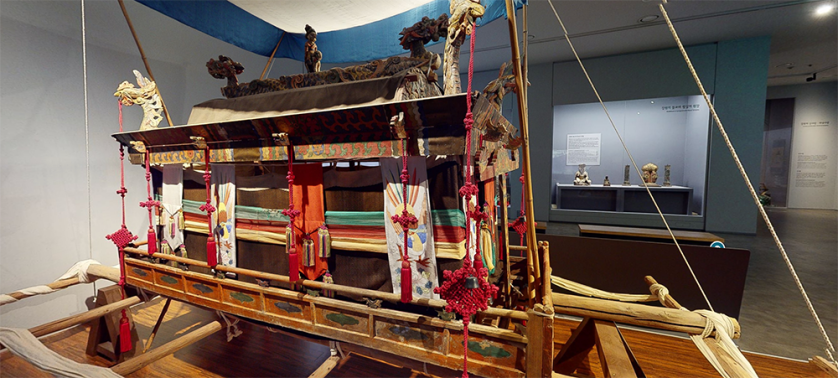
Also, you should understand the splendid, and even gorgeous carrier called 상여 (Sang-yeo) used to move died person from the funeral festival place to the grave site called 장지 (Jangi).
20-30 years ago, when I was a kid, there were a kind of 49, 100 or 150 times praying /ancestral rites to wish that person who died, go to a good place. In that case, every week, relatives gather at some place usually a temple, where sometimes, a monk danced to make a wish to return well together.
I/my generation may be the last generation to see and attend this Korean culture.
Please visit the link if you want to see a monk dancing called Seungmu.
 Life and Biology stories with Sooyoung and Others