Written by Rocky Smolin, v.8.0 June 03 2025
How not to start a novel
I never intended to write a book. Ever.
By book here I’m talking novel – fiction. I do have three titles to my name – all technical computer- and software-related. One that sold really well, two that didn’t draw flies. Still, I suppose I am a writer. In addition to the tech books, I have written several hundreds of thousands of lines of computer code over a period of 40 years that no one will ever read. No Pulitzer or Nobel for that.
But if asked about writing a novel, I would say that I had a better chance of becoming Pope or playing for the Lakers. And being Jewish and 73 years old at the time I got sucked into this odyssey, that seemed a pretty safe assumption.
So here’s what happened. I was cycling with a friend up and down the coast in north San Diego County, and we were sharing stories about our lives. We hadn’t known each other for that long, so we still had stories to tell.
One of the stories I told my cycling friend was about an encounter with a witch that I had when I was in my early 20s – 21 if memory serves. I had known this woman for a few years – she was a compulsive meddler in other peoples’ lives, a self-identified artist (perhaps the worst artist in the history of Western civilization), and, among other things, my father’s mistress.
I had complained to this woman about a former girlfriend. I broke it off with her but the problem was that she hadn’t broken up with me. And that had become a bit of an annoyance.
At this point artist/meddler/mistress revealed herself as a practicing witch and asked me if I would like her to cast a spell to get rid of my ex. Well, I thought, what harm could it do? And being a child of the ‘60s I was ready to try pretty much anything having to do with spiritualism or the occult. At worst, it would be entertaining. So I said go ahead.
Artist/meddler/mistress/witch gathered up her spell-making paraphernalia – and after some incantations, candles, incense, etc., the spell was cast.
Now, after the “witch” cast that spell, the girl disappeared from my life as completely as if she’d never been born. Not a trace. Even today. No internet presence. Who’s alive today that won’t show up in a Google search?
Was it coincidence? Did the spell work? Would my therapist say that the spell give me permission to sever a relationship I had been unconsciously maintaining? Well, I don’t know. The witch told me that outcomes were the important thing and stop over-thinking (one of my self-confessed faults).
My cycling buddy was so impressed with the story that he told me I had to write it down. It’s family history, he said. You owe it to your descendants. You need to leave it as part of your legacy, for your family, and ya-da ya-da.
Yeah, yeah, OK, Martin. I’ll do that. I had absolutely no intention of doing anything of the sort.
But the seed was planted
Against my wishes, better judgment, nature, etc., the idea kept bouncing around in the back of my mind. Channeling Walter Mitty, I thought, “Could I turn this anecdote into a book? How would that work? How could I weave a whole story out of this incident? Short answer: I couldn’t. I didn’t know how to write a book – not fiction, anyway. I’d never written dialogue before. I didn’t know how the plot would go or who the characters would be – except for the witch, of course. So in short, I parked the whole thing in the dark attic of my mind and went about my business.
But the mind is a marvelous thing – one of the last great mysteries. And it has an unsettling tendency to do things we never anticipate.
So one day, I was standing at my computer (I work at a stand-up desk), when the following sentence came to mind, unbidden. I opened up a word doc and wrote:
“An old man sat alone on a park bench at Oak Street Beach looking out at Lake Michigan.”
I stared at the page, nonplussed. I didn’t have the name of my protagonist yet. But, OK, what about him? So I wrote:
“The small, brownish breakers made their quiet splash as they piled up against the seawall, blending with the soft hum of evening traffic on the Outer Drive behind him. Farther out, the oily gray-green swells rose and fell, the lake breathing slowly.”
A whole paragraph! So, I kept going. Who is this guy and why is he sitting there? (I had no idea.) But I continued to write; just a biographical sketch of this guy on the bench, adding details that would make a picture in my mind (isn’t that what real writers do – paint word pictures?). It became important because if I had pretensions of turning this paragraph into a book I had to find out who he was, what he was doing there, what was his raison d’etre (that’s French). At this point this was just a game. I was not a novelist, just a dilettante playing at novelizing.
I can’t remember exactly what happened after that, but I kept writing and, by and by, I had it! Chapter 1! There he was, Roger Coles (I had given him a name), meat on the bones, all ready to be sent on an adventure.
It was a very heady experience. I am too old to be coy about having taken drugs in my ill-spent youth, especially the psychedelic ones. This experience had a very reminiscent feeling. That’s as close as I can come to describing the euphoria. I had the feeling of standing on a precipice trying to decide whether to step off into space, or turn quietly back to my programming tasks.
So, I leaped. I was gonna turn this chapter into a book – a novel!
On plotters and pantsers
But first, gentle reader, a digression, if you’ll allow (try and stop me). Somewhere, I recalled reading that there are two kinds of writers: plotters and pantsers.
Plotters plan the book before they write. They do a plot outline, define the characters, identify the problem to be solved, and the solution, of course, the theme(s) of the book, motifs, etc., etc. Then they begin to write, knowing how the story begins, proceeds, and ends.
Pantsers just start writing, not knowing where the story will lead them. They “fly by the seat of their pants” so to speak. Comforting to know that I had a label even if I didn’t have the foggiest idea what I was about. I was a pantser.
Fiction versus nonfiction
They say writing fiction is easier than writing nonfiction. With nonfiction you are constrained by facts, by what is the truth (alright, I know what you’re thinking, but don’t go there). You have to do the research and present it in a clear, convincing style. When writing fiction you get to invent everything that goes into your story.
They also say writing nonfiction is easier than writing fiction. In nonfiction you just have to be absolutely sure of your facts, or someone will surely point out your error(s). When writing fiction, every word is made up by you: every character, scene, the dialogue, all the exposition… in short, you must invent everything that goes into your story by yourself.
But what next? I didn’t know.
So what do I do with this character? Where to go with this story? What happens next? I didn’t know. I ruminated. I temporized. I procrastinated.
Something I learned from programming: When you get stuck, turn to a different part of the project. I had been thinking about the problem of how to weave the incident with the witch into the story. And Chapter 1, I had to admit, wasn’t very exciting, consisting as it did of mostly creating the protagonist of the story, turning him from an idea into a person with history, with personality.
A Prologue! That’s it! I’ll start with a flashback, introduce the witch and her spell, and then fast forward to the man on the bench.
And since I had lived that spell-casting experience in real life, it would be easier to write. It wasn’t strictly autobiographical. The names had to be changed to protect the innocent. And the guilty. And the incident I was about to write would be a lot more interesting than the incident I had lived. I would like the fictional version better. And that would be my Prologue.
Done! Wonderful! Pathos and drama! Prologue and Chapter 1. This was getting good.
So on with the story! Except I still didn’t know where “on” was.
Write what you know
However, I did have a clue about how to proceed. It wasn’t a great clue, but I remembered reading somewhere, some time in the dim past, about writing, and it was this: Write about what you know.
Now, I know New Orleans, having been there a few times. So, okay, Roger (my protagonist), let’s have you emerging from the Gumbo Shop (my favorite eatery in the French Quarter of New Orleans), and then…what?
So I wrote:
“Roger left the Gumbo Shop and paused at the corner of Royal.”
So did I. And here’s one of those semi-magical moments that can only be accounted for by the unconscious mind because I surely was not in control of the process at this point.
I continued to write:
“He had intended to turn right on Royal and stroll down to Frenchmen Street, to hear some music. That had been his habit for almost every night of the three weeks he had been hanging out in the French Quarter. But now he felt a little tired of that routine, thinking that another night on Frenchmen would be pleasant, but predictable. Turn left, he thought. Maybe something different will happen.” (bold mine)
Wishful thinking? (Thinking of any kind?)
I didn’t know what would happen to Roger. I hoped that something different would happen because I had nothing in mind. And a story to write.
So I had him wander down Bourbon Street mimicking my wandering mind. And then:
“Tiring of Bourbon Street and the booze-fueled revelry with its overlay of desperation, he turned back to Royal. Reluctant to go back to his hotel this early, he started again for Frenchmen and the promise of better music. As he passed Le Gros Beignet Café, he thought he heard someone call his name. But that was unlikely. He didn’t know anyone in New Orleans.”
And walla! As he passed Le Gros Beignet Café something entirely unexpected did happen (to both of us). He was hailed by a woman he had known in college but hadn’t been in contact with for…decades? And then what?
Churchill once said: “When you’re going through hell, keep going.” So I thought, “When the writing gets hard, keep writing.” Flesh out this new character. Write some dialogue between…wait…dialogue? I had never written dialogue. OK, keep writing. Just write down the imaginary conversation between them. That seemed too easy. And it resulted for Roger and his new-found old friend (and me, too) a whole three-day adventure culminating in a visit to a witch (no spoilers).
How to get where you’re going
The internet is your friend. In particular, Google Earth Pro. When Roger emerged from the Gumbo Shop and wanted to go up to Frenchmen, I wasn’t entirely sure of the right way to go – the street names, the right turns, etc.
But using the street view of Google Earth Pro, I was able to fly right down to the street outside the Gumbo Shop and walk the streets verifying every turn. This is real Star Trek stuff, I thought. Formerly an author might have to go to New Orleans to get the verisimilitude (love that word) the writing needs. But I could go there virtually.
Of course you don’t get the sounds, the smells, the people in motion. But you do avoid having your hero make a left turn and end up in the river.
There were other locations I used in the story – some that I had been to, some not. But when I needed to see some place from street level, Google Earth Pro took me there. I went to plantations on the Old River Road outside of New Orleans, a small town in Burma, the Shwedagon Pagoda in Rangoon, and a Ducal Estate in Normandy. When I needed to find a cottage in Cape Cod for Roger that looked out over the sound, I went there with Google Earth Pro and found the cottage and the name of the street it was on. And I could then describe in the story what Roger saw when he looked out of the cottage’s kitchen window to Cape Cod Bay. In all these virtual visits I collected information that lent credibility to the story.
But wait…there’s more…
Google is your friend
I cannot count the number of times I went to the internet to answer a question or check some fact or get some data. I can imagine the great novelists of the ‘50s and ‘60s sitting in a library doing the research that would lend authenticity to their story. Or traveling to the location of their story for a few weeks to do the writing of that part of their story. No more. Google is your friend.
For example, when having to make up names for Burmese characters in my story, I Googled it and went down a fascinating rabbit hole about how the Burmese name themselves. Check it out.
When trying to find the exact right word to express the nuance I was looking for, I Googled the word plus “synonym” and got a list of synonyms which almost invariably had the exact word I was looking for. (You can also use that for finding antonyms.)
In short, for today’s writer, the internet is invaluable. The sum total of all our knowledge is there. You just have to ask and Presto! You are given the information you need.
By the way, I like Google but there’s nothing special about Google versus another search engine. Use the one you like.
The end
So, let’s cut to the chase. Eventually, I got to the end of the book. I’m not sure how I got there but I did have one inspiration – James Michener who was well known for the length of his books – Hawaii was 937 pages, 240,000 words (thank you, Google). When he was asked how he could write books of that prodigious length, he answered that to write you have to regard it as a job. Get up every day and go to work.
So I decided to treat it like a job and start writing every morning until I had completed at least one chapter.
It didn’t always work out that way. Some days I did a lot of research, so not many words that day. Some days it just flowed out (I’ll skip the graphic similes here). Some days, since I was a pantser and had no clear idea what would come next, I just pondered. But not idly. Creative pondering (I just made that up.).
Every day I worked. On my novel. Until the surprise ending. Yes, I was the first one to be surprised by the ending.
So at last I wrote “The End” – mentally.
What next?
I went back to page 1 and started reading. What have I got here? Aside from 73,000 words of perhaps dubious coherence. I was certain that it was not classic literature. But on the other hand, I didn’t think it was a literary turd. But halfway through the prologue I saw that some things needed changing. Or clarification. Or needed a metaphor to liven up the copy. Or the dialogue sounded stilted. Or…
Being a software developer by profession, it was obvious – Version 2.0! So I did the rewrite. And then another – 3.0. So it wasn’t really the end. Finishing the first draft of the manuscript was just another step along the road.
Beta testing
The next step was to get someone else to read it.
Lucky for me I am married to a freelance journalist. So she was my first beta tester. Old school, she insisted on editing hard copy. OK. In all things related to words, I deferred to her opinion. So I printed it out. And let her edit it. And then wrote Version 4.0.
But now I needed a focus group, a panel, a group of people I could impose on to read this oeuvre and feed back their comments. And this, my friends, was one of my better decisions. My focus group was about 12 people – real life and on-line – and all of them, if not eager to read, were at least compliant.
Writing any but the simplest story is similar to writing a computer program in the sense that all the pieces have to fit together properly, to flow in a logical way – what screenwriters call “continuity.” Events have to unfold in the order they occurred. A character that is left-handed has to be left-handed all the way through the story. A character introduced with brown eyes cannot have sparkling blue eyes later in the book. If the setting is in the 1960s you can’t refer to a digital watch. Or a cell phone. That’s anachronistic (great word, huh?).
One of my panel of “beta testers” wrote back about one of my characters, saying that the way the story reads, and the history of this character, she would be about 120 years old. Oh, right. Debug time. Not a difficult fix but necessary.
In addition to the details, you get feedback on lots of stuff. Did the story move along smartly or get bogged down in exposition and unnecessary detail? Did the plot have an unexplained twist? Were there loose ends that left the reader wondering? Stuff like that.
Which yielded Version 5.0. And Version 6.0 which was created from the feedback I received from a professional editor.
The Rest Is Detail
So now I had my book, right? Well, no, I had a manuscript. So how to move from manuscript to a book you can hold in your hand (or the e-reader of your choice)?
Getting the manuscript published is the goal. But finding a publisher or an agent who will flog your manuscript to a publisher is exceedingly difficult. Especially for the first-time (me) author.
A little research (thank you, Google) led me to…Amazon! You can upload your book for no cost. Amazon does the entire fulfillment and sends you a healthy percent of the money.
Amazon has revolutionized the publishing business, making it possible for writers like me to self-publish. But first you need to jump through a couple of hoops. They need it typeset in formats for printing and Kindle with front and back cover art.
Thanks to a friend, I got connected to a company in New York that took my manuscript and turned it into press-ready copy, with the right font and size for the reader, and a cool font for the chapter headings. They also sent me PDF, Kindle and Epub formats.
Thanks to another friend, I was sent to an artist in India through Fiverr who did a bang-up job of designing a cover.
Finally, a third friend (it’s not always what you know, but who you know, right?) helped me navigate the process of uploading my book to Amazon, and there it was on my own Amazon web page. Where it sold a few copies. Enough to qualify as “proof of concept.”
And, in due course, there’s that heady day when your author’s copies are delivered and you finally have your book in hand.
Now the problem is how to drive 40,000 people to the book’s web page on Amazon. In other words – marketing.
Or not. Perhaps this is the end of this particular adventure. I’m not a book marketer – don’t know where to start. But the model of plotters and pantsers goes as well, I think, for life as it does for writing fiction. In life, I am a pantser, so I have no idea what will come next. But I already have an idea for another book parked in a dark corner of my mind, waiting for that first magical sentence.
A final word
Are our thoughts and words important enough to memorialize? Or is it just a conceit that drives one to write?
Do you have a book in you? Or just a desire to write and, so far, don’t have the vaguest notion of how to go about it. Ruminate. But don’t ruminate forever. Write that first sentence when it comes to mind. Fill out the paragraph. Don’t be afraid. Let the book lead you where it will.
A famous aphorism, but mis-attributed to Thoreau is this: “Most men lead lives of quiet desperation.”
But that is only the first half of it. The whole quote is: “Most men lead lives of quiet desperation and go to the grave with the song still in them.”
It’s a mashup. The first half is Thoreau’s. But the second half is probably taken from Oliver Wendell Holmes: “Alas for those that never sing, / But die with all their music in them.”
Regardless of attribution, it is a powerful statement. And we should all, from time to time, ask ourselves:
Is there a song still in me that needs to be sung?
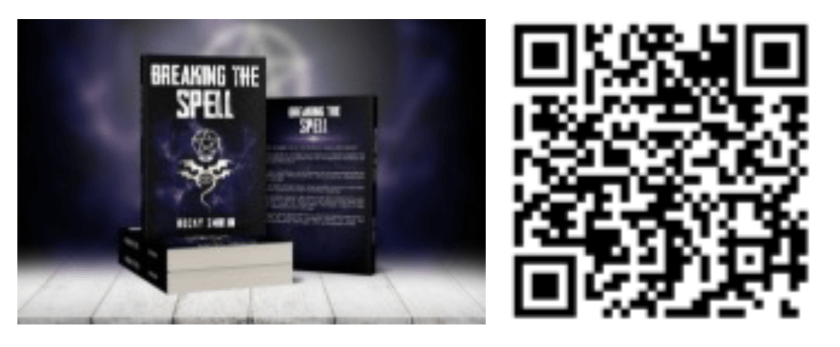
Breaking the Spell by Rocky Smolin is available on Amazon.


 Life and Biology stories with Sooyoung and Others