Written by Michell Cho, in 2024
I finally took a long solo trip. It’s been a really long time since I’ve taken a long solo trip. It’s been 28 years since I went backpacking through Russia and Eastern Europe for four weeks in the summer of 1996. It was a time to look back on my life, which has been so busy running forward, and to reflect on what is truly important in my life. In 1996, when I was in my 20s, I traveled while intensely contemplating questions like —“Who am I?”, “What is the purpose of life?”, “How should a person live to live a meaningful life?”— about the cycle of human birth, aging, illness, and death, and joys and sorrows. Now this recent trip was a time to look back on the past 30 years of my life and make a new commitment to how I live more meaningfully in the next 30 years.
This June, my son graduated from college, and I wanted to treat myself to a vacation after working so hard. I wanted to go to a new place where I did not know anyone for a month or so, do whatever I wanted to do, and relax. While thinking about learning to surf during my vacation, I searched Google to find good surfing resorts in nearby South America and came across a city called Huanchaco in Peru. It was a beautiful small beach town famous for surfing, and it reminded me of a dream I had since my 20s of going to Machu Picchu in Peru, so I decided to make Machu Picchu my destination.
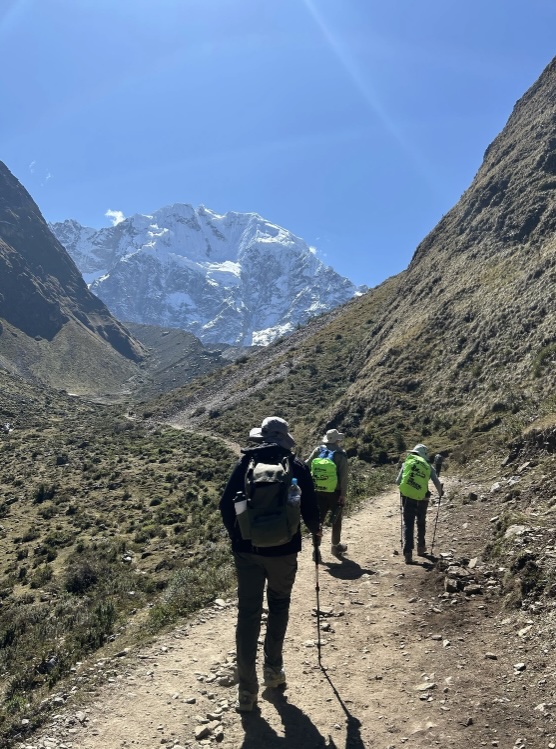
In early July, I arrived in Cusco, the ancient capital of the Inca civilization, and the five-day hike to Machu Picchu was a new challenge for me. I chose the difficult route of climbing Machu Picchu, instead of the convenient bus ride. The physical burden of climbing the steep mountain path was not easy because it was at high altitude. This trip was a journey that challenged the limits of my physical strength, with me struggling to catch my breath.
The first day of the hike was so hard that I thought about giving up, regretting why I even took on this challenge at the age of 50. When I arrived at the campsite at close to 7 pm after walking 22 km (14 miles) from dawn, I didn’t even want to eat dinner because of the pain from head to toe, and I was worried about how I would walk again the next day with this tired body. But strangely enough, when morning came, my body had recovered from a sound night’s sleep, and the pain was gone, and I felt a sense of accomplishment and confidence for having completed the hardest course of the 5-day itinerary.
At that moment, the thought suddenly crossed my mind that our lives are the same. We solve the difficult tasks that life throws at us one by one, and there may be days when we feel so hard that we want to give up, but if we live each day diligently, take on new challenges, and overcome difficulties, we gain a sense of accomplishment and confidence in life, and we find the meaning of life.
Life is a journey, and no one can avoid death. All living beings are born, grow, and mature, and when the time given to them ends, we all return to the embrace of the universe. The moment humans realize that the time given to us is not infinite, we begin to reflect on what is truly important in life.
We may have been living only in pursuit of material wealth and fame, forgetting the meaning of life and what is truly important to us. I looked back on the path I took while climbing the steep road of the mountain. The time of self-reflection in Peru, where I went into my own time and looked inside myself, was a valuable time that made my soul mature one step further. Confucius said that at the age of 50, one reaches a state of understanding the will of heaven. It is an age where one begins to accept life as it is, acknowledging one’s imperfections and embracing destiny. At this age, it’s ok to live authentically, just as I am.
Life is not a race, but a journey.
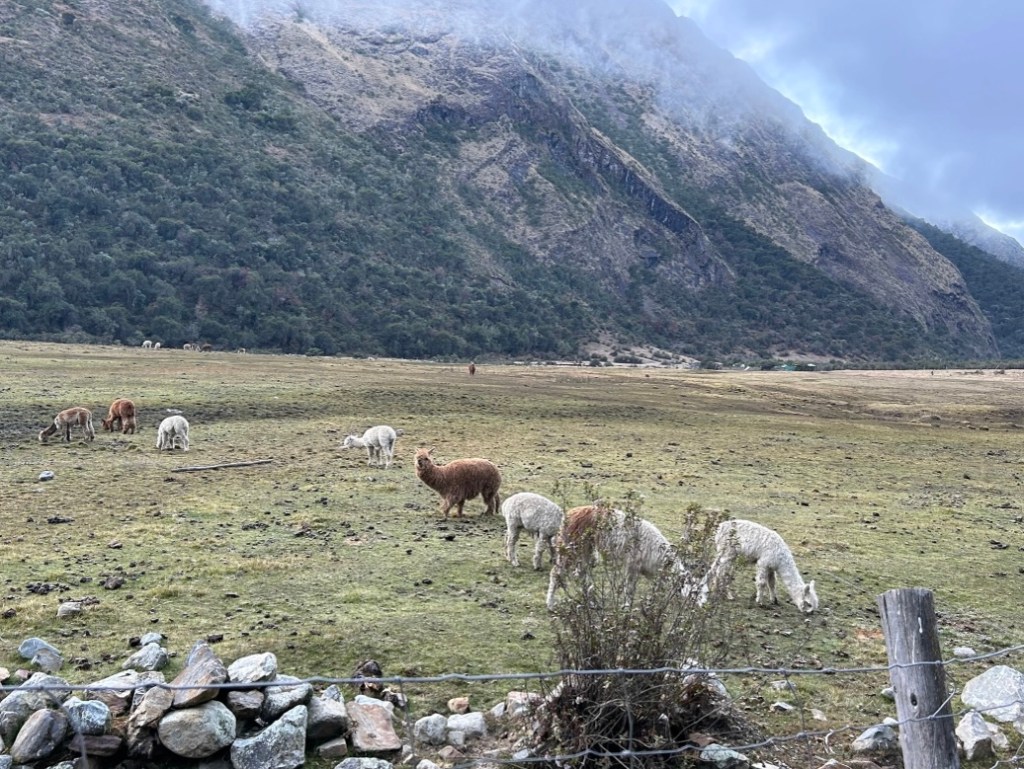
Hiking Machu Picchu has been on my bucket list for a long time. There are two hiking courses from Cusco to Machu Picchu, the capital of the Inca civilization: the Inca Trail and the Salkantay Trek. There is also a course that takes only two days by bus and train, but what I wanted to do was hike. The Inca Trail has a limited number of tourists per day, so I had to make a reservation at least 3 months in advance. This time, I decided to go on the Salkantay Trek, where I could enjoy more of the natural scenery. I booked a guided hiking tour with a company called Alpaca Tours and arrived in Cusco on July 2nd. I took a break and toured the city to get used to the highlands.
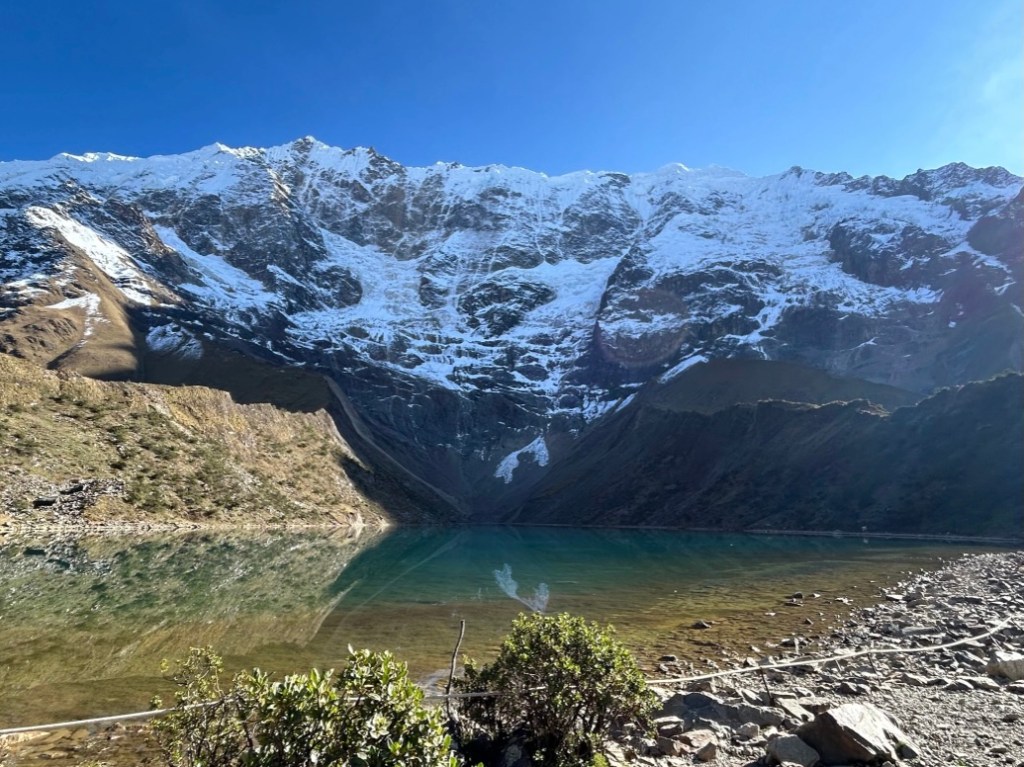
On July 4th, the first day of hiking, at 6 am, we started from the town of Soraypampa, located at 3900 meters above sea level, and climbed up and down to the 4200-meter Human Thai Lake for 2 hours, then walked up a steep trail to the Salkantay Pass, located at 4600 meters above sea level. It was a total course of 22 km (14 miles). The first day of this hike, with snow-covered icebergs in the background, was a day of challenging my physical strength due to low oxygen and steep mountain paths. As I climbed the mountain from dawn, I stopped every few minutes to catch my breath, and I felt like giving up, but I was determined to complete this challenge. Seeing me struggling, Americo, a tour guide, kept telling me, “It’s not a race. Go at your own pace.” Those words somehow encouraged and helped me to climb up one step at a time.
Just like mountain climbing, life is not a race but a journey. Everyone has their own path and journey. Don’t be discouraged or give up because you think you’re falling behind others. If there’s something you want to challenge yourself with, don’t be concerned about what others think or about your age, and try taking action. I remember a conversation with my friend Bill, who works in the same financial consulting field as me. One day, a client named J, who was 60 years old, came to him with a slightly worried face and asked if it would be financially possible for her to go to law school. She had been saving up her money well and managing it wisely, and when he calculated the scenarios and told her that it would be possible, J’s face brightened and she said, “But my son was against the idea and said this.” , “Mom, you’ll be 63 when you finish law school. Why do you want to do it now?”, So J said. “Son, even if I don’t go to law school, in 3 years I will be 63 years old. I want to be 63 years old while doing what I have been dreaming and wanting to do.” If there is something you want to do now but you are hesitating because of your age or the others’ opinions, what about dreaming again and making a plan? Whether it is a hobby or a new career, take the leap. When you challenge yourself with new things, overcome difficulties, and focus on today, you cultivate the garden of your body and mind, enriching your life.
About Michelle Cho, CFP, BFA, ChSNC
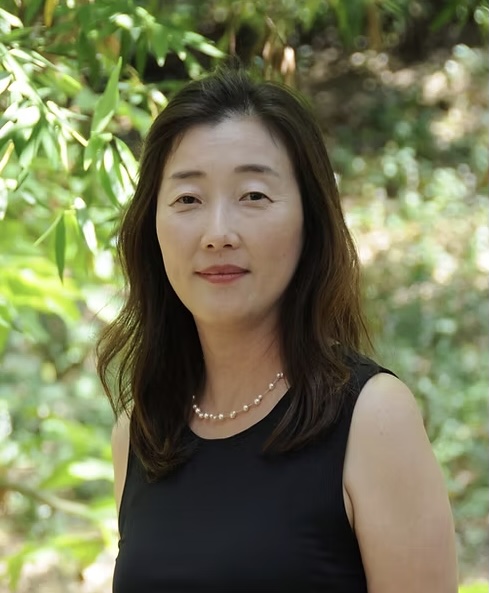
She graduated from UCSD with a degree in physics and studied high-energy physics at Cornell University for two years before changing her career. Now she runs a financial consulting firm called Echo Wealth Partners. She is a Certified Financial Planner, Behavioral Financial Advisor, and Chartered Special Needs Consultant and helps clients set financial goals based on their values and provides financial planning and overall investment management services. The goal of the company is to help clients improve their quality of life and live a rich and meaningful life through smart financial management and planning.
 Life and Biology stories with Sooyoung and Others