Antibodies: From Lab Bench to Therapeutic Drugs

I’ve always been fascinated by antibodies. My journey began in 2000, when I first took an undergraduate immunology class. During graduate school in Medical Biotechnology, I dove deeper—advanced immunology in 2001, psychoneuroimmunology in 2002—researching NKT cells and CD1d in autoimmune diseases. Back then, my curiosity was pure: I just wanted to understand how things worked. Papers, grants, and impact factors? I didn’t think about those. Honestly, even now, grant writing still feels like a mountain to climb!

Until 2018, during my third postdoc, I never actively pursued grants. I was fortunate to be in well-funded labs, free to follow my interests, attend meetings, and write papers when inspiration struck. That freedom was exhilarating. I often chose research topics my supervisors weren’t interested in—at least initially—giving me the joy of discovery.

But freedom has a cost. By the time I tried to apply for my own grant, it felt late. I wrote one in 2018, only to have my name removed by my PIs and replaced with a colleague’s. They told me it would increase our chances of funding. I also learned a hard lesson: in both academia and industry, even great data isn’t always shareable due to patents. At the end of the day, the only guaranteed rewards were a paycheck and the sheer pleasure of exploring science.

Sometimes I wonder if I should have pursued a Ph.D. in immunology instead of neurobiology. I missed a lot of immunology along the way. Still, I wouldn’t trade my journey—it shaped the scientist I am today.


Generating Antibodies: My Hands-On Experience

If you’ve worked in biology or medicine, you know antibodies are everywhere. They’re essential for research and diagnostics, from simple antibody staining to generating completely new reagents.

During my Ph.D., I generated antibodies both in-house and through companies. I provided expression constructs, sometimes purified proteins, and worked with animals like mice or ferrets. It took time, patience, and more than a few failed attempts—especially for antibodies against certain domains. For instance, when generating pan-antibodies against protocadherin 7, we eventually produced polyclonal antibodies, but monoclonal antibodies just didn’t cooperate.

Fast forward to 2020–2021: antibody engineering has advanced tremendously. I created numerous AAV constructs, including Fab and scFv, analyzing backbones, VH, VL, CDRs in detail. Companies sometimes tweaked CDRs sequences, either randomly or with AI. Even Fc regions required careful attention, as they could influence adverse effects in the case of Fc-fused proteins and full antibody drugs. To generate AAV constructs, all other parts, such as promoter regions, signal peptides, linkers, polyA, WPRE, etc., should be considered. The next steps are to check whether the antibody-based fragments are secreted and work properly by Western blots and ELISA. Of course, in the case of AAV constructs, we should check AAV property and yields and have AAV first.


Fc and Fab: The Power of Two

Antibodies have two main regions: Fab and Fc.

  • Fab or variable regions bind to antigens
  • Fc, often called the “effector arm or tail,” performs critical functions:
    1. Cell-mediated and humoral immune activation: Fc binds Fc receptors on macrophages, neutrophils, NK cells, and dendritic cells and leads to ADCC (antibody-dependent cellular cytotoxicity) and ADCP (antibody-dependent cellular phagocytosis).
    2. Complement system activation: Fc triggers pathogen lysis, opsonization, and inflammation.
    3. Half-life regulation: Fc binds neonatal Fc receptor (FcRn) in endothelial cells, protecting antibodies from degradation.
    4. Maternal-fetal transfer: IgG Fc interacts with FcRn in the placenta, passing immunity to the fetus.

When designing therapeutic antibodies, deciding whether to keep, engineer, or remove Fc is crucial. Fab fragments penetrate tissues better but have shorter half-lives. Fc is often necessary for cancer therapies, whereas autoimmune or blocking therapeutics benefit from Fc engineering to avoid harming self-tissues.


A Look at Therapeutic Antibodies

Here’s an overview of some major monoclonal antibody drugs and their Fc strategies:

DrugTargetIndicationFc StrategyEngineering / Mutations
RituximabCD20B-cell lymphoma, RAActive Fc → ADCC + CDCNone
TrastuzumabHER2HER2+ breast & gastric cancerActive Fc → ADCCNone
AdalimumabTNF-αRA, Crohn’s, psoriasisNeutralizingNone
CetuximabEGFRColorectal & head/neck cancerActive Fc → ADCCNone
NivolumabPD-1Melanoma, NSCLCFc-silent → avoids killing T cellsIgG4 backbone + S228P
PembrolizumabPD-1SimilarFc-silentIgG4 backbone + S228P
OmalizumabIgESevere asthma, urticariaFc engineered to avoid mast cell activationIgG1 backbone; avoids C1q binding
BevacizumabVEGF-AColorectal cancer, AMDNeutralizing; Fc not criticalWild-type IgG1

Key patterns:

  • Cancer drugs keep Fc active to kill tumor cells.
  • Checkpoint inhibitors silence Fc to avoid killing PD-1+ T cells.
  • Anti-cytokine drugs have no effector function, but increase half-life by FcRn recycling.
  • Anti-IgE drugs engineer Fc to prevent dangerous immune activation.

Fc-Free Antibodies: A Growing Field

Fc-free antibody fragments are also gaining attention. As of August 27, 2025:

StatusCount%
FDA-approved1527%
Terminated / Withdrawn1018%
Under Clinical Development2647%
Regulatory review47%
database for Therapeutic Antibodies (db.antibodysociety.org)

Even though Fc can trigger strong immune responses, careful control – through dosing or engineering – can make it highly beneficial. Fc-free fragments face challenges like short half-life or lack of effector function, explaining why some have been terminated.


Antibody research is a perfect blend of biology, engineering, and clinical innovation. It’s a field full of stories – both successes and failures – that teach us how to translate basic science into therapies. 

I’ve recently started reading again a book on therapeutic antibody engineering (2012), and I plan to share insights and reflections here from time to time.
GoJoseon—The first kingdom in Korea

Records about Gojoseon are found in the book Samguk Yusa (written by Buddhist monk Iryeon), which says that it was founded in 2333 BCE by Dangun Wanggeom.

According to the Dangun myth, Hwanung (a heavenly being who descended to earth) had a son named Dangun with Ungnyeo (a bear who transformed into a woman). The country that Dangun established was called Joseon.
Later in history, another kingdom called Joseon appeared, as you know, so historians use the name Gojoseon (“Old Joseon”) to refer to the earlier kingdom. Chinese historical texts such as the Shan Hai Jing and Guanzi also mention Joseon.

Gojoseon was based on a Bronze Age culture but broadly seems to cover the late Neolithic and early Iron Age and was said to have the Law of Eight Prohibitions. Among them, three laws are still passed down and known:

  1. A person who commits murder shall be executed.
  2. A person who injures another must compensate with grain.
  3. A person who steals shall become a slave. To redeem themselves, they must pay a fine of 500,000 coins.

It is believed that Gojoseon’s territory may have reached as far south as present-day Seoul.

In Korea, many dolmens (ancient stone tombs, Goindol in the Korean pronunciation) can still be found throughout the Korean Peninsula.


If you want to see a representative example, you can visit LegoLand in Chuncheon, South Korea, where such remains as Neolithic pit houses and Goindols scattered. In fact, it is known that the land beneath LegoLand contained many archaeological things, and the construction of the park was heavily opposed. Despite this, LegoLand was eventually built on the site.

 You can check it out on this website! But the information is written in Korean.


There is one Korean drama, Tae Wong Sa Shin Gi based on the Gojoseon legend.

Unfortunately, there are still no officially English-dubbed versions. JustWatch and Netflix only provide non-English versions.

There is some OST series of Tae Wong Sa Shin Gi on YouTube.

and….

I found Ep2 (Eng Sub) of Tae Wong Sa Shin Gi on YouTube

떠돌이, 차강석 씀 | Wanderer, by Cha, Kang Seok

떠돌이

2025/7/26 차강석 씀

고향을 떠난 지 10여 년
그곳이 재개발을 앞두고 있다

현재의 사회 구조상
재개발된 아파트가 나를 버린다

버려진 나는 좁디좁은
임대아파트를 전전하다가
거대한 힘에 눌려 죽을 것이다


Wanderer

7/26/2025 written by Cha, KangSoek

It’s been over ten years
since I left my hometown

now poised for redevelopment.

In today’s Korea society,

The redeveloped apartment casts me aside.

Abandoned, I wander

small rental apartment to another

Until some colossal force
presses me to death

Hobbies should be purely for enjoyment.

written by Younghee Lee, July 2025

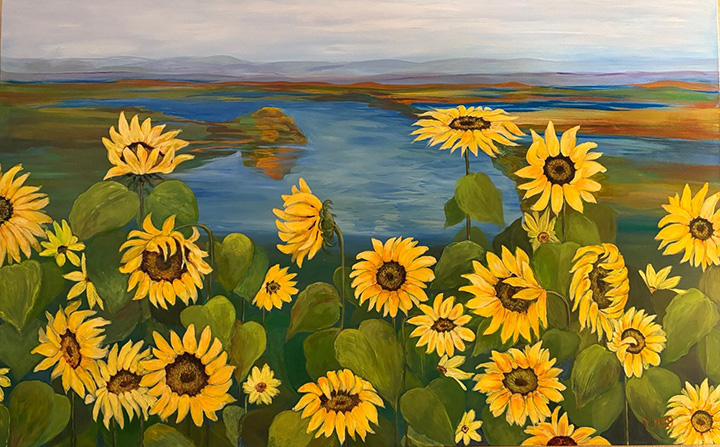
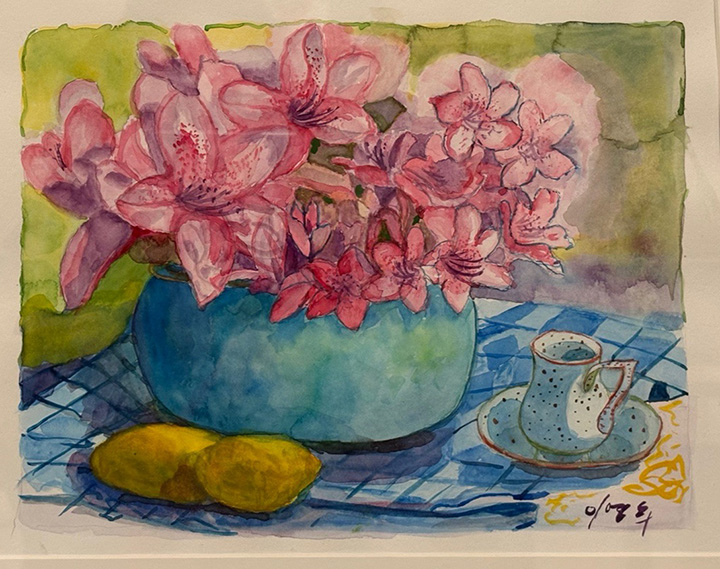
painted by Younghee Lee

Google tells me that a “hobby” is an activity done for pleasure, while a “special skill” is a talent or ability in which one excels beyond others. Over the years, I’ve come to understand how differently these two can be experienced in life.

When our children grew up and left the nest, the house felt unbearably quiet with just my husband and me. The days stretched long, and I wondered how to fill the hours. Then, one day, the thought came to me—I should paint.


Perhaps it was because, as a child, I never had proper art supplies and never dared to try. Without hesitation, I bought watercolor paints, brushes, a sketchbook, and even an easel. The joy and anticipation of that moment still feel vivid to me.

The first thing I painted was the red begonias blooming on our balcony. It was a clumsy piece, with no regard for light, shadow, or perspective, but leaning it against the living room wall filled my heart with happiness. Guests would compliment it and ask, “Who painted this?” I would reply, “I started it as a hobby—it’s my first since elementary school.” My memories of school art classes were purely theoretical; all I felt now was the pride of beginning something new.

After we moved to the United States, I often took my granddaughter to her art class. Watching her made me want to learn again. I gathered my courage, asked her teacher, and was warmly welcomed. I signed up for weekly lessons, walking home with my heart brimming with excitement. This time, I truly believed I could paint “real” paintings.

Reality, however, was humbling. I remembered how my high school aptitude test had shown a dismal score in spatial perception. My math and logic were near perfect, but my spatial awareness—a key to artistic ability—barely reached eighty points. Painting, it seemed, was not my natural gift. When I traveled, I was always tempted to capture beautiful scenes on canvas rather than in photographs, but that longing often turned into pressure.

Thankfully, my children loved my work, no matter how imperfect. Whether I painted roses that looked like smudges, sunflowers that resembled wildflowers, or adults that looked like children, they said, “We love it because it’s Mom’s painting.” To my surprise, my American son-in-law’s parents—who both majored in art—hung my painting of geraniums in their kitchen, calling it “fresh in a way only amateur work can be.”

Last year, my tenth-grade grandson lived with us. Gifted in sports, he had transferred from San Francisco to Los Angeles to improve his skills. In a family where academics had always been the priority, his decision surprised us. At first, we thought it was just a passing phase, but we were wrong. He threw himself entirely into school and club activities and even managed his diet with discipline, avoiding anything unhealthy. For him, his hobby and his special skill were one and the same—and his joy in doing it brought exceptional results.

Now, my grandson has returned home, and I am back to my own routine. The first thing I want to do is paint again. I’ve taken such a long break that it feels daunting, but I’m determined not to put down my brush. My sister, who knows me well, often asks why I struggle with painting instead of focusing on something I’m good at. My answer is simple: because it makes me happy. And I intend never to forget that a hobby should be pursued purely for the joy it brings.

For this Korean Version

The oldest lyric poem

Today, I looked into the oldest existing poem in the world.


Although it is uncertain whether Gongmudohaga is the oldest poem in the world, it is certainly the oldest existing lyric poem.

Upon research, similar poems from roughly the same period (estimated 1st to 2nd century BCE) exist in Sumerian, Indian, and ancient Egyptian civilizations.
Notable examples include the Epic of Gilgamesh (Sumerian civilization), Ligurra’s Hymns (Sumerian civilization), pyramid tomb wall inscriptions (ancient Egypt), and the Rigveda (India).

Gongmudohaga, the oldest poem in the world, is estimated to be from the Late Gojoseon or early Goguryeo period, around the 2nd to 1st century BCE.

Original text of Gongmudohaga and Korean pronunciation

This poem is recorded in historical texts such as Haedong Yeoksa, Daedong Siseon, Cheonggu Sicho, Yeonamjip, and Samguk Yusa. Samguk Yusa was fully translated into English as the book titled Overlooked Historical Records of the Three Korean Kingdoms in 2006.

Content of Gongmudohaga (translated)

The author is unknown but traditionally believed to be the wife of Baek Sugwangbu or Yeok, the wife of Gwak Rijago, who helped preserve the song as a poem.

It is said that the poem was sung/shouted when a woman witnessed her husband drown while crossing a river and sang/cried this lament, which was then recorded and passed down as a song.

배 | Boat

2021/3/26 김수영 씀

바다에
배한척
배 안엔 혼자

  비가 온다
폭풍이 친다
파도가 널 뛴다

  시간만 많다면
허락이 된다면
배를 지키고 싶다
바다가 잠잠해 질때까지

  배에 사람을 테우고 싶다
사람을 테울만큼 사이즈의 배이고 싶다

  배를 버려야 하는 때인지
지켜야 하는 때인지
알수 없다

  단지 내가 아는건
배 밖
육지엔
날 지키고자하는
내가 지켜야하는
사람들이 있다는것이다.


The Boat

March 26, 2021, written by Sooyoung Kim

Adrift on the sea,

a solitary boat

and I, its only soul.

Rain begins to fall.

The storm roars.

Waves rise and crash like beasts in revolt.

If only time were on my side,

if only I had permission

I would stay,

guarding this boat

until the waters quiet,

until the storm forgives.

I dream of filling this vessel with others,

of becoming a boat

wide and strong enough to carry them.

But I do not know

whether this is the time to let go

or the time to hold on.

All I know is this:

beyond the bow,

on distant land,

there are those

who would shield me

and whom I must protect

in return.

Design a site like this with WordPress.com
Get started