
written by Younghee Lee, July 2025
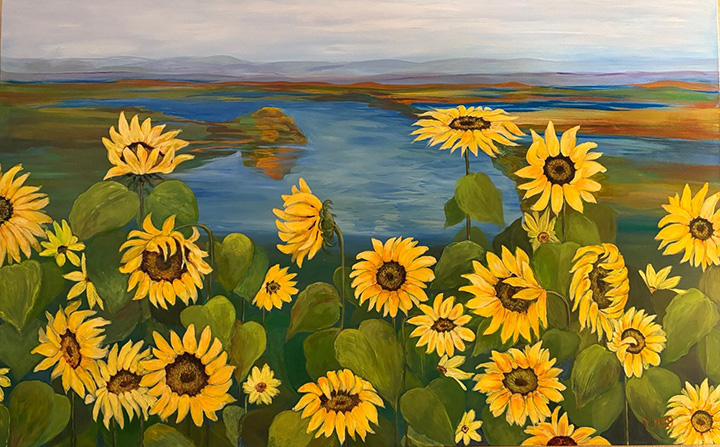
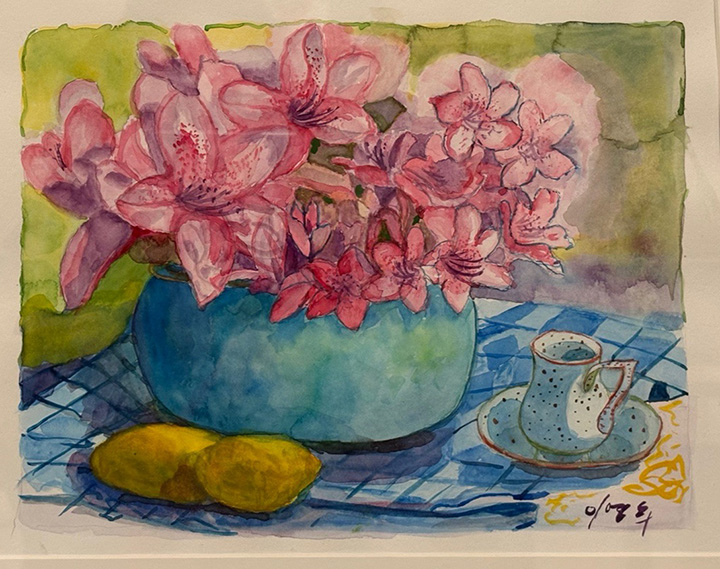
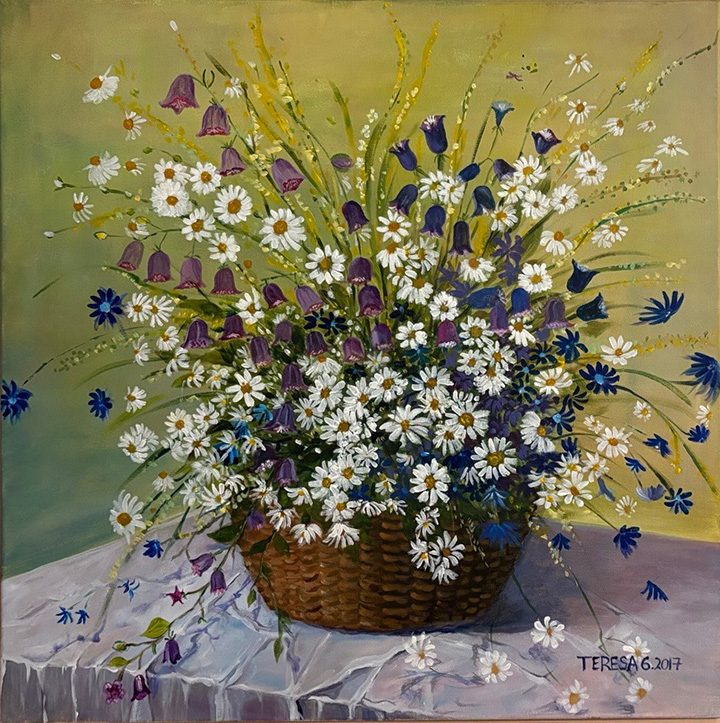
painted by Younghee Lee
Google tells me that a “hobby” is an activity done for pleasure, while a “special skill” is a talent or ability in which one excels beyond others. Over the years, I’ve come to understand how differently these two can be experienced in life.
When our children grew up and left the nest, the house felt unbearably quiet with just my husband and me. The days stretched long, and I wondered how to fill the hours. Then, one day, the thought came to me—I should paint.
Perhaps it was because, as a child, I never had proper art supplies and never dared to try. Without hesitation, I bought watercolor paints, brushes, a sketchbook, and even an easel. The joy and anticipation of that moment still feel vivid to me.
The first thing I painted was the red begonias blooming on our balcony. It was a clumsy piece, with no regard for light, shadow, or perspective, but leaning it against the living room wall filled my heart with happiness. Guests would compliment it and ask, “Who painted this?” I would reply, “I started it as a hobby—it’s my first since elementary school.” My memories of school art classes were purely theoretical; all I felt now was the pride of beginning something new.
After we moved to the United States, I often took my granddaughter to her art class. Watching her made me want to learn again. I gathered my courage, asked her teacher, and was warmly welcomed. I signed up for weekly lessons, walking home with my heart brimming with excitement. This time, I truly believed I could paint “real” paintings.
Reality, however, was humbling. I remembered how my high school aptitude test had shown a dismal score in spatial perception. My math and logic were near perfect, but my spatial awareness—a key to artistic ability—barely reached eighty points. Painting, it seemed, was not my natural gift. When I traveled, I was always tempted to capture beautiful scenes on canvas rather than in photographs, but that longing often turned into pressure.
Thankfully, my children loved my work, no matter how imperfect. Whether I painted roses that looked like smudges, sunflowers that resembled wildflowers, or adults that looked like children, they said, “We love it because it’s Mom’s painting.” To my surprise, my American son-in-law’s parents—who both majored in art—hung my painting of geraniums in their kitchen, calling it “fresh in a way only amateur work can be.”
Last year, my tenth-grade grandson lived with us. Gifted in sports, he had transferred from San Francisco to Los Angeles to improve his skills. In a family where academics had always been the priority, his decision surprised us. At first, we thought it was just a passing phase, but we were wrong. He threw himself entirely into school and club activities and even managed his diet with discipline, avoiding anything unhealthy. For him, his hobby and his special skill were one and the same—and his joy in doing it brought exceptional results.
Now, my grandson has returned home, and I am back to my own routine. The first thing I want to do is paint again. I’ve taken such a long break that it feels daunting, but I’m determined not to put down my brush. My sister, who knows me well, often asks why I struggle with painting instead of focusing on something I’m good at. My answer is simple: because it makes me happy. And I intend never to forget that a hobby should be pursued purely for the joy it brings.
 Life and Biology stories with Sooyoung and Others