If you want more numbers of quiz, please click here
If you read one more about [Wine Bits and Sips] The Charm of Wine, click here
Life and Biology stories with Sooyoung and Others
ironic living toward death, continue learning visible and invisible big big world around and inside us. Share your stories and poems here!!!

If you want more numbers of quiz, please click here
If you read one more about [Wine Bits and Sips] The Charm of Wine, click here
2026/4/11 차강석 씀
맑은 물이
컵에서 넘을까 말까 하고 있다
나에게 시를 짓는다는 것은
위의 물처럼 넘으면 화가 나고
넘지 않으면, 언제 넘을까를
걱정하는 것과 같다
시가 잘 안 풀리면 화가 나고
시가 잘 써지면, 발이 뜻대로
움직여 주지 않아 짜증난다
화와 걱정이
찰랑 되는 물처럼
내 기분은 출렁인다
Clear water
is about to overflow
For me, writing a poem
is like that water
if it overflows, I get angry,
if it doesn’t overflow,
I worry about when it will overflow
If a poem doesn’t go well,
I get angry,
if a poem is written well,
my feet do not move
as I intend, and I get irritated
Anger and worry
like sloshing water,
my mood sways
Postscript
오늘은 강석형을 만난 이야기를 시 뒤에 덧붙여 본다.
강석형은 발로, 더 정확히는 발가락으로 컴퓨터를 다룬다.
그는 시를 쓰고, 그 시를 우리 블로그에 꾸준히 올리는 시인이기도 하다.
강석형이 나의 친구인지 아닌지는 잘 모르겠다.
하지만 그는, 내가 존경하는 사람 중 한명이고,
한때 같은 단체를 꾸렸던 소중한 인연이다.
우리는 1997년 여름, 인터넷 마이넷 통신망에서 만났다.
하이텔이나 천리안 같은 대형 통신망과 달리
마이넷은 교육부 산하에서 운영되던,
아는 사람만 아는 무료 통신망이었다.
그곳에는 돈이 없던 학생들과
마찬가지로 돈이 없던 장애인들이 모여 있었다.
그 무렵 나는 대학 2학년이었고,
결핵이 재발하여 고향집에 내려와 있었다.
할 수 있는 일은 많지 않았고,
나는 컴퓨터를 통해 세상과 연결되었다.
병은 처음엔 혹독했다.
피를 토하고, 매일 병원에 가서 주사를 맞아야 했고,
약도 쉽게 듣지 않았다.
하지만 시간이 지나면서 상태는 나아졌다.
일을 할 수 없었기에
자원봉사를 시작했다.
처음으로 찾은 것은 임사체험 관련 단체였고,
미국의 한 단체에서 한글-영어 번역 자원봉사를 맡았다.
그 인연은 지금도 이어지고 있다.
그해, 국내에 자원봉사 단체들이 생겨났고
나는 춘천시 자원봉사대 1기,
청소년 수련원 상담소 소속 대학생 자원봉사자 1기로 활동했다. 또한 춘천시 천주교 성당 소속 기쁨의 전화 상담소에서 긴 교육을 받고, 전화상담자로 활동했다.
그리고 강석형의 제안으로
마이넷 동호회 참사랑 (장애인과 비장애인 클럽) 창립 멤버가 되었고,
부회장 역할을 맡았다.
클럽 참사랑은 통신망이 사라질 때까지 이어졌다.
학교 클럽은 아니었지만
그곳은 세상과 이어지는 다리였고,
우리는 온라인과 오프라인을 넘나들며
함께 모였다.
장애인이든 아니든
세상을 조금 더 나은 곳으로 만들고 싶어 하던
아주 평범한 그런 사람들이었다.
강석형은 검정고시를 준비했다.
나는 크게 돕지 못했다.
돌이켜 생각해 보니
강석형은 누군가의 도움 때문이 아니라
그의 궂은 의지로
초등, 중등, 고등의 모든 과정을 아주 금새 통과해냈다.
이후 경희사이버대학교 문학과에 입학했고,
복지학과를 거쳐
언어치료학 석사 과정까지 마쳤다.
나는
강석 형의 시와 글들을 더 많은 사람들에게
소개하고 싶은 마음이다.
Today, I am adding a story about meeting Kang Seok hyung (a Korean term used by a male to address an older male).

Kang Seok hyung uses his feet, more precisely, his toes, to operate a computer.
I am not sure whether he is my friend or not.
But one thing is certain: he is someone I deeply respect,
and someone with whom I once built a community or organization.
We met in the summer of 1997 on an online network called Mynet.
Unlike major Korean networks such as Hitel or Chollian,
Mynet was a lesser-known, free network operated under the Ministry of Education, South Korea.
Because it was free,
it was a site where students without money
and people with disabilities, also without money, gathered.
At the time, I was a sophomore in college.
My tuberculosis had relapsed, and I had returned to my hometown.
There was little I could do,
so I connected to the world through a computer.
The illness was harsh at first.
I coughed up blood, went to the hospital every day for injections,
and the medication did not work easily.
But over time, my condition gradually improved.
Since I could not work,
I began volunteering.
The first thing I found online was an organization related to near-death experiences. Through it, I started working as a Korean–English translation volunteer for a group in the United States.
That connection continues to this day.
That same year, volunteer organizations began to emerge in Korea as well. I became part of the first cohort of the Chuncheon City Volunteer Corps and a university student volunteer affiliated with a Chunchuon Youth Center and counseling phone call center called “Gippeum-ui jeonhaw,” meaning a joyful call center.
Then, at Kang Seok hyung’s suggestion,
I became one of the founding members of a Mynet club, “ChamSaRang”, meaning trulove, and took on the role of vice president.
The club lasted until the network itself disappeared.
It was not a school club,
but it was a bridge to the world for me and others.
We met both online and offline,
gathering together.
Disabled or not,
we were all young,
and we genuinely wanted to make this society a better place.
Kang Seok hyung prepared for the school equivalency exams.
I did not help him much.
Looking back,
it was not because of anyone’s help,
but through his own determination
that he passed every stage.
He later entered Kyung Hee Cyber University to study literature,
then went on to study social welfare,
and eventually completed a master’s degree in speech-language pathology.
Even now,
I remain someone who wants to introduce more of his writing to the world.
I share a series of Wine Bits and Sips, written by Junghyun. We invite you to start your wine journey right here, with us as your friendly guide, Junghyun.
for the original Korean version
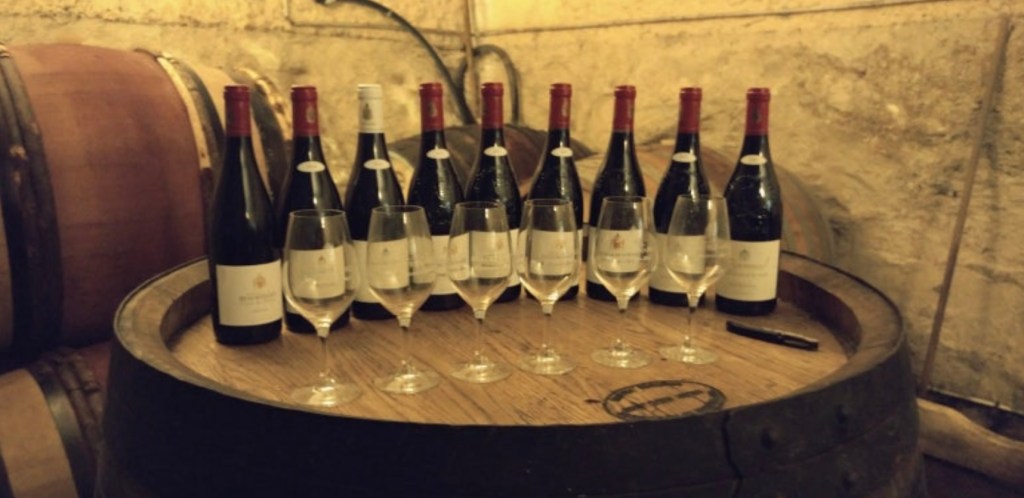
D·I·V·E·R·S·I·T·Y.
Before we dive into wine cellars, ratings, and the age-old debate whether an expensive bottle is truly worth its price, let me tell you why I got into wine in the first place.
The beauty of wine, I think, is this: without packing a bag or going anywhere, you can sit still and travel the world through all five senses. That’s the charm, and sometimes, honestly, it can also be the headache. Choosing a wine can feel like a multiple-choice question with answer options that spill onto the next page. You can’t always get it right. But that’s exactly why the moment you stumble upon something extraordinary feels so electrifying. One unexpected sip can make your eyes go wide in wonder. When a wine truly delights you, even the long hunting for that perfect bottle becomes a kind of play. The risk is, of course, that if you fail too many times in a row, the motivation to keep trying quietly fades away. Along with it, you lose the chance of ever finding that one wine that brings you genuine happiness. This is why, rather than picking at random, it helps to improve your odds a little bit.
That’s what this series is about.
Start with a Grape You Like
The usual advice is to begin your journey by finding a grape variety you enjoy.
Build a framework, something to anchor your choices so they’re easier to remember. In the New World, many wines are crafted from a single, well-known variety, which makes comparisons much easier. Mid-range American wines in particular tend to express their grape variety in a direct, straightforward way. Trying different bottles from the same producer, such as Long Barn or Textbook, across different varieties is a great way to map out your preferences. Textbook is best known for its reds and produces across a wide range, including Cabernet Sauvignon, Chardonnay, and Sauvignon Blanc, with Pinot Noir being a more recent addition to their lineup. Each grape brings its own skin thickness, natural sugars, and character, and you’ll taste these differences in the glass as distinct wine’s texture, tannins, acidity, and finishes. Once you discover a variety you love, you can begin expanding your horizons by seeking out the same grape from different countries. However, keep in mind that this is only one of many ways to explore the world of wine.
Collaborative Harmony of Grape, Terroir, and Tradition
Wine, they say, is a joint creation of the grape, the terroir, and the winemaker’s human hand. In France, it’s traditional not to list the grape variety on the label. Bordeaux-style blends are common, and the French tend to feel that variety alone doesn’t determine the wine’s soul. They see little reason to highlight it as the primary feature. During a Bordeaux winery tour years ago, where most of the guests were American. The winemaker poured a glass of deep, dark red wine and challenged us to guess the grape. Most guessed Cabernet Sauvignon or Syrah. The answer? 100% Merlot. These graphs came from vines nearly a hundred years old, rooted in the dry, stony soil of a hillside. While we were in Saint-Émilion on the Right Bank, an area where Merlot is the dominant variety and typically blended with small amounts of Cabernet Franc and Cabernet Sauvignon, that tasting was a revelation. It was the exact moment the concept of terroir finally clicked for me, instantly and completely.
I came to wine with a strong conviction that France was its spiritual home of wine, so I started there, tasting my way across the regions one glass at a time. Unlike the New World, France places terroir at the center of everything. I fell for the rich, brooding tannins of Bordeaux reds: that dark tropical fruit, the weight, and a seductive, perfume-like quality that lingers like a single drop of fragrance. A wine with real complexity doesn’t just speak to your palate. It speaks to your imagination. I’d find myself picturing an elegant woman in a field of wildflowers or something bold, dynamic, almost physical. That’s Bordeaux red to me.
The Pope’s Wine and a New Obsession
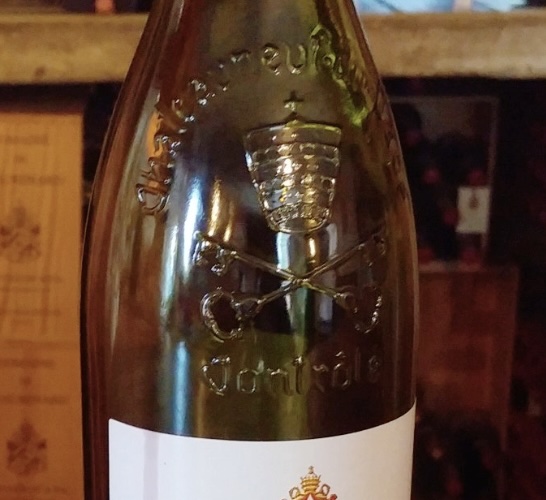
Then came Châteauneuf-du-Pape (CDP), often called the Pope’s wine, hailing from the southern Rhône valley. During the Avignon Papacy, Pope John XXII built a summer residence and a winery north of Avignon, giving the region its name, which translates to the “new castle of the Pope.” While history suggests that the wines of the Rhône still required refinement at the time, leading the Pope to reportedly ship in Burgundy until local quality improved. One of the most striking features of these bottles is the embossed papal coat of arms, featuring the tiara over the keys of Saint Peter, which sets them apart from everything else on the shelf. CDP is a blend led by Grenache, Syrah, and Mourvèdre (GSM), along with other permitted varieties [the list has been revised from 13 down to 9 permitted varieties], which gives it a characteristic complexity. As a wine built for long aging, it possesses both power and elegance that never disappoints. Rich and full-bodied, yet more reasonably priced than Bordeaux or Burgundy, so it’s become my trusted bottle. It is a wine that feels particularly right from late autumn through the Christmas season, offering a warmth from the inside out. The only catch: it’s not exactly an everyday-priced bottle. Though when you see the vineyard, where every grape is hand-harvested and farmed organically, the price starts to feel entirely fair.
Southern Rhône Syrah: the Original Heritage
One afternoon at Lotte department store wine event, a staff recommendation led me to a Southern French Syrah.
Most people associate Syrah with Australia, but it originated in France’s south. Phylloxera (a kind of aphid) devastated the vineyards of the region in the 19th century, and the Syrah planted today is technically a reimported variety; however, something about this land remains unchanged. The combination of limestone and gravel soils, paired with the fierce Mistral wind, gives Southern French Syrah a character entirely unlike its Australian counterpart. I drank a 2012 vintage in 2023 and was struck by the kind of balance and depth that only a well-aged, high-quality wine can offer. That specific wine is no longer imported, but whenever I spot a Syrah from the neighboring Roussillon region, it goes straight into my basket. Roussillon was long known for cheap table wine, but with talented winemakers moving in, the quality has surged, and you now find genuinely excellent value there.
A Recommendation That Changed My Mind
When dining out, I often ask for a wine pairing recommendation, a habit that sometimes leads me to bottles I’d never have chosen for myself.
This is exactly what happened at a wine bar near my home. I typically did not reach for American wines, and when it comes to whites, I rarely stray beyond French Chardonnay, but this was wonderful, offering a rich, almost oily texture and ripe orange fruit, complemented by a touch of oak and just a whisper of mineral on the finish. It was quite simply delicious. Curious to see whether I could find a similar experience elsewhere, I tracked down a South African Chardonnay in the $20 range. South Africa occupies somewhere between the Old World and the New with a wine history that is much longer than most people realize. The Dutch East India Company planted vines there as early as 1662, producing the country’s first wine by 1669. By the 1880s, South Africa had become one of England’s premier wine suppliers until politics, natural disasters, and war pushed it into obscurity for decades. It was only under the presidency of Nelson Mandela that the wine industry began to rebuild. Today, South African winemakers draw from both traditions by studying Burgundian techniques while embracing the expressive, fruit-forward styles of the New World. The result is a collection of wines with a unique identity that often provide exceptional value.
Every new variety, region, and producer weaves together terroir, intention, and craftsmanship into a story that awakens all five senses. The world of wine is truly boundless.
This is how I travel the world, right from the glass on my dinner table.
written by Younghee Lee, Essayist
for the original Korean version
Drawn by the warm sunlight, I stepped out into the yard and gently brushed aside the fallen persimmon leaves that had piled up since last autumn. As expected, beneath the leaves, pale green shoots and light purple flower buds were pushing their way up here and there. My heart, which had been shriveled during the long winter, filled with joy. I cleared away the leaves so the plants could receive more sunlight.
After Christmas and the year-end holidays pass, there are flowers that announce the arrival of spring first in my yard. It is the purple hyacinth. A long time ago, someone gifted me a pot of this plant. After enjoying its blooms, I planted the bulb under the persimmon tree. Since then, it has multiplied year after year, producing more flowers each spring. Like orchids, hyacinths grow green leaves on both sides, with a flower stalk rising from the center. Dozens of small blossoms cluster neatly along the stem, forming a single beautiful flower. Every morning, new stalks emerge, creating a feast of purple blooms, which is truly a breathtaking sight.
Looking up the meaning of the flower, I found that the hyacinth symbolizes “eternal love.” In Greek mythology, both Apollo, the sun god, and Zephyrus, the god of the west wind, fell in love with a young boy named Hyacinthus. The boy was exceptionally handsome, athletic, and even brave on the battlefield. Ultimately, Apollo and Hyacinthus became lovers.
One day, the two held a competition in a field to see who could throw a discus further. As Apollo caught a discus brilliantly thrown by Hyacinthus and hurled it high back toward him, Zephyrus – watching the scene in a fit of jealousy – blew a gust of wind. The wind caused the discus to strike the boy’s forehead, and he died. Clasping the boy in his arms, Apollo grieved. As he wept, he sprinkled the blood from the boy’s head onto the grass and promised to bring him back to life as a beautiful flower. Soon after, a flower bloomed from the blood-stained grass, and that flower is said to be the purple hyacinth.
Hyacinths carry different meanings depending on their color. Purple is eternal love and sorrowful love. Red is love that lingers in the heart. Yellow is courage and win in love. Blue is the joy of love. White is peaceful love. Pink is playfulness and charm. While these expressions may seem distinct, all these meanings seem to represent the many emotions we experience when we love someone.
After the hyacinths fade, wood sorrel (Oxalis, called love plant in Korea), though never planted, spreads across the flower bed. Could it be the lingering traces of a love that didn’t fully blossom?
Then, the persimmon tree, jujube tree, and roses bloom in turn, completing the full arrival of spring in the yard. Watching this scene, I feel as though my own heart is blooming along with the flowers.
When spring arrives, flowers, grass, and trees do their absolute best to sprout and bloom. In doing so, they capture people’s attention and receive their love. They don’t even require much: a drink of water every few days and a few grains of fertilizer whenever they come to mind. Often, I don’t give them any fertilizer at all throughout the year. Still, as if keeping a promise, they bring us joy every day with a different appearance each time spring returns. Shouldn’t we also repay someone for the joy and beauty that nature gives us? Shouldn’t we, like the flowers and trees in our garden, sprout and bloom for someone else? It isn’t that difficult. It can be as simple as giving a bright greeting like a flower, yielding your spot in the checkout line at the market to someone with fewer items, not comparing yourself to others, avoiding greed, and not looking down on those around you.
Just as blooming a flower doesn’t require any extraordinary nutrients, we too can achieve this with just a little bit of effort. We are living in the age of AI (Artificial Intelligence), but I don’t believe we should live by relying solely on computers instead of people. No matter how beautifully a computer creates a flower, it is not a “real” flower. No matter how well an AI robot is made, how could it ever be the same as a human? Even the most wicked person has tears, don’t they?
There are times when we must not simply rush forward. If there is a terrifying cliff ahead and you keep running, you might fall and meet with disaster. Looking at a world where AI dominates every field, I am reminded of the 18th-century French Enlightenment thinker Jean-Jacques Rousseau. He argued that the excessive development of civilization, science, and art makes humans dangerous, corrupts them, and causes inequality. This is a theory worth reflecting on once again. For seniors like us, who must gradually slow down, the arrival of an era driven by artificial intelligence feels somewhat worrying.
I believe Rousseau’s famous words, “Return to Nature,” serve as a warning to us. It is a cry to recover the inherent purity, autonomy, and moral intuition of humanity. I fear that “evil robots” might emerge and harm mankind. We humans have a duty to protect this Earth. God gave us this “Garden of Eden” called Earth in the vast universe. Just as every flower has its own unique characteristics, we humans must also exercise our individuality and traits to create a beautiful paradise.

