
A series of Wine Bits and Sips, written by Junghyun.
For the original Korean version
If you’re a wine lover, a decanter is a must ……. right?
You’ve probably seen it in a movie or a drama: someone lifts an elegant glass vessel, tilts it slowly, and lets the wine fall into a glass in a long, glistening stream. It looks impossibly sophisticated. And if you’ve ever read the manga The Drops of God, you’ve almost certainly felt the pull of a beautiful decanter. But is it actually essential for a wine enthusiast? I’d say: not necessarily.
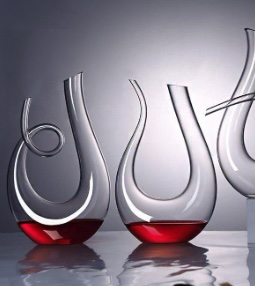
There’s a temptation to think that using a decanter signals you know your wine and that decanting will magically improve whatever’s in the bottle. But decanting carelessly can actually backfire: delicate wines can lose their most refined aromas in the process, and a decanter that hasn’t been cleaned thoroughly can leave an off-putting smell in the wine.
The original purpose of a decanter was practical: to separate an old vintage’s sediment from the wine. You’d hold a lit candle behind the bottle, watch for the sediment, and slowly pour only the clear wine into the decanter before serving. Older reds often develop tartrate crystals, which is another reason to decant before pouring. Decanters are also used to quickly aerate a young, tightly structured wine, essentially fast-forwarding its evolution in the glass. That said, most sommeliers apparently prefer the simpler approach of just opening the bottle a few hours ahead of time and letting it breathe in the bottle.
I’ve had both good and bad experiences with decanting. At a natural wine restaurant, the server decanted a bottle to help dissipate the funky, barnyard notes that natural wines sometimes carry, and it worked beautifully, revealing the wine’s true character underneath. The other memory is less fond: at a gathering where we’d opened an expensive bottle, it sat in a wide-bottomed decanter for four or five hours before being served at the end of the meal. By then, it had passed its peak entirely and was flat, uninteresting, and a shadow of what it should have been.
A decanter is useful when you need it. But it’s also bulky, not cheap, and worth asking yourself honestly: how often will I actually use this? And cleaning it is its own challenge; if there’s any soapy residue or wine staining, you’d typically rinse it with a small amount of the wine you’re about to decant, sacrificing a little in the process. If your main goal is aeration, a compact wine aerator like the Vintorio is a practical alternative. Personally, I find it more interesting to pour into a glass and just wait; watching how the wine evolves in the glass over time is part of the pleasure.
Have you ever wanted just one glass of wine, not the whole bottle? Pour a glass, seal the bottle well, tuck it in the fridge door, and come back to it whenever you like.
This one I do recommend is the Vacu Vin Wine Saver
The Vacu Vin Wine Saver with its vacuum pump makes a real difference for storage. Stored upright in the fridge, a sealed bottle keeps well for two to three weeks. A small note on corks: putting the cork back in upside-down is considered unhygienic; the outside of the cork has been exposed to air and handling, so ideally you’d replace it with the original orientation. That’s not always easy to do, which is exactly why the rubber Vacu Vin stopper is so practical.
If you only want a few glasses at a time, half-bottles are another option, though they’re rarely half the price and the selection tends to be limited. A good stopper and a few days of careful drinking are usually the better deal.
🤣One last thing: please don’t follow those YouTube hacks that show you pouring leftover wine into a plastic bottle and squeezing out the air. Single-use plastic bottles aren’t meant for reuse, bacteria can grow, and squeezing the bottle releases micro/nano-plastics directly into your wine. You have a perfectly good glass bottle right there. Use it.
For sparkling wines: skip the vacuum stopper; it removes the carbonation along with the air. Use a Champagne stopper instead, which keeps the fizz intact. Wine stoppers are inexpensive, last a lifetime, and genuinely earn their place in your wine kit. Highly recommended. 🍾
Of all the wine accessories you’ll reach for, the opener is the one you’ll use most. Most of us have a standard two-step waiter’s corkscrew from some wine gift set, the kind that occasionally destroys the cork and requires more technique than it should. My personal favorite is the Alessi Alessandro M., which I ordered as an afterthought to hit a minimum shipping amount on a German kitchenware order. It’s a continuous-turn corkscrew: just keep rotating in one direction and the cork comes out smoothly. It also looks beautiful on the table, which doesn’t hurt. Guests always notice it. Worth every cent.
Electric openers work well too, but a well-designed manual opener with some personality makes the ritual of opening a bottle that much more enjoyable.
Don’t forget the foil cutter to go with it. The two-step waiter’s corkscrew usually has a small serrated blade built in, but if you’re using an Alessi-style or electric opener, a standalone foil cutter is the way to go; just place it on the capsule, press lightly, and turn.
A few more accessories worth knowing about:
Wine gift sets these days often come with a wine ring, a small collar that sits at the bottle’s neck to catch drips. Personally, I prefer a dedicated dark-colored cotton napkin (burgundy or navy works well), which is easy to wash, looks elegant, and is more hygienic.
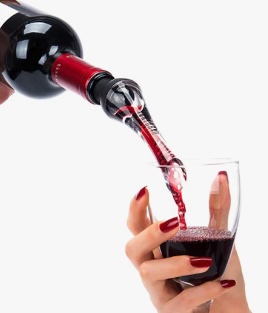
Another handy item is Drops Stop wine pourers. These thin discs roll up and insert into the bottle mouth, preventing drips as you pour. The disposable disk version is especially convenient for large gatherings.
And finally, the often-overlooked essential: an ice bucket, or for something more compact, an active wine cooler sleeve. It works like a freezable gel pack that fits around the bottle, keeping your wine at the right temperature from the first glass to the last. Doubles perfectly as a camping companion. 🏕️
😘For everything on wine glasses, see No. 2. For the biggest wine accessory of all, the wine fridge, see No. 1.

