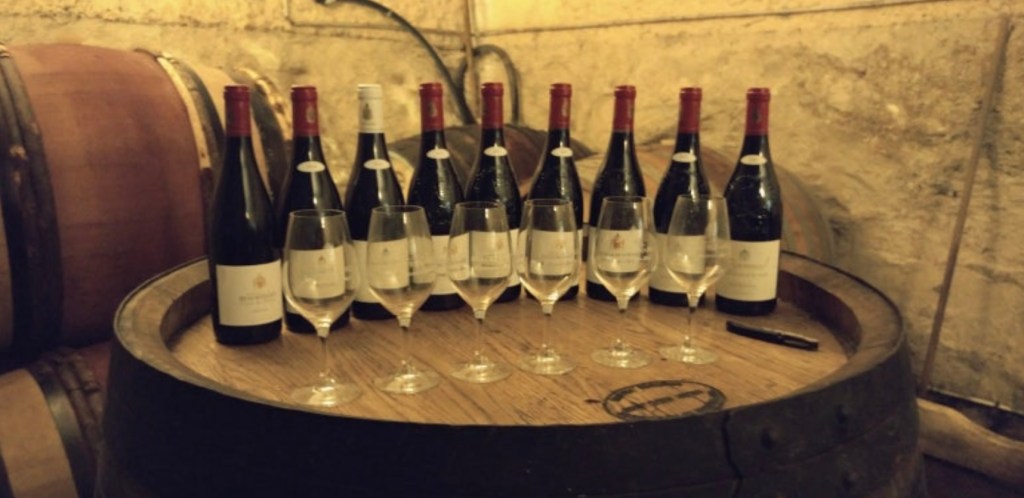
Bottles piling up at home? Wondering whether a wine fridge is worth it?
Wine is, at its core, a bottled beverage with around 13% alcohol. It doesn’t spoil easily. However, that said, if you want it to taste exactly the same a few months from now as it does today, you’ll want to store it somewhere dark and cool, what the French call a cave, essentially a cellar-like environment. Experts give a fairly wide range for ideal storage temperature: anywhere from 45°F to 68°F (7–20°C). In my own experience, a single shelf in a closet, away from direct sunlight and not directly in the path of heating or air conditioning, works perfectly well for up to a year. The key is to lay the bottles on their side, which keeps the cork moist and prevents it from drying out.
If you’re planning to finish a bottle within a month or two of buying it, there’s really no need to invest in a dedicated wine fridge. And if you just want the look, a stylish wine rack on a sideboard or countertop does the job beautifully and adds a lovely touch to any room.
When a wine fridge actually makes sense
If you find yourself regularly storing more than 20 to 30 bottles at a time, keeping wines for six months or longer, or aging premium bottles (think $80+) for several years, it’s time to invest in a proper wine fridge.
A few things to know before you buy:
Compressor vs. thermoelectric.
Smaller, quieter thermoelectric (semiconductor) models have become popular, but they’re sensitive to ambient temperature and tend to have shorter lifespans. For long-term storage, a compressor-based unit is the more reliable choice.
Brand matters.
Look for something with minimal vibration, consistent temperature control, and a solid track record for durability [Top brands worth considering: LG DIOS, Dometic, and Eurocave]. My wine fridge costs more than my main refrigerator 😅.
Dual-zone vs. single-zone.
Some models let you set different temperatures for reds and whites; others don’t. If yours has only one temperature zone, set it to white wine temperature. Reds can be served slightly warmer after taking them out, but whites need that cooler baseline.
A few practical notes:
Wine you’re planning to drink soon doesn’t need to go in the fridge, though pulling a perfectly chilled bottle from it does feel rather nice.
If you’re moving soon, hold off on buying. The vibration and temperature swings of a move aren’t great for a wine fridge or the wine inside it. Wait until you’re settled.
Wine fridges can be noisy; they take up real space. [If you’re short on room, there’s always the sommelier-approved method: clearing out a wardrobe. It works really well 🥰]; they use more electricity than a standard fridge 😭.
살면서 가끔 이런 생각을 한다.
만약 이 세상에 타이레놀이 없다면, 나는 아이를 어떻게 키웠을까, 끼울까?
열이 나고, 밤새 힘들었던 순간들. 부모라면 누구나 타이레놀의 경이에 의지해 본 경험이 있을 것이다.

우리는 익숙하게 타이레놀을 사용하지만, 타이레놀의 역사는 언제 시작된 것일까?

타이레놀의 긴 역사
많은 사람들이 타이레놀을 현대 의약품이라고 생각하지만, 그 역사는 생각보다 길다.
1955년 미국 McNeil Laboratories는 Tylenol이라는 이름으로 어린이용 해열제를 출시했다. 이후 1959년 Johnson & Johnson이 회사를 인수하면서 타이레놀은 미국 전역으로 보급되었고, 오늘날 가장 널리 사용되는 진통·해열제 중 하나가 되었다. 하지만 아세트아미노펜 자체는 훨씬 오래전인 1878년 미국 화학자 Harmon Northrop Morse에 의해 처음 합성되었다.
1890년대부터 진통과 해열 목적으로 사용되기 시작했지만, 당시에는 이미 의학계를 지배하고 있던 더 강력한 약물이 있었다. 바로 아편(Opium)이다.

인류와 함께한 진통제, 아편
아편은 인류가 수천 년 동안 사용해 온 천연 진통제이자 만병통치약이었다.
양귀비에서 얻어지는 이 물질은 통증을 줄이는 놀라운 효과를 가지고 있다.하지만 문제는 진통 효과만큼이나 강력한 의존성 중독성이다.

19세기 초 독일의 젊은 화학 견습생 Friedrich Sertürner는 아편 속에서 가장 강력한 활성 성분을 분리하는 데 성공한다. 그는 이 물질에 꿈의 신 Morpheus의 이름을 따서 Morphine이라는 이름을 붙였다. 당시 그는 자신에게 직접 약물을 투여하며 실험했고, 훗날 이 물질이 위험할 수 있다는 강력한 경고를 남긴다. 그러나 의학계는 모르핀의 강력한 진통 효과에 매료되었다.
1827년 Merck가 대량생산을 시작하면서 모르핀은 전 세계 의료 현장으로 빠르게 퍼졌다.

더 강한 약을 향한 욕망
1853년 스코틀랜드 의사 Alexander Wood는 주사기를 이용해 모르핀을 직접 체내에 주입하면 더 적은 양으로 효과를 낼 수 있다고 생각했다. 그 결과 모르핀 주사는 빠르게 확산되었다. 그 첫번째 약물과다 복용의 희생량은 Wood의 부인이었다.

당시 의사들은 더 강력하면서도 중독성이 적은 진통제를 찾았다. 그리고 그 과정에서 탄생한 것이 Heroin (acetylated morphine)이었다. 1898년 Bayer는 모르핀을 화학적으로 변형한 약물을 Heroin이라는 이름으로 판매하기 시작했다. 그 당신 관련 연구자들은 이 약물이 모르핀보다 안전하고 중독성이 적을 것이라는 성급한 결론을 내렸다. 하지만 그것은 치명적인 오판이었다. 헤로인은 더 빠르게 뇌에 도달했고, 더 강한 쾌감과 의존성을 만들었다. 20세기 초가 되자 의사들과 연구자들은 헤로인의 위험성을 인식하기 시작했고, 미국은 1924년 Heroin Act를 통해 헤로인의 제조와 판매를 금지한다.

Natural은 Safe를 의미하지 않는다
흥미로운 점은 모르핀, 헤로인, 그리고 현대의 오피오이드 진통제들이 모두 자연에서 시작되었다는 사실이다.
양귀비는 아름다운 꽃이다. 어떤 사람은 꽃이 아름답다고 말하고, 어떤 사람은 향기가 좋다고 말한다. 하지만 그 아름다운 꽃은 동시에 인류 역사상 가장 강력한 진통제와 가장 심각한 약물 의존 문제를 만들어낸 출발점이다.

우리는 종종 "천연 성분"이라는 말을 들으면 안전하다고 생각하고 상업적으로 이용된다. 그러나 역사는 그렇지 않다고 말한다. 독버섯도 천연이고, 아편도 천연이다. Natural과 Safe는 결코 같은 의미가 아니다.

타이레놀에서 다시 시작된 질문
아마 그래서 합성의약품인 타이레놀이 더 흥미로운지도 모른다.
오늘날 수많은 부모들이 아이의 열을 내리기 위해 사용하는 비교적 안전한 약. 이 약은 안전하지만, 시럽을 물처럼 마시면 물론 안 된다. 간에 치명적인 해로움을 끼칠 수 있다.
100년 넘게 사용되어 왔지만 아직도 작용기전이 완전히 밝혀지지 않은 약 (아무래도 열을 낮춘다는 것 자체가 면역작용을 통제하고, 그 결과가 우회적으로 아픔을 통제할 것같다).
그리고 무엇보다 아편이나 모르핀과는 전혀 다른 길을 걸어온 진통제.

진통제의 역사를 돌아보면, 그것은 단순한 의학의 발전사가 아니다.

인간의 고통을 줄이려는 노력과 과학적 호기심, 때로는 성급한 결론, 그리고 상업적 이해관계가 끊임없이 교차하고 있는 역사이다.

타이레놀에서 시작된 오늘의 글은… 야산의 양귀비 꽃 (지금 이시대에는 야산에 양귀비 꽃은 없겠지만..)으로 이어졌다. 난 실재로 양귀비 꽃에 대해 초등학교 수업 때 들은 적은 있어도 본 적은 없다.
Sometimes I find myself wondering: if Tylenol had never existed, how would I have raised my children?
The fevers, the countless nights spent comforting a restless child who couldn’t sleep. Almost every parent has probably relied on Tylenol at some point.
We use Tylenol so routinely today that we rarely stop to think about it. But when did the history of pain relief actually begin?
The Long History of Tylenol
Many people think of Tylenol as a modern medicine, but its history is much longer than most realize.
In 1955, McNeil Laboratories introduced a children’s fever reducer under the brand name Tylenol. After Johnson & Johnson acquired the company in 1959, Tylenol became widely available across the United States and eventually grew into one of the most commonly used pain relievers and fever reducers in the world.
Acetaminophen itself, however, dates back much further. It was first synthesized in 1878 by the American🇺🇸 chemist Harmon Northrop Morse. By the 1890s, it was already being used to relieve pain and reduce fever. Yet at the time, medicine was dominated by a much more powerful substance. That substance was opium.
Opium: The Painkiller That Accompanied Human History
Opium is a natural pain reliever that humans have used for thousands of years.
Derived from the opium poppy, it possesses remarkable pain-relieving properties. The problem, however, is that its power to relieve pain is matched by its ability to create dependence.
In the early nineteenth century, a young German🇩🇪 chemical apprentice named Friedrich Sertürner succeeded in isolating the most potent active ingredient found in opium. He named the substance Morphine after Morpheus, the Greek god of dreams.
Like many early scientists, Sertürner experimented on himself. He administered the substance to his own body and later warned that it could be dangerous. Nevertheless, the medical community was captivated by morphine’s extraordinary ability to relieve pain.
When Merck began mass-producing morphine in 1827, it rapidly spread throughout medical practice around the world.
The Desire for a Stronger Drug
In 1853, the Scottish🏴 physician Alexander Wood believed that injecting morphine directly into the body would allow doctors to achieve the same effects with smaller doses. As a result, injectable morphine quickly gained popularity and The first victim of the injected morphine was Wood’s wife.
At the same time, physicians continued searching for a painkiller that was even more effective while being less addictive.
Out of that research came heroin, acetylated morphine.
In 1898, Bayer began marketing a chemically modified form of morphine under the name Heroin.
Early researchers hoped that this new drug would be safer and less addictive than morphine. It was a devastating miscalculation.
Heroin reached the brain more rapidly, produced stronger feelings of euphoria, and ultimately proved even more addictive. By the early twentieth century, doctors and researchers had begun recognizing its dangers. In 1924, the United States passed the Heroin Act, effectively banning the manufacture and sale of heroin.
Natural Does Not Mean Safe
One of the most interesting aspects of this story is that morphine, heroin, and modern opioid painkillers all originated from nature.
The poppy is a beautiful flower. Some people admire its appearance. Others appreciate its fragrance. Yet this beautiful flower also became the starting point for some of the most powerful pain-relieving drugs and some of the most devastating addiction problems in human history.
We often assume that something described as “natural” must also be safe. History tells a different story.
Poisonous mushrooms are natural. Opium is natural. Natural and safe are not the same thing.
A Question That Returns to Tylenol
Perhaps that is one reason why Tylenol, a synthetic drug, remains so fascinating.
It is the medicine countless parents use to bring down a child’s fever. Of course, while this medication is safe, you certainly must not drink the syrup as if it were water. Doing so could cause fatal harm to your liver.
It has been used for well over a century, yet its precise mechanism of action is still not completely understood. (It seems that lowering a fever essentially regulates the immune response, and that this, in turn, indirectly helps control the pain.)
Most importantly, it followed a path very different from that of opium or morphine🪜.
When we look back at the history of painkillers, we are looking at more than the history of medicine.
It is also the story of humanity’s effort to reduce suffering, a story shaped by scientific curiosity, occasional premature conclusions, and powerful commercial interests 🤑.
Today’s reflections began with Tylenol, but somehow led me all the way to the poppy flower 🌺.
Growing up, I heard about poppies in elementary school, but I have never actually seen one in person. Perhaps wild opium poppies once existed in fields and hillsides somewhere in Korea, but certainly not today.
Today, I wrote a bit about AAV serotypes and doses, and target organs, inspired after reading Reporter’s notebook
CAP-002 case
clinical fatalities and the limits of IV-delivery
A child died in Capsida’s CAP-002 trial in September 2025, the first patient treated with an engineered, IV-administered, BBB-crossing AAV for STXBP1 encephalopathy.
Capsida Biotherapeutics voluntarily halted the SYNRGY trial (NCT06983158) after the first treated paediatric patient with developmental and epileptic encephalopathy (DEE) caused by STXBP1 mutations, died. The cause of death remains under investigation. CAP-002 is notable because its capsid was specifically engineered to cross the blood-brain barrier (BBB) via IV infusion, without intracranial injection. Regulators did not enforce the hold. However, Capsida self-imposed it while searching for the root cause.👍
Now, we should check some adverse events linked to IV AAVs.
Reported patient deaths linked to IV AAV by serotype
Now, we have to think about AAV5’s successful story. A decade of relative safety, why?
In August 2022, Europe approved the world’s first AAV5-based gene therapy for severe hemophilia A – Roctavian (valoctocogene roxaparvovec), developed by BioMarin. The FDA followed in June 2023. Since Phase 1/2 trials began in the mid-2010s, hundreds of patients have received a single IV infusion of AAV5, and to date, no patient deaths have been directly attributed to the therapy. In a field where other AAV programs have seen multiple fatalities, this is a notable record.
Hemophilia A is caused by a missing clotting protein (Factor VIII) that is normally made in the liver. So the therapeutic goal of Roctavian is simply to deliver a working gene to liver cells and the liver happens to be exactly where AAV naturally travels after an IV injection. The vector does not need to fight its way past any biological barriers. It goes where it was always going to go.
So what makes AAV5 different? The answer is not the stereotype itself [I think, and some others would agree with me although it is some part of stories].
The dose matters.
Because the liver is the natural destination for IV-delivered AAV5-based gene therapies, a relatively modest dose is enough to achieve a therapeutic effect in hemophilia. Roctavian is given at 4–6 × 10¹³ vg/kg, roughly half to a third of the doses used in CNS or muscle-targeting programs. That difference in dose is, in large part, the difference between a therapy with an acceptable safety profile and one that has killed patients.
Why does the target organ change everything?
Think of it this way. When you give AAV through an IV, the vector enters the bloodstream and travels throughout the body. The liver acts like a sponge as always. It absorbs a large fraction of whatever AAV is circulating, regardless of where the doctor wants it to go. This is simply how our body works.
For hemophilia, this is actually favorable: you want the gene delivered to liver cells, and the liver is already soaking it up. A dose of 4–6 × 10¹³ vg/kg is enough to transduce enough liver cells to restore Factor VIII production. The liver handles this dose without triggering a dangerous immune response in most patients.
But for diseases of the brain or muscle, the liver is an obstacle, not a destination. To get enough AAV past the blood-brain barrier or into muscle tissue, you have to flood the entire system with a much larger dose, often 2 to 10 times higher. The liver still absorbs most of it, now overwhelmed by vectors it was never meant to receive in such quantities. The result, in the worst cases, is acute liver failure, immune storms, or vascular damage.
The safety record of AAV5 in hemophilia is genuinely encouraging, but it would be a mistake to conclude that AAV5 is simply a “safe” serotype. The real lesson is more specific and more important: IV gene therapy works best and most safely when the target organ is the liver. AAV5 has never been tested at the doses that CNS or muscle delivery would require, so we simply do not know how it would perform in that context.
What the full clinical picture tells us is that the moment gene therapy asks AAV to travel beyond the liver via IV, the dose requirements climb into a range where serious toxicity and death become real risks regardless of which serotype is used. AAV8, AAV9, and AAVrh74 have all produced fatal outcomes in this higher dose regime. Engineered capsids designed to cross the blood-brain barrier represent the field’s attempt to break this trade-off, but as the September 2025 death in Capsida’s trial shows, even the most advanced designed next-generation vectors carry unknowns that only human trials can reveal [The dose not disclosed yet].
A lower dose of IV gene therapy targeting other organs might be successful, which underscores the need for more efficient AAV engineering or local injection to resolve these matters.
나에게 시를 짓는다는 것은
위의 물처럼 넘으면 화가 나고
넘지 않으면, 언제 넘을까를
걱정하는 것과 같다
시가 잘 안 풀리면 화가 나고
시가 잘 써지면, 발이 뜻대로
움직여 주지 않아 짜증난다
화와 걱정이
찰랑 되는 물처럼
내 기분은 출렁인다
Sloshing
Clear water is about to overflow
For me, writing a poem is like that water
if it overflows, I get angry, if it doesn’t overflow, I worry about when it will overflow
If a poem doesn’t go well,
I get angry, if a poem is written well, my feet do not move as I intend, and I get irritated
Anger and worry like sloshing water, my mood sways
Postscript
Korean version (뒤풀이글 한국말로 읽으시려면 여기를 클릭)
오늘은 강석형을 만난 이야기를 시 뒤에 덧붙여 본다.
강석형은 발로, 더 정확히는 발가락으로 컴퓨터를 다룬다. 그는 시를 쓰고, 그 시를 우리 블로그에 꾸준히 올리는 시인이기도 하다.
강석형이 나의 친구인지 아닌지는 잘 모르겠다. 하지만 그는, 내가 존경하는 사람 중 한명이고, 한때 같은 단체를 꾸렸던 소중한 인연이다.
우리는 1997년 여름, 인터넷 마이넷 통신망에서 만났다. 하이텔이나 천리안 같은 대형 통신망과 달리 마이넷은 교육부 산하에서 운영되던, 아는 사람만 아는 무료 통신망이었다.
그곳에는 돈이 없던 학생들과 마찬가지로 돈이 없던 장애인들이 모여 있었다.
그 무렵 나는 대학 2학년이었고, 결핵이 재발하여 고향집에 내려와 있었다. 할 수 있는 일은 많지 않았고, 나는 컴퓨터를 통해 세상과 연결되었다.
병은 처음엔 혹독했다. 피를 토하고, 매일 병원에 가서 주사를 맞아야 했고, 약도 쉽게 듣지 않았다. 하지만 시간이 지나면서 상태는 나아졌다.
일을 할 수 없었기에 자원봉사를 시작했다.
처음으로 찾은 것은 임사체험 관련 단체였고, 미국의 한 단체에서 한글-영어 번역 자원봉사를 맡았다. 그 인연은 지금도 이어지고 있다.
그해, 국내에 자원봉사 단체들이 생겨났고 나는 춘천시 자원봉사대 1기, 청소년 수련원 상담소 소속 대학생 자원봉사자 1기로 활동했다. 또한 춘천시 천주교 성당 소속 기쁨의 전화 상담소에서 긴 교육을 받고, 전화상담자로 활동했다.
그리고 강석형의 제안으로 마이넷 동호회 참사랑 (장애인과 비장애인 클럽) 창립 멤버가 되었고, 부회장 역할을 맡았다.
클럽 참사랑은 통신망이 사라질 때까지 이어졌다.
학교 클럽은 아니었지만 그곳은 세상과 이어지는 다리였고, 우리는 온라인과 오프라인을 넘나들며 함께 모였다.
장애인이든 아니든 세상을 조금 더 나은 곳으로 만들고 싶어 하던 아주 평범한 그런 사람들이었다.
강석형은 검정고시를 준비했다. 나는 크게 돕지 못했다.
돌이켜 생각해 보니 강석형은 누군가의 도움 때문이 아니라 그의 궂은 의지로 초등, 중등, 고등의 모든 과정을 아주 금새 통과해냈다.
이후 경희사이버대학교 문학과에 입학했고, 복지학과를 거쳐 언어치료학 석사 과정까지 마쳤다.
나는 강석 형의 시와 글들을 더 많은 사람들에게 소개하고 싶은 마음이다.
Today, I am adding a story about meeting Kang Seok hyung (a Korean term used by a male to address an older male).
Kang Seok hyung uses his feet, more precisely, his toes, to operate a computer.
I am not sure whether he is my friend or not. But one thing is certain: he is someone I deeply respect, and someone with whom I once built a community or organization.
We met in the summer of 1997 on an online network called Mynet. Unlike major Korean networks such as Hitel or Chollian, Mynet was a lesser-known, free network operated under the Ministry of Education, South Korea.
Because it was free, it was a site where students without money and people with disabilities, also without money, gathered.
At the time, I was a sophomore in college. My tuberculosis had relapsed, and I had returned to my hometown. There was little I could do, so I connected to the world through a computer.
The illness was harsh at first. I coughed up blood, went to the hospital every day for injections, and the medication did not work easily. But over time, my condition gradually improved.
Since I could not work, I began volunteering.
The first thing I found online was an organization related to near-death experiences. Through it, I started working as a Korean–English translation volunteer for a group in the United States. That connection continues to this day.
That same year, volunteer organizations began to emerge in Korea as well. I became part of the first cohort of the Chuncheon City Volunteer Corps and a university student volunteer affiliated with a Chunchuon Youth Center and counseling phone call center called “Gippeum-ui jeonhaw,” meaning a joyful call center.
Then, at Kang Seok hyung’s suggestion, I became one of the founding members of a Mynet club, “ChamSaRang”, meaning trulove, and took on the role of vice president.
The club lasted until the network itself disappeared.
It was not a school club, but it was a bridge to the world for me and others. We met both online and offline, gathering together.
Disabled or not, we were all young, and we genuinely wanted to make this society a better place.
Kang Seok hyung prepared for the school equivalency exams. I did not help him much.
Looking back, it was not because of anyone’s help, but through his own determination that he passed every stage.
He later entered Kyung Hee Cyber University to study literature, then went on to study social welfare, and eventually completed a master’s degree in speech-language pathology.
Even now, I remain someone who wants to introduce more of his writing to the world.
I share a series of Wine Bits and Sips, written by Junghyun. We invite you to start your wine journey right here, with us as your friendly guide, Junghyun.
Before we dive into wine cellars, ratings, and the age-old debate whether an expensive bottle is truly worth its price, let me tell you why I got into wine in the first place.
The beauty of wine, I think, is this: without packing a bag or going anywhere, you can sit still and travel the world through all five senses. That’s the charm, and sometimes, honestly, it can also be the headache. Choosing a wine can feel like a multiple-choice question with answer options that spill onto the next page. You can’t always get it right. But that’s exactly why the moment you stumble upon something extraordinary feels so electrifying. One unexpected sip can make your eyes go wide in wonder. When a wine truly delights you, even the long hunting for that perfect bottle becomes a kind of play. The risk is, of course, that if you fail too many times in a row, the motivation to keep trying quietly fades away. Along with it, you lose the chance of ever finding that one wine that brings you genuine happiness. This is why, rather than picking at random, it helps to improve your odds a little bit.
That’s what this series is about.
Start with a Grape You Like
The usual advice is to begin your journey by finding a grape variety you enjoy.
Build a framework, something to anchor your choices so they’re easier to remember. In the New World, many wines are crafted from a single, well-known variety, which makes comparisons much easier. Mid-range American wines in particular tend to express their grape variety in a direct, straightforward way. Trying different bottles from the same producer, such as Long Barn or Textbook, across different varieties is a great way to map out your preferences. Textbook is best known for its reds and produces across a wide range, including Cabernet Sauvignon, Chardonnay, and Sauvignon Blanc, with Pinot Noir being a more recent addition to their lineup. Each grape brings its own skin thickness, natural sugars, and character, and you’ll taste these differences in the glass as distinct wine’s texture, tannins, acidity, and finishes. Once you discover a variety you love, you can begin expanding your horizons by seeking out the same grape from different countries. However, keep in mind that this is only one of many ways to explore the world of wine.
Collaborative Harmony of Grape, Terroir, and Tradition
Wine, they say, is a joint creation of the grape, the terroir, and the winemaker’s human hand. In France, it’s traditional not to list the grape variety on the label. Bordeaux-style blends are common, and the French tend to feel that variety alone doesn’t determine the wine’s soul. They see little reason to highlight it as the primary feature. During a Bordeaux winery tour years ago, where most of the guests were American. The winemaker poured a glass of deep, dark red wine and challenged us to guess the grape. Most guessed Cabernet Sauvignon or Syrah. The answer? 100% Merlot. These graphs came from vines nearly a hundred years old, rooted in the dry, stony soil of a hillside. While we were in Saint-Émilion on the Right Bank, an area where Merlot is the dominant variety and typically blended with small amounts of Cabernet Franc and Cabernet Sauvignon, that tasting was a revelation. It was the exact moment the concept of terroir finally clicked for me, instantly and completely.
I came to wine with a strong conviction that France was its spiritual home of wine, so I started there, tasting my way across the regions one glass at a time. Unlike the New World, France places terroir at the center of everything. I fell for the rich, brooding tannins of Bordeaux reds: that dark tropical fruit, the weight, and a seductive, perfume-like quality that lingers like a single drop of fragrance. A wine with real complexity doesn’t just speak to your palate. It speaks to your imagination. I’d find myself picturing an elegant woman in a field of wildflowers or something bold, dynamic, almost physical. That’s Bordeaux red to me.
The Pope’s Wine and a New Obsession
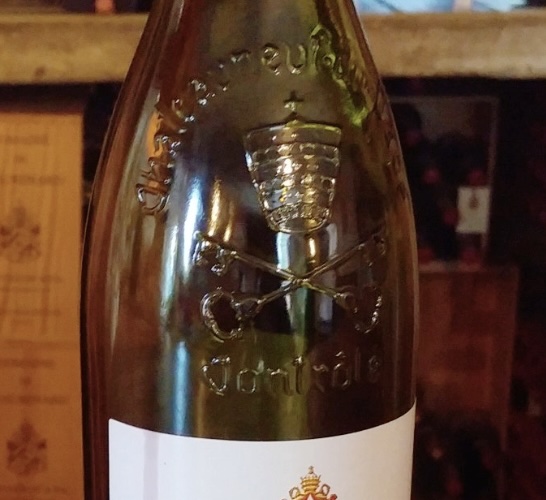
Chataeuneuf du pape bottle
Then came Châteauneuf-du-Pape (CDP), often called the Pope’s wine, hailing from the southern Rhône valley. During the Avignon Papacy, Pope John XXII built a summer residence and a winery north of Avignon, giving the region its name, which translates to the “new castle of the Pope.” While history suggests that the wines of the Rhône still required refinement at the time, leading the Pope to reportedly ship in Burgundy until local quality improved. One of the most striking features of these bottles is the embossed papal coat of arms, featuring the tiara over the keys of Saint Peter, which sets them apart from everything else on the shelf. CDP is a blend led by Grenache, Syrah, and Mourvèdre (GSM), along with other permitted varieties [the list has been revised from 13 down to 9 permitted varieties], which gives it a characteristic complexity. As a wine built for long aging, it possesses both power and elegance that never disappoints. Rich and full-bodied, yet more reasonably priced than Bordeaux or Burgundy, so it’s become my trusted bottle. It is a wine that feels particularly right from late autumn through the Christmas season, offering a warmth from the inside out. The only catch: it’s not exactly an everyday-priced bottle. Though when you see the vineyard, where every grape is hand-harvested and farmed organically, the price starts to feel entirely fair.
Southern Rhône Syrah: the Original Heritage
One afternoon at Lotte department store wine event, a staff recommendation led me to a Southern French Syrah.
Most people associate Syrah with Australia, but it originated in France’s south. Phylloxera (a kind of aphid) devastated the vineyards of the region in the 19th century, and the Syrah planted today is technically a reimported variety; however, something about this land remains unchanged. The combination of limestone and gravel soils, paired with the fierce Mistral wind, gives Southern French Syrah a character entirely unlike its Australian counterpart. I drank a 2012 vintage in 2023 and was struck by the kind of balance and depth that only a well-aged, high-quality wine can offer. That specific wine is no longer imported, but whenever I spot a Syrah from the neighboring Roussillon region, it goes straight into my basket. Roussillon was long known for cheap table wine, but with talented winemakers moving in, the quality has surged, and you now find genuinely excellent value there.
A Recommendation That Changed My Mind
When dining out, I often ask for a wine pairing recommendation, a habit that sometimes leads me to bottles I’d never have chosen for myself.
This is exactly what happened at a wine bar near my home. I typically did not reach for American wines, and when it comes to whites, I rarely stray beyond French Chardonnay, but this was wonderful, offering a rich, almost oily texture and ripe orange fruit, complemented by a touch of oak and just a whisper of mineral on the finish. It was quite simply delicious. Curious to see whether I could find a similar experience elsewhere, I tracked down a South African Chardonnay in the $20 range. South Africa occupies somewhere between the Old World and the New with a wine history that is much longer than most people realize. The Dutch East India Company planted vines there as early as 1662, producing the country’s first wine by 1669. By the 1880s, South Africa had become one of England’s premier wine suppliers until politics, natural disasters, and war pushed it into obscurity for decades. It was only under the presidency of Nelson Mandela that the wine industry began to rebuild. Today, South African winemakers draw from both traditions by studying Burgundian techniques while embracing the expressive, fruit-forward styles of the New World. The result is a collection of wines with a unique identity that often provide exceptional value.
Every new variety, region, and producer weaves together terroir, intention, and craftsmanship into a story that awakens all five senses. The world of wine is truly boundless.
This is how I travel the world, right from the glass on my dinner table.